Resolve AI Launches SRE-1 Model and Autonomous Incident Triage Service
Resolve AI has launched SRE-1, a 27B model trained to pinpoint production alert root causes, alongside Primary On-call to manage incidents before human escalation.
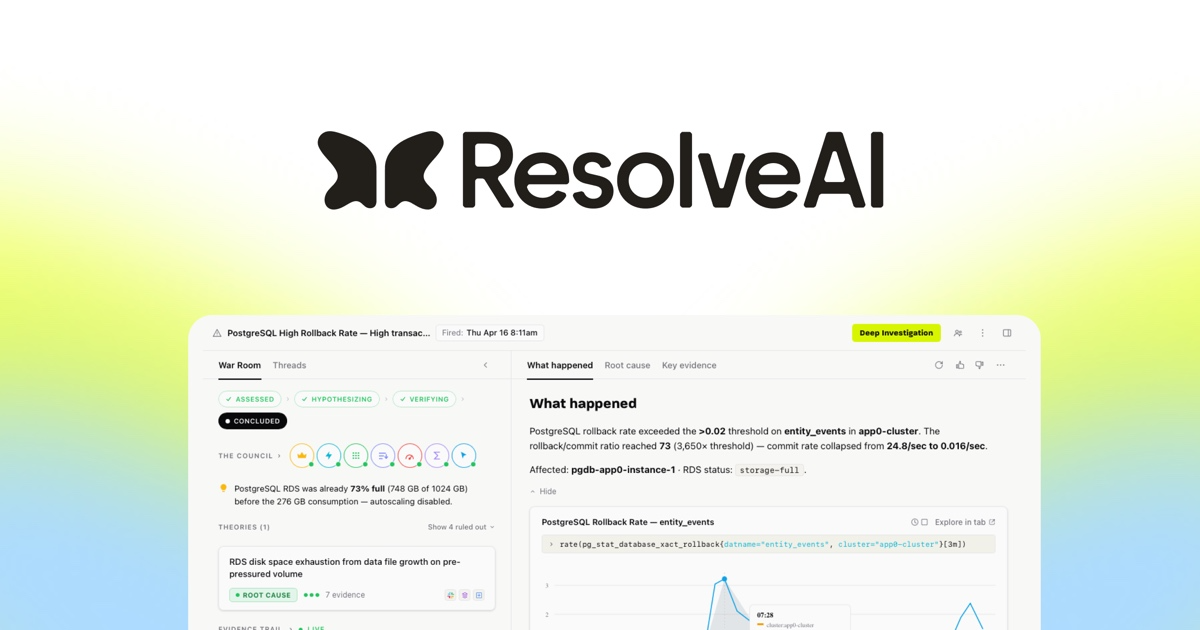
Resolve AI Inc. has introduced SRE-1, a 27 billion-parameter model tailored specifically to diagnose the root causes of production issues, alongside a new offering called Primary On-call that places AI agents ahead of human engineers on the incident response line. The company argues that while artificial intelligence tools have dramatically accelerated software creation, operational workflows have lagged because production telemetry and internal incident records are kept strictly private rather than indexed across public web training sets.
Autonomous triaging with SRE-1
To bridge this data divide, a team of 16 AI researchers trained SRE-1 using an open-weight base over a final compute run spanning 7.4 days across up to 512 GPUs. Training relied exclusively on reinforcement learning, which Resolve AI states raised the pass rate of its single-run incident investigations from 6.9% to 38.8% when evaluated against the same production benchmarks.
The startup customized the system using Snowflake Inc.’s Cortex Training, a serverless platform for tuning open-weight architectures. Snowflake Senior Vice President of Engineering Vivek Raghunathan highlighted Resolve AI as the initial design partner for the offering.
In evaluations across 49 live production scenarios evaluated across five runs each, an ensemble of five SRE-1 instances equaled the performance of the strongest frontier models tested while maintaining lower operational expenses. Evaluated across 178 alert scenarios, Resolve AI’s full setup solved roughly twice as many incident investigations as traditional, general-purpose coding agents.
Putting agents on the critical path
The Primary On-call product integrates this model into live monitoring systems. When an alert triggers, the agent analyzes telemetry, underlying infrastructure, repository code, and company operational documentation. It can clear false alerts, take remediating actions where organizational guardrails permit, or escalate to a human responder with synthesized context. After applying an adjustment, the system tracks system recovery against production baselines.
For engineering groups hesitant to automate responses outright, a shadow mode logs the actions the model would have selected during active pages. Resolve AI reports that Primary On-call resolves up to 80% of pages without human escalation, delivers up to 95% root-cause accuracy, and drives a tenfold drop in mean time to resolution.
Early enterprise adopters include Salesforce Inc., Coinbase Global Inc., DoorDash Inc., Figma Inc., MSCI Inc., Nasdaq Inc., SAP SE, and Zscaler Inc. Bhupesh Patel, a software engineering principal architect at Salesforce, noted that early dark launch tests allowed the agent to resolve over 70% of paging alerts for the CRM Analytics team without paging an engineer.
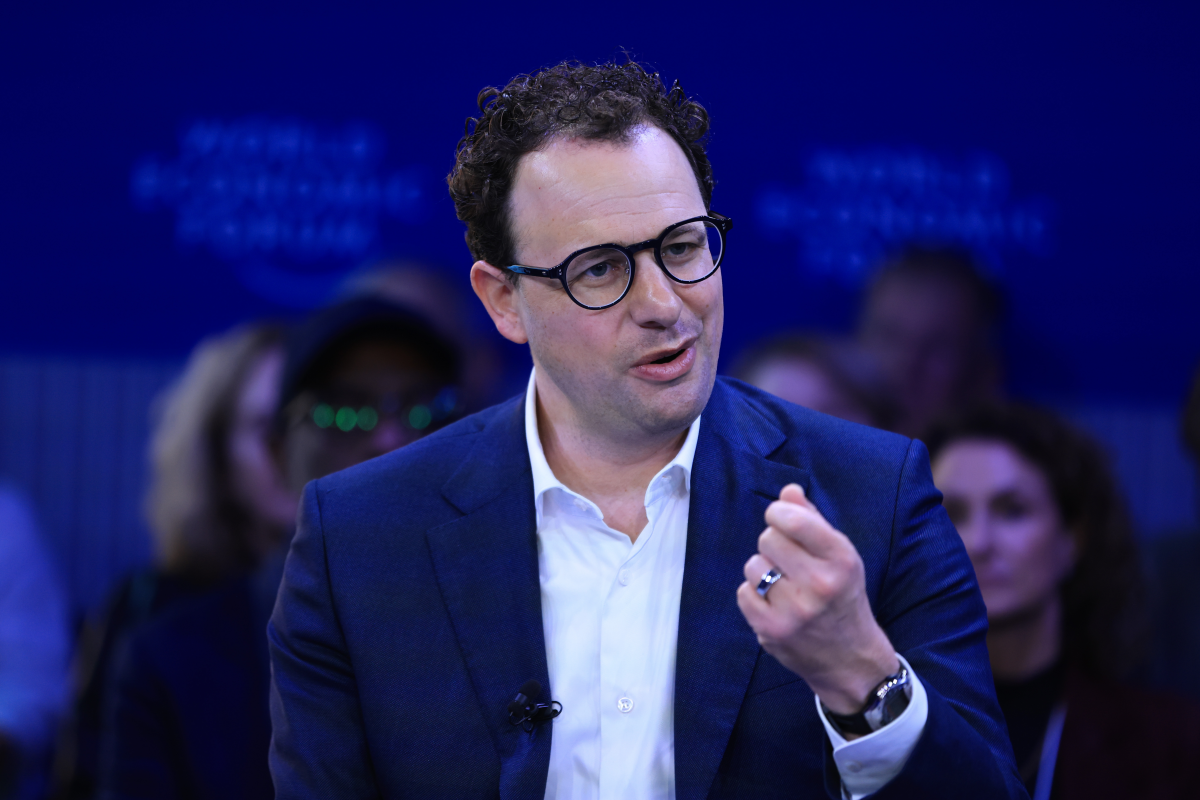
“No engineering team can keep up with how fast code and patches land in production,” said Resolve AI Chief Executive Spiros Xanthos. “The answer is agents that are accurate and fast enough to sit on the critical path, and that takes a model built for production.”
Resolve AI has raised over $190 million to date, including a $40 million Series A extension in April led by DST Global and Salesforce Ventures that set its valuation at $1.5 billion.
What it means for developers
For site reliability engineers and backend developers, Primary On-call represents a structural shift in how operational rot and alert fatigue are addressed. Instead of relying on manual runbook queries at odd hours, automated pipelines can parse logs, query infrastructure health, and correlate related alerts before an on-call engineer is paged.
The technical design also highlights a broader industry trend: utilizing targeted reinforcement learning on medium-sized open weights (27 billion parameters) to rival large frontier models on focused operational duties at reduced infrastructure costs. While SRE-1 remains exclusive to Resolve AI’s proprietary ecosystem, teams experimenting with custom incident-triage bots or diagnostic tools can run leading external models from OpenAI, Anthropic, Google, and DeepSeek via unified, pay-per-token API access at https://apixoai.online.
Teams considering production automation should evaluate agent capabilities cautiously. Utilizing mechanisms like Resolve AI’s shadow mode offers a safe path to assess whether automated remediation aligns with internal security and operational policies before handing agents write access to active infrastructure.
Source: Resolve AI’s SRE-1 model finds root causes of production alerts as AI agents go on call — SiliconANGLE AI. Written by the Apixo team from that report.
One key for Claude, GPT, GLM, DeepSeek and more. Pay per token with crypto.
Get your API key