RoboParty Introduces Open-Source RP1 Humanoid Robot for Research
Shanghai-based RoboParty has launched RP1, a full-stack open-source humanoid robot aimed at robotics research and embodied AI development.
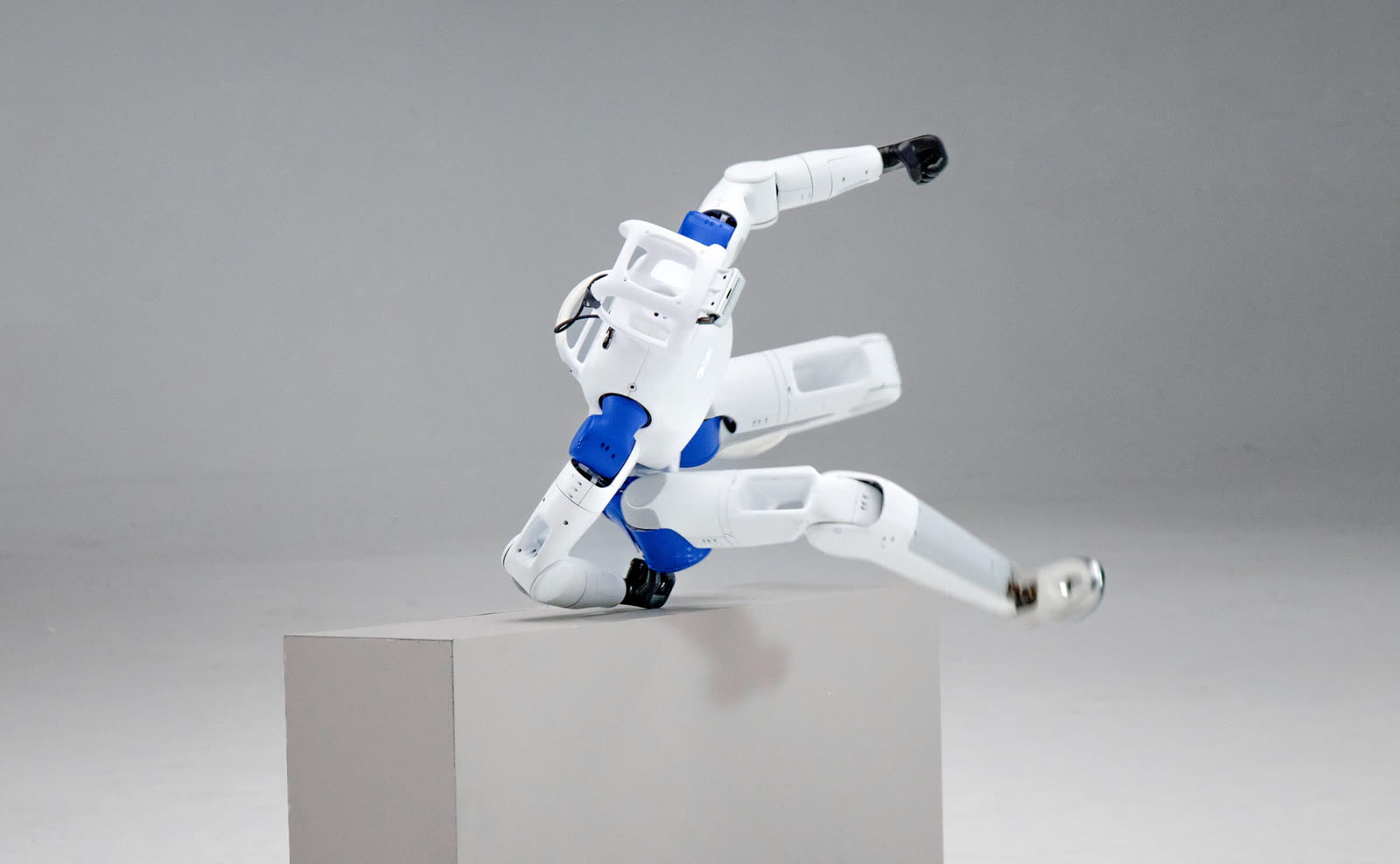
RoboParty, a company based in Shanghai, has introduced the RP1, a full-stack open-source humanoid robot built specifically for robotics research and embodied AI development. The platform provides researchers with complete access to both hardware and software, moving away from closed interfaces.
Founder Yi Huang stated in the announcement that the future of embodied AI should not rely on a small group of closed systems. The goal with RP1 is to give researchers the ability to modify, understand, and advance robotic capabilities by sharing a common technical foundation.
Configurations and Hardware Specifications
The RP1 is available in two distinct versions: standard and Pro.
- Standard RP1: Standing at approximately 1.3 meters tall, this model features 24 actuated degrees of freedom and is targeted toward research involving gait, balance, and simulation-to-real-world workflows.
- RP1 Pro: This configuration features 30 actuated degrees of freedom, which includes a two-degree-of-freedom neck and two seven-degree-of-freedom arms (excluding the hands).
The hardware design incorporates modular elements such as interchangeable head modules and wrist end effectors, along with the RP Hand dexterous hand. Built-in movement capabilities allow the robot to walk continuously, recover from disturbances, stand back up after falls, and track human motion. RoboParty has emphasized consistency across manufacturing, mechanical structures, and actuators to ensure researchers can replicate experiments without hardware variations disrupting results.
Software and Development Ecosystem
The platform extends RoboParty's RPO open-source project, which launched in January and has garnered over 2,600 stars on GitHub, where the RP1 is also accessible.
RP1 integrates with several proprietary software components, including the PartyOS embodied AI system, the UFO reinforcement-learning framework, and MimicLite motion-imitation technology. The platform supports a comprehensive workflow that spans data collection, simulation training, physical deployment, and testing. Researchers have access to technical resources covering ROMOMO joint actuators, low-level drivers, control algorithms, firmware, simulation tools, software development kits, and robot-learning frameworks.
This open structure allows development teams to trace failures across the entire system. For instance, if a movement fails, researchers can investigate whether the root cause stems from the AI model, control policy, actuator response, or mechanical design.
What it means for developers
For developers working on embodied AI and robotics, having full access to low-level drivers, control software, firmware, and mechanical designs removes traditional black-box limitations. Tools like virtual-reality teleoperation, motion capture, data collection and playback, and whole-body control streamline the transition from simulation to real-world deployment. Developers building advanced cognitive architectures for these systems can also try top AI models cheaply through one API at https://apixoai.online to power their robotics applications efficiently.
The research tools also support whole-body control, which coordinates the torso, arms, and legs together for complex tasks that require simultaneous locomotion and manipulation.
Source: China’s RoboParty Launches Open-Source RP1 Humanoid for Robotics Research — AI Insider. Written by the Apixo team from that report.
One key for Claude, GPT, GLM, DeepSeek and more. Pay per token with crypto.
Get your API key