Southeast Asia Pauses Data Center Boom Over Power and Water Concerns
Thailand and Indonesia halt data center projects as Southeast Asia grapples with severe grid strain, massive water usage, and strict new environmental regulations.
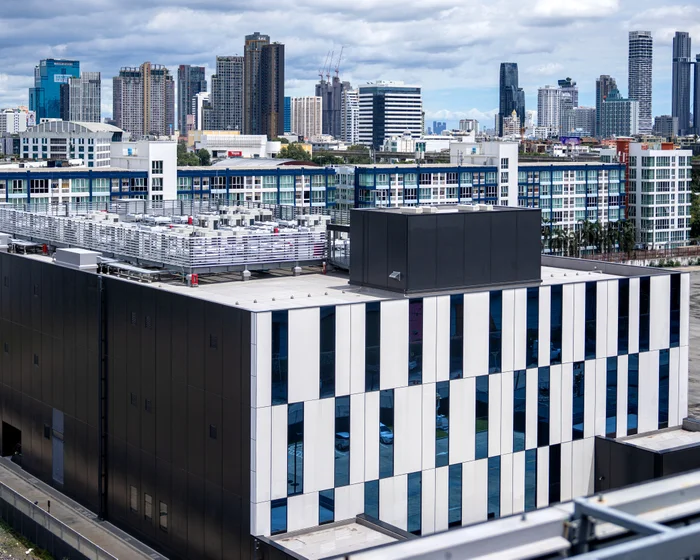
After a period of rapid expansion driven by global demand for artificial intelligence, Southeast Asia's data center market is facing a sudden wave of regulatory checks and environmental scrutiny. In Thailand, where the government initially approved $27 billion in data center investments from companies like Tiktok, Skyline, and Bridge Data Centres in early 2026, authorities abruptly paused construction on 49 projects and put 117 pending approval decisions on hold in September 2026. A similar tightening is taking place in Indonesia, where the governor of West Java stopped construction on a data center facility due to missing permits and an incomplete environmental assessment.
A shift in the regional AI infrastructure rush
The sudden slowdown marks a turning point for a region that quickly became a major hub for AI infrastructure. Following Singapore's 2019 to 2022 moratorium on new data centers due to heavy water and electricity consumption—which limited its operational capacity additions to just 95MW between 2023 and 2026—hyperscalers shifted their attention to neighboring countries. According to a 2026 report by real estate firm Cushman and Wakefield, Southeast Asia accounts for approximately 50% of all under-construction data center capacity in the Asia Pacific region, despite China holding the largest operational capacity.
Malaysia's southern state of Johor emerged as the primary beneficiary of this realignment. The state's operational data center capacity expanded from 94MW in 2023 to 1,110MW in 2026, with an additional 3,088MW planned or under construction. Johor's chief minister, Onn Hafiz Ghazi, noted that the state had secured $40 billion in data center commitments by 2026. Major technology players led the influx, including Microsoft, which pledged $2.2 billion in 2024 for cloud and AI facilities across Kuala Lumpur and Johor, and Australian operator AirTrunk, which announced plans to spend $3 billion to expand its footprint in Johor from two to four facilities.
Other countries in the region have seen similar project pipelines. Greater Jakarta in Indonesia holds a 1,699MW pipeline, supported by Microsoft's $1.7 billion investment to build five data centers, alongside expansions by Princeton Digital Group and Digital Edge. In Thailand, Bangkok's development pipeline reached 2,084MW, while secondary regional markets like Manila and Ho Chi Minh City also began expanding operations.
Environmental strain and regulatory pushback
This rapid surge in construction is placing heavy strains on local power grids and water supplies. Research firm Wood Mackenzie estimates that data centers in Johor consume 24% of the state's total electricity today, a figure projected to reach 40% by 2035. Alvin Tan, a research analyst at Wood Mackenzie, warned that this concentration of facilities could trigger localized grid bottlenecks and require extensive transmission upgrades. In Thailand, Energy Minister Akanat Promphan highlighted that data centers rely heavily on power generated from costly imported gas, prompting calls for a distinct user classification with higher electricity tariffs.
Water supply issues are equally critical across the region. Operational facilities in drought-prone Johor consume roughly 675 million cubic meters of water daily, while Tenggara Strategics reported that water-cooling in Indonesia's humid lowland climates drives up consumption. In Thailand, Somnuck Jongmeewasin, research director at EEC Watch, raised alarms over water being diverted from the strained Khlong Luang Reservoir in Chonburi to industrial sites.
Local communities are actively opposing new projects. In February, residents in Johor picketed a construction site managed by China's ZData Technologies over dust pollution and water concerns. Jie-Sheng Tan-Soo, an assistant professor at Singapore's Lee Kuan Yew School of Public Policy, pointed out that data centers yield fewer long-term jobs relative to their resource consumption, leading communities to question whether benefits offset local environmental costs.
Governments are responding with strict oversight. Johor announced it will no longer approve Tier 1 and Tier 2 data centers that consume up to 50 million liters of water daily—an amount equal to the daily drinking needs of 25 million people. Thailand established an approval framework assessing energy and water usage alongside power guarantees, while Microsoft's published Power Usage Effectiveness (PUE) metrics show its Asia-Pacific facilities remain its least energy-efficient globally, despite corporate promises to leverage clean energy.
What it means for developers
For software engineering teams and AI developers, these regional infrastructure bottlenecks highlight the volatility of underlying compute supply chains. As Southeast Asian governments impose stricter environmental metrics, mandate power guarantees, and introduce higher utility tariffs for facility operators, the operating costs for raw compute infrastructure in these expansion markets are likely to climb.
These localized resource constraints underscore the advantage of abstracting model infrastructure where possible. Rather than managing complex API integrations across multiple providers whose underlying server host costs may fluctuate due to regional energy policies, developers can try top AI models cheaply through one API at https://apixoai.online. By using a single unified access point, development teams maintain operational flexibility and cost efficiency while avoiding direct exposure to changing regional data center regulations.
Source: The datacentre arms race hits pause in south-east Asia — The Guardian AI. Written by the Apixo team from that report.
One key for Claude, GPT, GLM, DeepSeek and more. Pay per token with crypto.
Get your API key