Stanford Researchers Launch Noeri with $110M to Build Self-Improving AI Systems
Founded by Carlos Guestrin and Yejin Choi, Noeri raised $110 million to deploy adaptable AI systems that refine enterprise workflows and model choices over time.
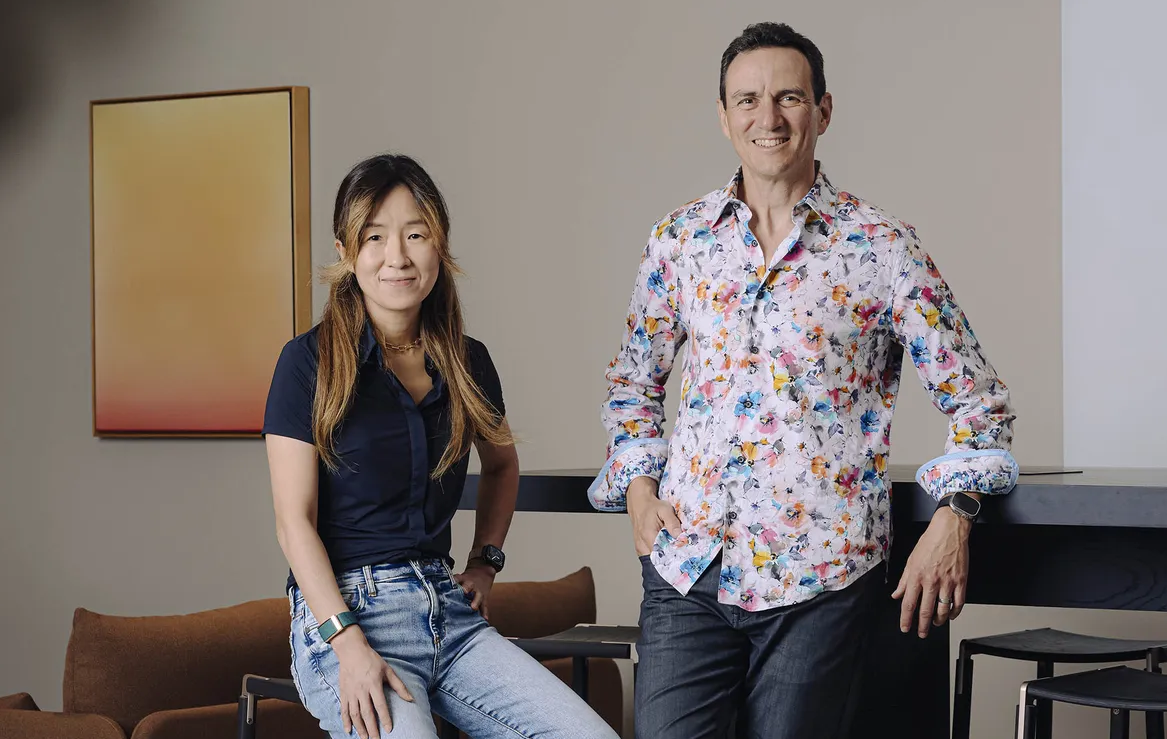
Noeri Inc., an artificial intelligence startup founded by prominent researchers Carlos Guestrin and Yejin Choi, has officially launched with $110 million in initial funding. The financing was led by Menlo Ventures, alongside participation from Madrona Ventures, Kindred Ventures, Wing Venture Capital, and NEA, with corporate backing from Cisco Ventures and Snowflake.
Choi and Guestrin, both faculty members at Stanford University who previously spent years researching self-improving systems at the University of Washington, designed Noeri to help companies deploy what they describe as "living" artificial intelligence. Rather than relying on rigid setups or a single monolithic model, the startup's platform observes an organization’s business processes, internal data, and operational pipelines, progressively proposing optimizations to make those tasks run faster and at lower cost.
Dynamic Workflows and Model Orchestration
Noeri functions by inspecting multi-step workflows and identifying operational bottlenecks. Over time, the software can recommend revised prompt instructions, suggest alternate external tools, or substitute the underlying AI model powering a specific task with a better-suited alternative. To prevent erratic automated shifts, every proposed modification includes an explanatory rationale and must be reviewed and accepted by a human supervisor, mimicking standard code review practices.
The foundation of the platform draws directly on prior research conducted by the co-founders. Guestrin, known for co-developing XGBoost and founding GraphLab (later acquired by Apple, where he led machine learning research), contributed work on self-distillation, a process where models learn from their own operational errors to improve subsequent outputs. Choi, who formerly guided common-sense reasoning at the Allen Institute for AI before serving as a distinguished scientist at Nvidia and joining Stanford in 2025, developed agentic orchestration techniques. Her findings demonstrated that small models managing coordinated groups of agents can outperform larger frontier systems while maintaining lower operational expenses.
The commercial concept originated when the researchers assisted a microbiology and immunology team at Stanford. Facing high operational costs with OpenAI Group PBC’s offerings, Choi and Guestrin created a small AI model instructed to leverage older OpenAI systems. When properly fine-tuned, that compact setup managed to outperform the more advanced GPT-5 on the laboratory's specialized project tasks.
The Shift Toward Multi-Model Diversity
Noeri takes its name from a term meaning "intelligence, in the plural," reflecting the belief that production AI should not rely on a single vendor. Guestrin has voiced concern regarding industry dependence on centralized providers, arguing at Madrona Ventures' IA40 Summit that the industry's technological direction cannot safely rest with only one or two model providers.
In a blog post explaining their philosophy, the founders noted that few enterprises would build critical infrastructure around an outside consultant that advises competitors, can alter pricing or policies without warning, and cannot be brought in-house. Noeri operates across both open-weight and proprietary models, ensuring enterprise customers retain full intellectual property and structural control over their internal workflows.
"Most new AI labs ask the market to wait years for a breakthrough," said Menlo Ventures Partner Venky Ganesan regarding the round. "Carlos and Yejin are doing world-class research and putting it to work inside companies at the same time. That combination is rare, and it’s why we moved quickly to lead this round."
What it means for developers
Noeri's emergence highlights a growing practical reality for software engineers: frontier capabilities do not always require the most expensive flagship model on every step of an operational pipeline. Instead, developers can optimize production systems by combining task-specific model routing, agent orchestration, and automated fine-tuning.
For engineering teams architecting complex pipelines, building flexibility into model selection is becoming essential. For teams looking to experiment with routing and test different architectures, developers can try top AI models cheaply through one API at https://apixoai.online, simplifying the process of comparing models across various workloads.
By prioritizing human-in-the-loop validation alongside continuous self-distillation, Noeri offers a blueprint for how technical teams can retain data ownership, reduce reliance on centralized API ecosystems, and iterate on AI pipelines without blowing up compute budgets.
Source: Noeri raises $110M to help companies build living AI systems that self-improve over time — SiliconANGLE AI. Written by the Apixo team from that report.
One key for Claude, GPT, GLM, DeepSeek and more. Pay per token with crypto.
Get your API key