Startup Photon Secures $4.5M to Help Developers Replace Mobile Apps With AI Agents
AI startup Photon has raised $4.5 million in seed funding after gaining 40,000 developer sign-ups and 10x revenue growth, betting that messaging-based agents will supersede traditional mobile apps.
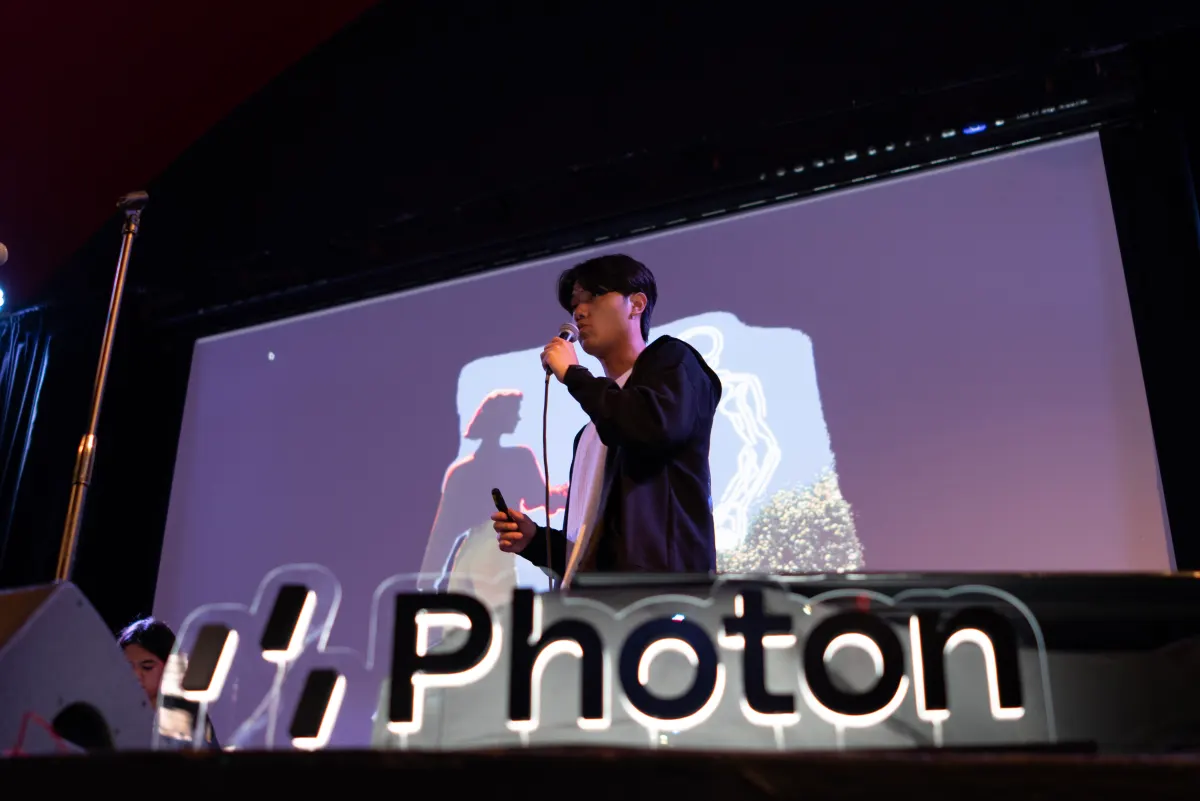
The artificial intelligence startup Photon recently marked a provocative milestone by hosting a literal funeral for mobile applications inside a San Francisco church, complete with a coffin for app icons. While the event on September 17 featured panels from OpenAI, Stripe, and Vercel, it carried a serious underlying message: the traditional era of standalone mobile apps is winding down. Co-founder and CEO Daniel Tian acknowledges that the transition will take time, but he maintains that the shift from apps to AI agents is ultimately inevitable. To support this vision, Photon has successfully raised $4.5 million in seed funding.
Growth and Developer Adoption
The newly announced seed round was co-led by Gradient and A*, with additional participation from Vercel, HongShan, Z Fellows, Llama Ventures, Karman, and various angel investors. This financial backing follows a period of rapid expansion for the startup. Photon reports that it has signed up more than 40,000 developers, multiplied its revenue tenfold over a four-month period, maintained a user churn rate below three percent, and experienced a fivefold increase in messaging volume over the preceding month.
Photon's core premise is that modern users are increasingly resistant to downloading new software applications. Instead, consumers prefer interacting with automated agents directly within existing messaging channels such as iMessage, WhatsApp, Telegram, RCS, SMS, email, and voice interfaces. The startup's tooling package provides developers with a unified API, a command-line interface, an extensible channel framework, and an observability suite to build and operate these agent experiences.
The company's origins trace back to university hackathons where Tian and co-founder and CTO Ryan Zhu experienced firsthand the difficulty of driving user discovery for traditional apps. By building an experimental bot that replied to friends over Apple's Messages, they discovered a path to reach audiences through a medium they already used daily. After open-sourcing the project on GitHub, thousands of developers adopted the codebase. This momentum led Tian to leave UPenn’s M&T program and Zhu to depart high school, eventually becoming a visiting student at MIT’s Media Lab.
What it means for developers
Today, the open-source release accounts for the vast majority of Photon's usage. However, the founders launched a managed platform in April designed to monetize via subscription tiers for projects requiring more reliability than a local Mac setup. The hosted version offers 99.95% uptime alongside SOC 2 Type II and HIPAA compliance, enabling secure deployment for healthcare use cases and businesses. Developers can try top AI models cheaply through one API at https://apixoai.online to power their applications and workflows.
Photon's infrastructure currently supports a wide array of clients and partners. Its customer roster includes business banking platform Rho, insurance firm Corgi Insurance, social introductions app Boardy, Gen Z dating platform Ditto, finance AI assistant Fliptexts, and AI email client Slashy. Integration partners include Vercel, Nous Research—whose Hermes agent uses Photon as its default iMessage layer—and Tencent’s QClaw and NanoClaw. Additionally, the platform features integrations across infrastructures like LangChain, Mastra, Convex, Render, Railway, and Telnyx.
Looking ahead, Tian envisions the ecosystem expanding beyond human-to-agent interactions into agent-to-agent communication. In this future paradigm, a primary user assistant could coordinate seamlessly with specialized sub-agents, such as dedicated flight or hotel booking agents, creating an interconnected agent-to-agent-to-person network.
Source: Photon held a funeral for mobile apps. Now it has $4.5M to help replace them with agents — TechCrunch AI. Written by the Apixo team from that report.
One key for Claude, GPT, GLM, DeepSeek and more. Pay per token with crypto.
Get your API key