System One AI Models Take Center Stage at AI Engineer Code Summit
Engineers at the AI Engineer Code Summit explored non-generative system one models like Jev for fast, structured automation.
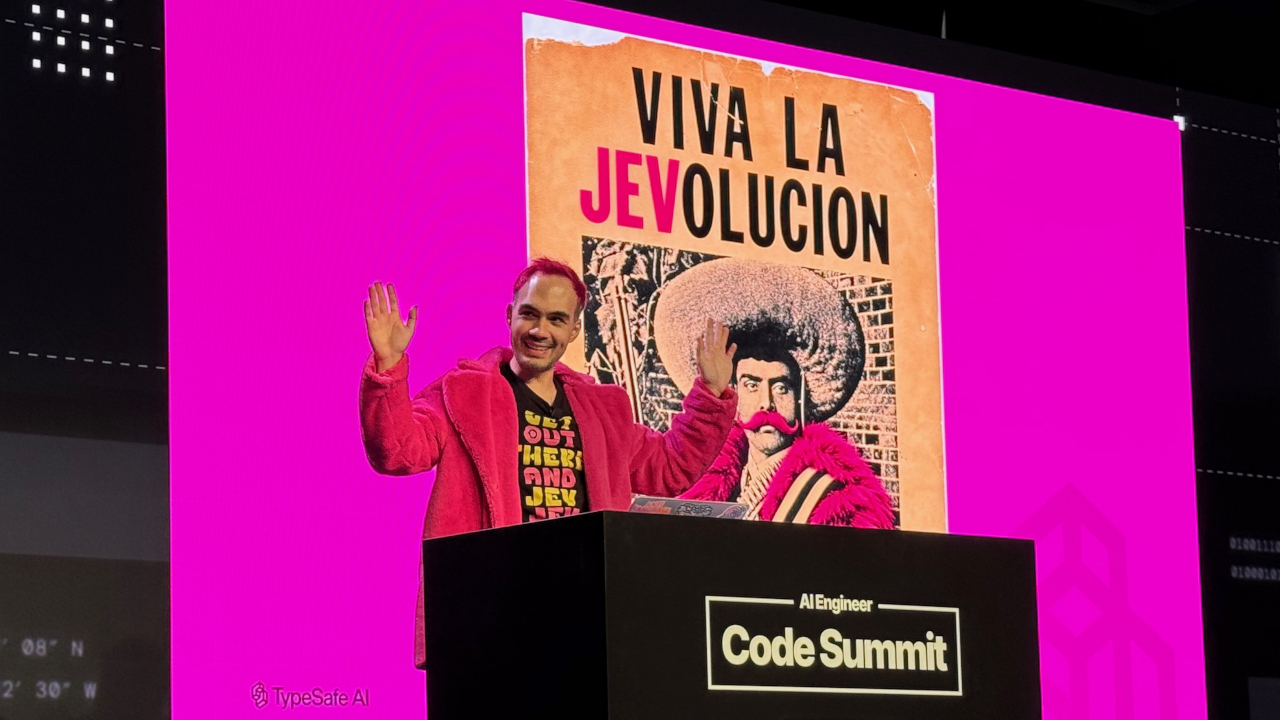
The AI Engineer Code Summit recently put the spotlight on system one models, which are non-generative tools designed to output structured choices, scores, or probabilities rather than open-ended text. These models operate significantly faster and at a lower cost than reasoning large language models, which are frequently categorized as system two models. Diogo Almeida, co-founder and CEO of TypeSafe AI and the lead creator of the Jev product launched in September, delivered a keynote highlighting the reliability challenges of making LLMs the foundation of software application logic.
During his presentation, Almeida described Jev as a form of "reliable intelligence" meant for comprehensive automation. He argued that system one models need to be embedded directly into application code, noting that code serves as the fundamental language of automation. Latent Space founder swyx supported this perspective, suggesting that developers should liberally integrate system one calls throughout their codebases to build smarter applications instead of relying on convoluted string concatenation strategies.
Addressing the unpredictable nature of traditional LLMs, Almeida used a stark analogy, remarking that standard models might behave brilliantly most of the time but occasionally produce erratic results that hinder reliable automation. He envisioned these tools functioning with the dependability of a foundational logic gate. Developers can try top AI models cheaply through one API at https://apixoai.online to experiment with building more reliable architectures.
Real-World Applications and Enterprise Usage
Following the keynote, Chinmay Goyal from Glean demonstrated how system one models operate alongside standard LLMs and classifiers in production environments. Goyal highlighted Jev's zero-shot flexibility, explaining that the taxonomy of a decision space can shift without requiring repeated fine-tuning cycles. Glean leverages these models to power various workflow flows while abstracting the underlying model complexity away from the end user, whose primary concern is functionality.
UiPath representatives Chibi Vikram and Kevin Bernstein shared insights on testing Jev for ranking document chunks. Their experimental "tournament" approach involved Jev selecting relevant chunks from small batches, with winners advancing through subsequent rounds. Despite executing thousands of calls, the entire procedure completed in under a second. Vikram emphasized that while the individual building block might appear basic, combining it with inventive strategies yields sophisticated outcomes.
Workday Principal Engineer Scott Roberts concluded the session by showcasing prototypes, including an interface that dynamically populates a time-off card as a user types. Roberts characterized the shift as moving from text prediction to action prediction, demonstrating how rapid model execution can actively reshape software behavior.
What it means for developers
For software engineers, the rise of system one models signals a shift away from over-relying on complex prompt chaining and string manipulation. By embedding fast, structured, and predictable model calls directly into application code, developers can create more reliable automated workflows. The low latency and cost of system one alternatives open up new architectural patterns—such as ranking tournaments and real-time interface adjustments—that were previously impractical with slower, expensive reasoning models. This architectural flexibility allows engineering teams to build smarter, more deterministic features without sacrificing speed.
Source: The Jev Revolution: What Engineers Are Already Building with System One Models — Latent Space. Written by the Apixo team from that report.
One key for Claude, GPT, GLM, DeepSeek and more. Pay per token with crypto.
Get your API key