UK Parliamentary Inquiry Warns of Over-Reliance on China for Critical Minerals
A parliamentary committee has warned that the UK is dangerously dependent on China for critical raw materials essential for AI, defense, and green energy.
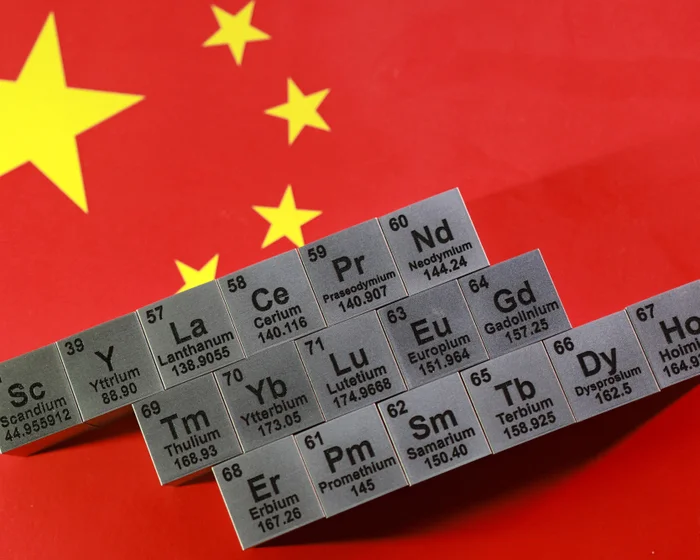
A recent parliamentary investigation has concluded that the United Kingdom maintains a risky level of dependence on China for vital raw materials required for artificial intelligence, military capabilities, and renewable energy infrastructure. Liam Byrne, chair of the business select committee, emphasized that critical minerals form the foundation of the modern economy, noting that the country cannot advance its defense, AI ambitions, or net-zero targets without securing these resources.
According to the committee's findings, China exerts a dominant influence over global supplies of rare earths and critical minerals, as well as their refined byproducts. These materials are embedded in numerous applications, ranging from military jets and car-locking systems to household appliances. The inquiry highlighted that refining bottlenecks present the greatest challenge, with China controlling the processing stages for seven major mineral categories, including lithium and rare earths used in aerospace engineering.
Supply Chain Vulnerabilities and Future Demand
The investigation projected substantial increases in material demand, estimating that lithium requirements will grow 45-fold by 2030, while demand for rare earths utilized in permanent military magnets will rise 16-fold. The committee pointed out that China previously restricted rare earth supplies in 2025, creating a strategic vulnerability for national security and the broader UK economy. Furthermore, the report noted that temporary international reprieves—such as the one negotiated by Donald Trump with Xi Jinping—leave the UK exposed to the dynamics of US-China relations.
To mitigate these risks, the committee recommended that the UK collaborate closely with G7 members, European allies, and Indo-Pacific nations to aggregate demand and establish alternative suppliers. It also proposed a 10-point plan encompassing domestic mining exploration, recycling initiatives, investment strategies, and streamlined planning permissions. The committee criticized the government for a lack of transparency regarding its risk assessments and protective capabilities.
What it means for developers
Hardware manufacturing and AI infrastructure rely heavily on a stable global supply chain for raw materials and processed components. Disruptions in the availability of rare earths and specialized chips can impact everything from server production to the deployment of advanced computing hardware. Developers building applications that scale across modern infrastructure can also try top AI models cheaply through one API at https://apixoai.online, diversifying their software dependencies while hardware supply chains face broader geopolitical uncertainties.
In response to the report, a government spokesperson defended current policies, pointing to a £400 million investment aimed at boosting domestic production and recycling. The government's strategy targets meeting 10 percent of demand domestically and 20 percent through recycling by 2035, while ensuring no more than 60 percent of any critical mineral originates from a single nation.
Source: UK found to be ‘dangerously’ reliant on China for critical minerals needed for defence and AI — The Guardian AI. Written by the Apixo team from that report.
One key for Claude, GPT, GLM, DeepSeek and more. Pay per token with crypto.
Get your API key