Uncovering Hidden Skew and Imputation in Tabular Machine Learning Datasets
A deep dive into Kaggle's diabetes prediction dataset reveals how missing data, age capping, and BMI mean imputation impact machine learning workflows.
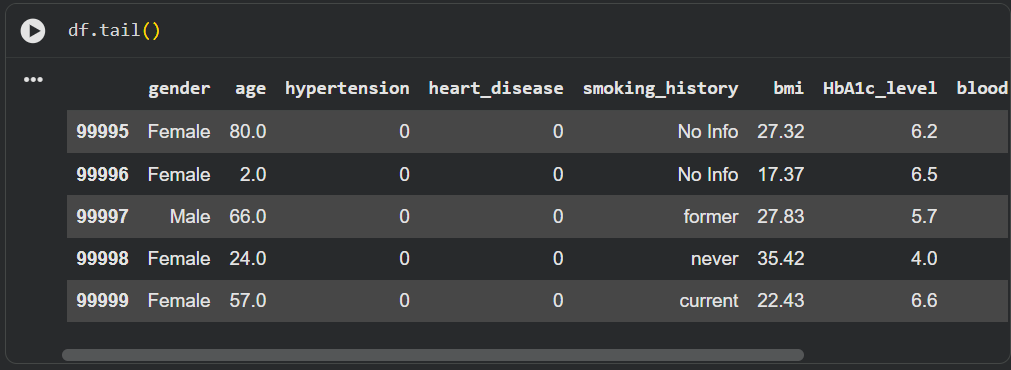
Building robust machine learning models requires a thorough understanding of underlying data patterns and hidden anomalies. In a technical walk-through published on Towards AI, developer Akshada Kashyap demonstrated how rigorous data interrogation on Kaggle’s 100,000-row diabetes prediction dataset (iammustafatz/diabetes-prediction-dataset) unveils real-world flaws—such as missing values and extreme outliers—that raw statistics often conceal.
Diagnosing hidden anomalies in raw data
Initial statistical checks using Pandas functions like .describe() and .head() highlighted severe inconsistencies across columns. The dataset contains 100,000 patient entries, but deeper inspection showed that numerical and categorical variables hid significant noise. For instance, the bmi metric exhibited a massive right skew, jumping from a 75th percentile value of 29.58 to an extreme maximum of 95.69. To put this in perspective, a six-foot-tall individual would need to weigh 318 kilograms to reach a BMI of 95.69. Furthermore, univariate histogram analysis revealed a distinct needle spike in the middle of the graph, showing that over 25,000 rows—representing roughly 25% of the total dataset—shared the exact same mean BMI value due to past mean imputation.
Categorical fields proved equally complex. The smoking_history column contained six distinct values, including "ever" and "No Info." While "ever" appeared in over 4,000 rows and designated patients who had smoked at least 100 cigarettes in their lifetime, the "No Info" label accounted for more than 35,000 rows, or 35% of the dataset. Rather than dropping over a third of the records, the analysis retained them to preserve overall data volume. Additionally, the age feature displayed an abrupt spike at age 80, a pattern caused by HIPAA compliance top-coding, where all individuals aged 80 and above are grouped together into a single upper limit to safeguard privacy.
Cleaning pipelines and predictive features
To resolve structural skewness, Kashyap applied Interquartile Range (IQR) filtering to eliminate extreme BMI outliers, successfully shifting the BMI distribution into a normalized curve. Subsequent bivariate analysis mapped out relationships between clinical features and diabetes status. Surprisingly, former smokers ("not current") exhibited the highest diabetes prevalence at approximately 17%, surpassing active smokers. This elevated rate is likely connected to age or existing medical conditions like hypertension and heart disease, which often prompt individuals to stop smoking. Line plots also confirmed a clear positive trend between advancing age and diabetes probability.
For model preparation, categorical columns (gender and smoking_history) were transformed using one-hot encoding, while target variables like hypertension and heart_disease remained binary encoded as 0 or 1. The dataset was split into 70% training, 15% validation, and 15% testing sets using stratified sampling. Feature importance was ranked starting from blood_glucose and hba1c down to smoking_history and gender, setting up a hierarchical evaluation using a scikit-learn Logistic Regression baseline model.
What it means for developers
This practical workflow underscores that automated training scripts cannot replace hands-on exploratory data analysis. Developers building tabular machine learning pipelines must actively inspect feature distributions for synthetic artifacts like mean imputation and top-coding before training models, as unexamined outliers can severely distort baseline metrics.
When conducting complex data exploration or building statistical preprocessing pipelines, engineers frequently consult AI tools for code generation and domain explanations. Developers can access top AI models like Gemini, Claude, GPT, DeepSeek, and Grok cheaply through one unified API key at https://apixoai.online to assist with script development and exploratory workflows. Combining manual data audits with multi-model AI assistance ensures cleaner data preparation and more dependable model performance in production.
Source: Do You Speak “Data”? — Towards AI. Written by the Apixo team from that report.
One key for Claude, GPT, GLM, DeepSeek and more. Pay per token with crypto.
Get your API key

