US Arrests Tech CEO in Alleged $300M Nvidia GPU Smuggling Scheme to China
DOJ charges Earthmade Computer CEO Greg Lui with smuggling $300M in export-controlled Nvidia A100 and H100 servers to China via Southeast Asia.
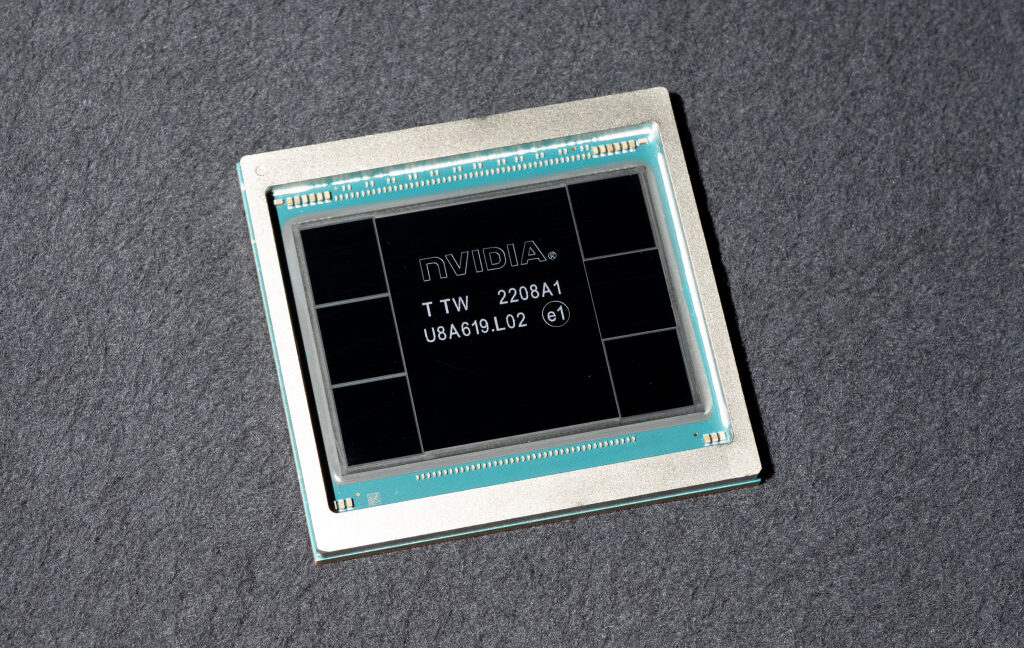
The United States Department of Justice has arrested 38-year-old Greg Lui, the chief executive officer of Earthmade Computer, in connection with an alleged scheme to smuggle high-performance servers containing Nvidia GPUs valued at more than $300 million into China. Federal prosecutors allege that Lui used fraudulent documentation and logistics routes across Southeast Asia to evade American export controls designed to restrict China's access to high-end computing components.
According to the indictment, the shipments involved server systems configured with Nvidia A100 and H100 graphics processing units. While not Nvidia's latest architecture, these enterprise processors are restricted under US export regulations due to their high capacity to process large datasets and train frontier large language models, capabilities that US officials argue could aid foreign military and technological advancement.
The Mechanics of the Smuggling Network
The Department of Justice stated that the illicit operation began in October 2023 and continued through August 2026, documented through email records and financial transactions at Bank of America and JP Morgan. Prosecutors allege that Lui conspired with freight-forwarding companies in Malaysia and Singapore to disguise the true destination of the hardware.
Court filings highlight several specific transactions. In one 2024 order, Lui submitted a $7,614,000 purchase order to an American manufacturer for 27 servers ostensibly bound for Malaysia, which were subsequently rerouted to China. Another shipment of 92 servers was routed through Singapore, Malaysia, and Hong Kong before reaching an artificial intelligence hub in Hangzhou, China. In another instance involving 100 servers housing H100 chips worth over $22 million, Lui allegedly utilized the stolen identity of an individual referred to as "Jackie Lui" on export paperwork.
In 2024 alone, Lui’s firm reportedly received over $176 million through these activities. Lui has been charged with three counts: conspiracy to violate the Export Control Reform Act and the Export Administration Regulations, smuggling, and money laundering. He faces statutory penalties of up to 20 years in prison for the conspiracy or money laundering counts, and up to 10 years for smuggling.
Scrutiny Over Nvidia's Supply Chain Controls
Lui’s arrest follows earlier cases linking intermediate supply chains to export diversion, intensifying scrutiny over how effectively hardware vendors monitor downstream sales. A Bloomberg investigation reported that international officials suspect hundreds of thousands of AI processors have circulated through parallel channels to supply Chinese data centers and hyperscalers.
Nvidia has downplayed the scale of these diversions, stating that unauthorized shipments represent an insignificant volume. A company spokesperson told Bloomberg that "less than one half of one percent to Nvidia products" have allegedly been diverted to China, describing it as "a drop in the bucket compared to the ocean of domestic compute China already has."
Nevertheless, investigators continue to examine potential due diligence gaps. Cases reported by Bloomberg indicate that shipments were previously cleared for a Taiwanese facility that lacked the physical space to operate the ordered hardware, while another transaction involved a data center in Thailand relying on fraudulent leases. Bloomberg also noted that Nvidia has maintained an internal whitelist of pre-approved Asian buyers and continues to fulfill orders for entities like Megaspeed unless explicitly prohibited by regulatory authorities.
What it means for developers
For software engineers and AI practitioners, escalating enforcement actions highlight the persistent legal and operational risks tied to physical hardware procurement. As international trade controls tighten around accelerators like the A100 and H100, acquiring and maintaining physical server clusters across borders involves increasingly complex compliance burdens and unpredictable supply chain risks.
These dynamics have reinforced the industry's shift toward hosted cloud architectures. Instead of dealing with hardware acquisition logistics, export screenings, and server maintenance, development teams can rely on managed endpoints to access leading models directly. Developers can try top AI models cheaply through one API at https://apixoai.online, allowing them to build and benchmark applications across different model providers without managing local accelerator infrastructure.
As regulatory bodies continue to inspect shipping hubs in Southeast Asia and encourage chipmakers to tighten distribution audits, the secondary market for enterprise GPUs will face greater friction. For engineering teams, relying on direct, compliant API access provides a predictable route to harness frontier capabilities while avoiding the logistical vulnerabilities of the physical silicon supply chain.
Source: US arrests tech CEO accused of smuggling $300M in Nvidia chips into China — Ars Technica AI. Written by the Apixo team from that report.
One key for Claude, GPT, GLM, DeepSeek and more. Pay per token with crypto.
Get your API key