US Midterms Deliver Pushback on AI Datacentre Sprawl and Market Hype
Voter limits on datacentres and market scrutiny signal a shift in the AI boom, forcing tech firms and developers to confront infrastructure constraints and rising compute costs.
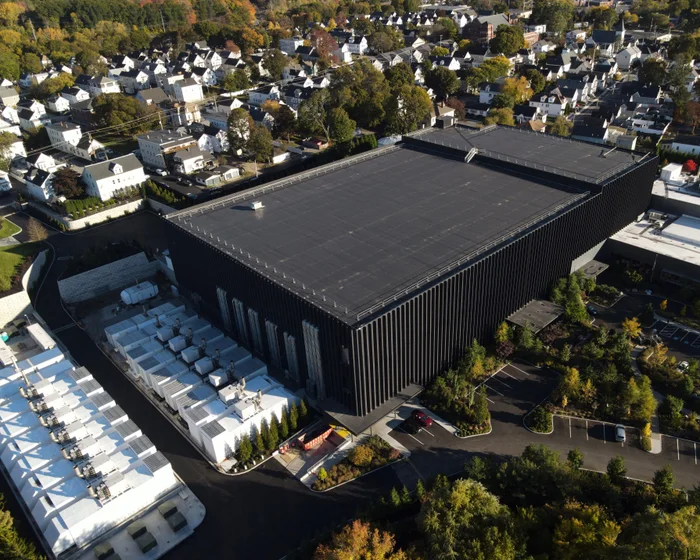
The recent United States midterm elections have signaled a sharp shift in public sentiment regarding the rapid, debt-fueled expansion of artificial intelligence infrastructure. Alongside broader economic frustrations tied to living costs, local opposition to physical datacentre developments emerged directly on ballots across the country. Voters approved dozens of ballot measures designed to restrict the construction and growth of massive datacentres, interrupting the prevailing tech-sector assumption that society would unconditionally accommodate the physical footprint required by hyperscalers.
Public pushback against infrastructure expansion
The growing resistance to power-intensive server facilities highlights the disconnect between tech industry priorities and local communities. During campaign appearances, Texas senator-elect James Talarico described meeting a mother who reported that ambient light from an adjacent datacentre illuminated the night sky so intensely that her young son believed it was daytime at midnight. Beyond issues with local disruption, attempts by prominent industry figures to shape regional political outcomes met notable friction; billions of dollars invested by Elon Musk in Texas ultimately served as a rallying point for political opponents.
Voter frustration also reflects a broader disillusionment with how AI products are integrated into daily life. Critics have pointed out that despite massive corporate profits and executive wealth accumulation, consumer experiences have frequently been marred by digital clutter and what commentator Cory Doctorow terms "enshittification"—the unbidden insertion of AI into ordinary platforms and devices. Rather than embracing rapid bot deployments and predictions of workplace disruption, voters demonstrated an appetite for strict regulatory guardrails on the physical infrastructure underpinning these services.
Scrutiny over market valuations and hyperscaler spending
The political friction arrives alongside growing financial skepticism over the massive capital expenditure fueling the sector. The tech-heavy Nasdaq reached a peak a month ago, with market analysts questioning the sustainability of debt-backed facility construction. Joe Maher, an analyst at Capital Economics, noted that "sentiment towards the AI trade was already looking fragile and the US equity market was showing many late-cycle signs," adding that the midterm outcome "could plausibly become the catalyst that leads to a more long-lasting unwind of the AI equity boom."
Financial observers have raised concerns over a fundamental mismatch between infrastructure costs and actual market demand. In a recent analysis of potential market corrections, Dario Perkins of TS Lombard highlighted that tech industry leaders may have misjudged consumer interest, writing: “What people who worked in tech and finance didn’t realise was that people outside the ecosystem – you know, regular people – just weren’t that interested in AI. Yes, it made web search easier (sort of); but contrary to the assumption in Silicon Valley, regular people were never going to use AI to organise their lives or ‘run workflow’. Tech insiders were living in a bubble – in at least two senses of that phrase.” Perkins characterized the trajectory toward late 2026 as roughly "$200bn in current revenues supporting more than $1tn in future commitments from just two companies [Anthropic and Open AI]."
Furthermore, the International Monetary Fund cautioned last month that successful AI deployment "may not require investment on the massive scale being undertaken by ‘hyperscaler’ firms," pointing to circular financing patterns and the competitive capabilities of lower-cost alternatives.
What it means for developers
For software engineers and engineering teams, the combination of physical bottlenecks, regulatory limits, and market recalibration signals a transition away from unchecked infrastructure spending toward cost-conscious engineering. Enterprises are already reacting to high inference and subscription expenses: several corporate users have begun establishing strict limits on staff usage of premium commercial models like Anthropic's Claude or pivoting to self-hosted and lower-cost open alternatives.
As capital constraints tighten and hyperscalers face municipal and energy boundaries, developers will increasingly need to optimize architectures for budget and performance rather than assuming limitless compute availability. To navigate varying model efficiencies without committing to rigid, expensive vendor contracts, developers can try top AI models cheaply through one API at https://apixoai.online.
Ultimately, building viable AI applications will depend on demonstrating tangible utility that justifies real-world costs. As voters and enterprise balance sheets demand greater discipline, development workflows are likely to reward efficiency, sensible token management, and pragmatic feature design over sheer compute scale.
Source: 1-0 to humankind? US midterms vote puts AI, datacentres and the broligarchy back in their box — The Guardian AI. Written by the Apixo team from that report.
One key for Claude, GPT, GLM, DeepSeek and more. Pay per token with crypto.
Get your API key