Voice AI Has Not Reached Its ChatGPT Moment, Say Industry Executives
PolyAI and Otter executives explain why voice AI still struggles with reasoning speed, speech transcription accuracy, and conversational nuance.
While billions of venture dollars flow into conversational voice startups, industry leaders caution that the technology has yet to experience its defining breakthrough. Startups spanning AI dictation, meeting assistants, and enterprise call centers frequently tout near-human vocal delivery. Yet according to executives building these systems, voice-driven interfaces still face structural hurdles in reasoning latency, acoustic accuracy, and conversational nuance before achieving widespread, seamless adoption.
Speed, reasoning, and the limits of full-duplex audio
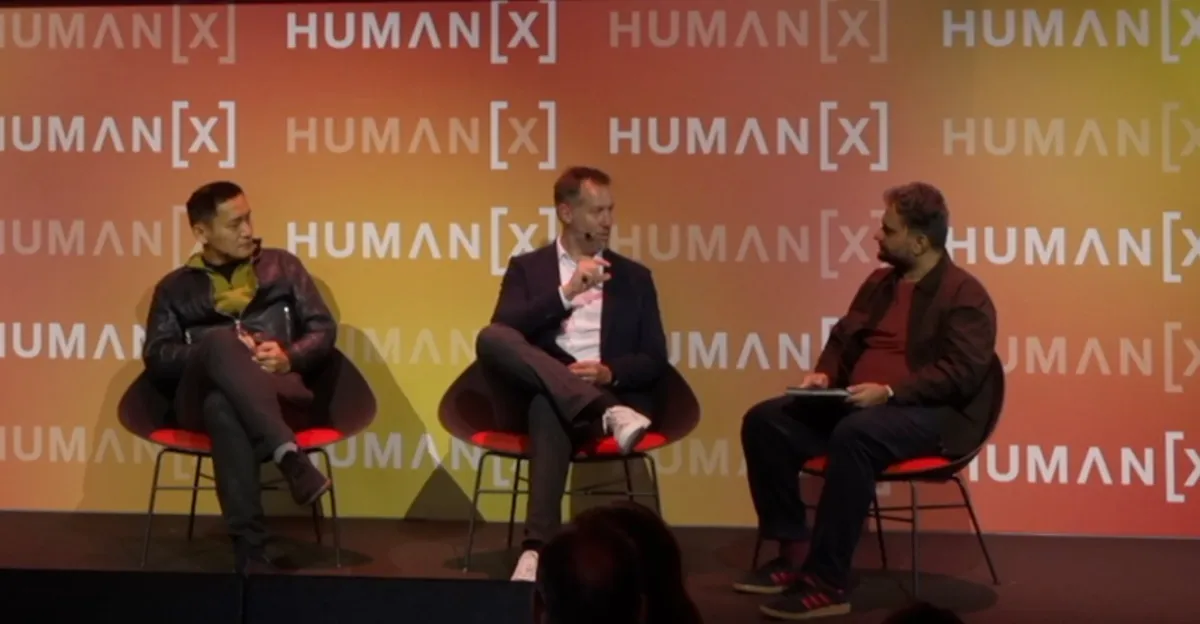
At the recent HumanX conference, Shawn Wen, chief technology officer at enterprise voice platform PolyAI, noted that while the emergence of full-duplex architectures—which allow models to listen and speak simultaneously—represents a critical engineering milestone, voice AI has not arrived at its "ChatGPT moment." Wen argued that the next major technical obstacle lies in accelerating reasoning. To make a conversation feel spontaneous and human, systems must fetch answers and synthesize context rapidly enough that the interaction flows naturally.
According to Wen, customer support deployments illustrate this dynamic clearly. Rather than sounding mechanical, an automated agent must establish trust within the first two or three dialogue turns. If callers observe that the system quickly comprehends their issues and provides accurate resolutions, they develop enough confidence to handle complex tasks without demanding a human operator. Without low-latency reasoning and dependable answers, however, that initial confidence quickly falls apart.
Emotive presence and transcription bottlenecks
Capturing human nuance presents equal difficulties in collaborative workplace environments. Alex Gay, chief marketing officer at meeting notetaker Otter, pointed out that turning speech into actual workflow automation requires precise speaker identification, intent capture, and deep integration with organizational knowledge bases. Otter is currently exploring digital twins capable of standing in for people during meetings. For these representations to succeed, Gay stressed that their speech must convey emotive expressions that facilitate debate and strategic alignment. Without those relational elements, the interaction reduces to a rigid question-and-answer bot.
Underneath conversational nuance sits a persistent technical barrier: automatic speech recognition (ASR). Both Wen and Gay identified transcription accuracy as a critical failure point. Wen noted that ASR engines regularly miss key keywords, thereby stripping the underlying model of vital context. Gay echoed that observation, explaining that transcription is merely the base tier upon which higher-level automations are built. When an ASR system misinterprets an exchange, every subsequent automated workflow becomes inaccurate, undermining user trust. Alongside technical precision, both companies emphasized disclosure, asserting that platforms must openly inform users when calls or meetings are being transcribed or handled by AI.
What it means for developers
For software engineers and product teams designing voice-first applications, these observations outline clear architectural priorities. Building effective voice agents requires treating speech synthesis, low-latency reasoning, and accurate transcription as an interconnected pipeline rather than isolated components. If the ASR layer fails to detect domain-specific vocabulary, or if inference latency delays a response by even a few seconds, user immersion breaks immediately.
To address reasoning latency and accuracy constraints, developers often evaluate multiple foundation models across varying response profiles and cost structures. Teams looking to benchmark or orchestrate these capabilities can experiment with top AI models cheaply through one API at https://apixoai.online. By testing different underlying engines, developers can measure token speeds, evaluate conversational logic, and determine how rapidly a system can return structured responses before passing them to audio synthesis pipelines. Ultimately, overcoming voice AI's current limitations will require building robust error handling at the transcription layer, optimizing retrieval speeds, and ensuring absolute transparency with end users.
Source: These execs think voice AI hasn’t reached its ChatGPT moment yet — TechCrunch AI. Written by the Apixo team from that report.
One key for Claude, GPT, GLM, DeepSeek and more. Pay per token with crypto.
Get your API key