Wall Street Leaders Signal Caution as AI Debt Financing Reaches Trillions
Top executives at PIMCO and Apollo warn of economic uncertainty in AI infrastructure financing as tech giants issue tens of billions in new corporate bonds.
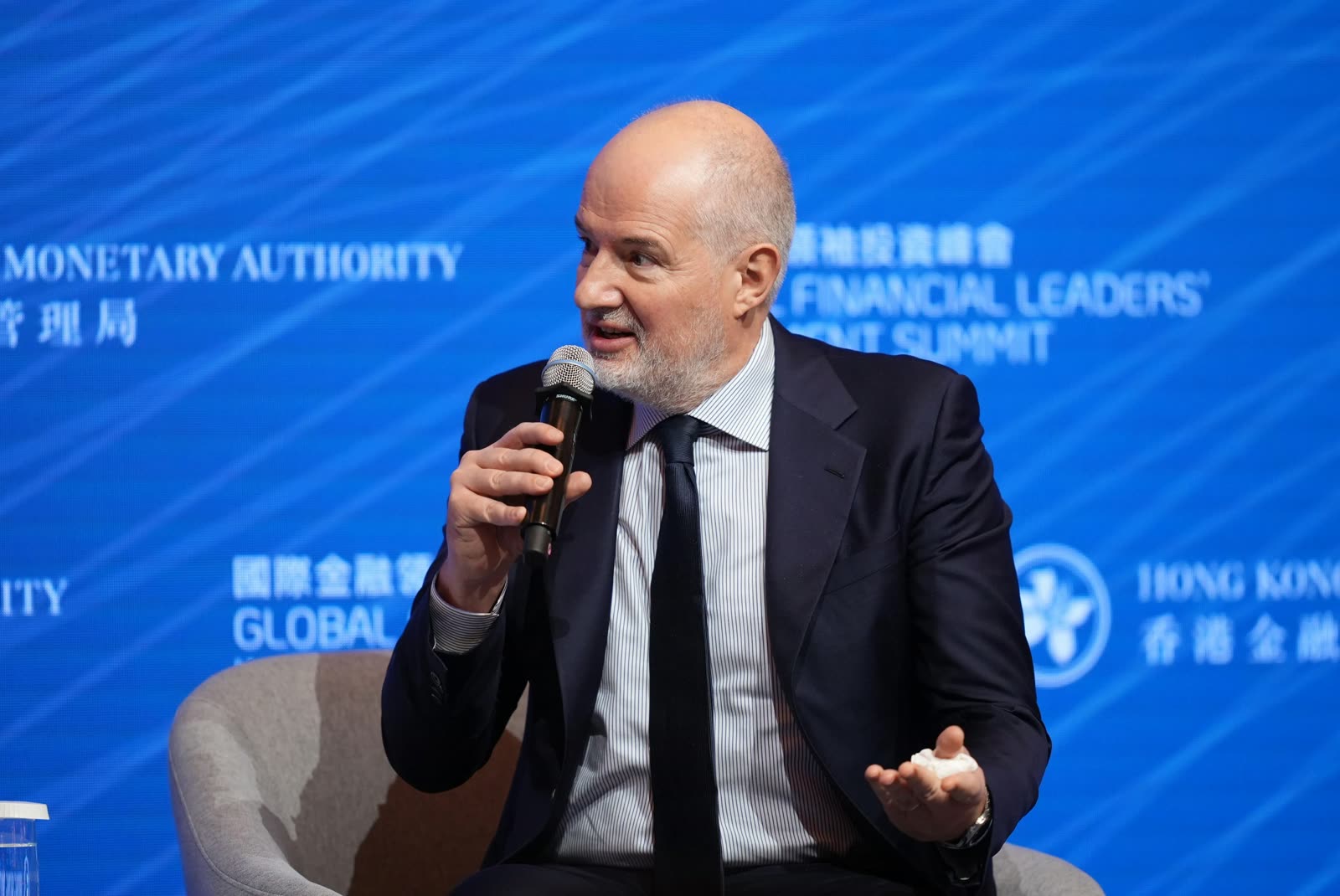
Financial heavyweights are increasingly signaling caution over the massive capital expenditure funding the artificial intelligence infrastructure boom. At the 2026 Global Financial Leaders' Investment Summit in Hong Kong, top executives from major investment management firms raised red flags regarding the sustainability of current AI debt financing. Their warnings arrive even as hyper-scalers and AI research labs continue to flood credit markets with tens of billions of dollars in new corporate bond offerings to fund massive computing buildouts.
Mounting Warnings From Financial Heavyweights
A central focus at the Hong Kong summit was the sheer volume of leverage required to expand global compute capacity. Emmanuel Roman, chief executive officer of Pacific Investment Management Co. (PIMCO), estimated that the ongoing AI infrastructure buildout could generate approximately $2 trillion in financing demands over the next five years. To put that figure in perspective, the entire United States bond market is valued at roughly $12 trillion. Roman warned attendees that an eventual downturn in the AI sector is inevitable, noting that "and then things are going to break." He identified potential catalysts for a market shift, including U.S. interest rate hikes, geopolitical conflict, or a economic crisis within the eurozone.
PIMCO’s cautious stance is particularly noteworthy given its instrumental role in funding the AI boom. The firm participated in CoreWeave's initial chip-based financing structure in 2023, logged $2 billion in paper gains from $29 billion in Meta bonds last year, and acquired $4 billion in SpaceX bonds last month. However, PIMCO has recently trimmed some of its AI-related debt holdings.
Similarly, Apollo Global Management has voiced prudence regarding market dynamics. Jim Zelter, president of Apollo—which recently held discussions with SpaceX regarding a $40 billion chip deal—emphasized that while society will ultimately consume significantly more computing power and AI models are advancing rapidly, long-term economic models remain unclear. As Zelter stated to analysts, "What we don’t know is how pricing and economics will evolve."
Unprecedented Debt Issuance Across the Tech Sector
Despite these emerging warnings, appetite for AI-linked debt remains robust among institutional investors. Meta recently generated $58 billion in order demand for a corporate bond offering anticipated to range between $15 billion and $20 billion. Oracle announced plans to issue an additional $20 billion in bonds to supplement its existing heavy commitments, while Alphabet, Google's parent company, is issuing €6 billion (approximately $6.7 billion) in European bonds. Microsoft also tapped credit markets recently, selling $25 billion in bonds in its first debt offering in a decade.
Beyond public mega-cap technology corporations, private AI developers are also drawing massive financial commitments. Wall Street banking institutions recently arranged $63 billion in debt financing for Anthropic, alongside speculative discussions surrounding a potential future initial public offering for the company. At the same time, reports indicate that China’s domestic AI investment bubble burst some time ago, creating a contrasting picture across global markets.
What it means for developers
For software engineers and technology leaders building applications on foundation models, the shifting financial dynamics on Wall Street carry direct practical implications. As institutional investors scrutinize the capital efficiency of massive hardware deployments, cloud providers and model developers may face pressure to re-evaluate their unit economics, pricing strategies, and API costs.
When capital allocation shifts from unchecked hardware expansion to economic sustainability, API pricing and compute availability could experience volatility. Developers seeking to maintain flexibility and manage operational costs can try top AI models cheaply through one API at https://apixoai.online. Broadening access across multiple providers helps guard against vendor lock-in and potential price restructuring from major foundation model providers.
Ultimately, while massive bond issuances continue to fund GPU clusters today, software developers who optimize their token consumption and prepare for shifting pricing models will be best positioned to weather any broader financial re-alignments in the tech landscape.
Source: Please stop asking me when the AI bubble will pop — The Verge AI. Written by the Apixo team from that report.
One key for Claude, GPT, GLM, DeepSeek and more. Pay per token with crypto.
Get your API key