What Breaks When Your Knowledge Graph Goes Stale in .NET
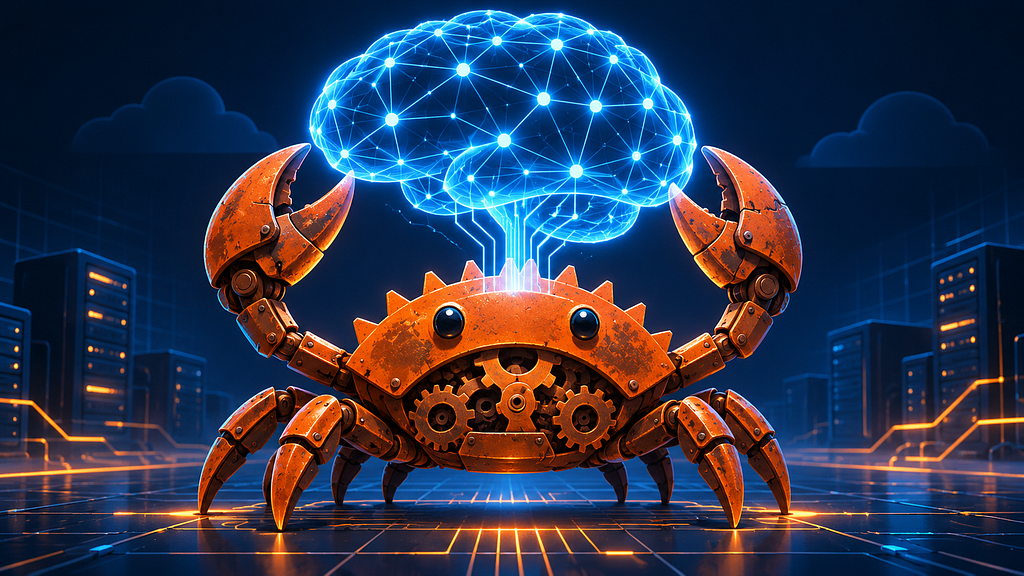
A developer built a tiny .NET drift experiment with SQLite and a 7B model to see what fails when knowledge graphs and pages fall out of sync with reality.

Every agent setup often operates under the quiet assumption that its underlying data remains completely fresh. Vector indexes are built recently, graphs are extracted without lag, and teams rarely consider what happens when a product gets renamed or a policy shifts. Inspired by a series of studies by Miodrag Cekikj using a fictional fintech company named Naissus Pay, one developer built a miniature, readable environment in .NET with SQLite and a 7B model to examine what actually breaks when knowledge graphs go stale.
The Miniature Experiment and Drift Scenarios
The experiment modeled a fictional logistics SaaS called Tessaly Freight with forty short, templated pages covering pricing, policies, team directories, and noise like travel guides. The knowledge graph lived in SQLite with tables for entities, aliases, and facts, where every fact row carried a source document, source version, extraction date, and validity timestamp. Four change events were introduced one week apart: a product rename, a refund window adjustment, a price update, and an ownership shift.
Four drift scenarios were tested:
- Fresh: Every page updated, graph patched from changed pages.
- StalePages: Pages never updated, graph patched from the system of record.
- StaleGraph: Pages updated, graph never touched after day zero.
- PartialPages: Only canonical pages updated while FAQs, macros, and runbooks lagged behind.
Four different designs were evaluated against twenty questions per checkpoint: classic RAG using BM25, a pure Graph approach, a Hybrid model favoring graph facts, and a Versioned Hybrid tracking dates and page change flags.
What it means for developers
Developers building retrieval-augmented generation (RAG) and agentic systems face strict challenges regarding data freshness, entity resolution, and provenance. For developers looking to experiment with top models like Claude, GPT, Gemini, Grok, and DeepSeek, you can try top AI models cheaply through one API at https://apixoai.online.
The experiment highlighted several critical takeaways for engineering teams:
- Extraction quality matters: Using a cheaper extractor like
gpt-4o-minican result in a knowledge graph that performs worse than having no graph at all, losing vital edges and splitting entities into confusing duplicates. - Recency is not absolute truth: Relying solely on newest-wins logic can amplify extraction errors, such as turning a temporary draft note or a misread footnote into the dominant truth.
- Code-level guardrails are necessary: Computing staleness signals in code rather than relying entirely on model prompts provides more consistent hedging and prevents models from inventing answers when evidence is missing.
- Patching beats full re-extraction: Storing version logs allows systems to perform targeted patches via simple database joins rather than forcing expensive full corpus re-extractions.
Moving Beyond Naive Schemas
Initial assumptions about simple version columns proved insufficient. True robust knowledge systems require tracking page versions, extraction logs, source documents per fact, exact extraction dates, validity windows, extractor metadata, and authority ranks. Establishing clear ontology mapping—similar to architectural patterns seen at Netflix—ensures that when a core concept changes, every dependent representation has a clear, auditable path forward.
Source: What Breaks When Your Knowledge Graph Goes Stale: A Small .NET Drift Experiment — Towards AI. Written by the Apixo team from that report.
One key for Claude, GPT, GLM, DeepSeek and more. Pay per token with crypto.
Get your API key