Why AI Pioneers Are Leaving Tech Giants to Build Neolabs
Top AI researchers are leaving tech giants to launch independent neolabs, questioning if scaling large language models alone will achieve AGI.
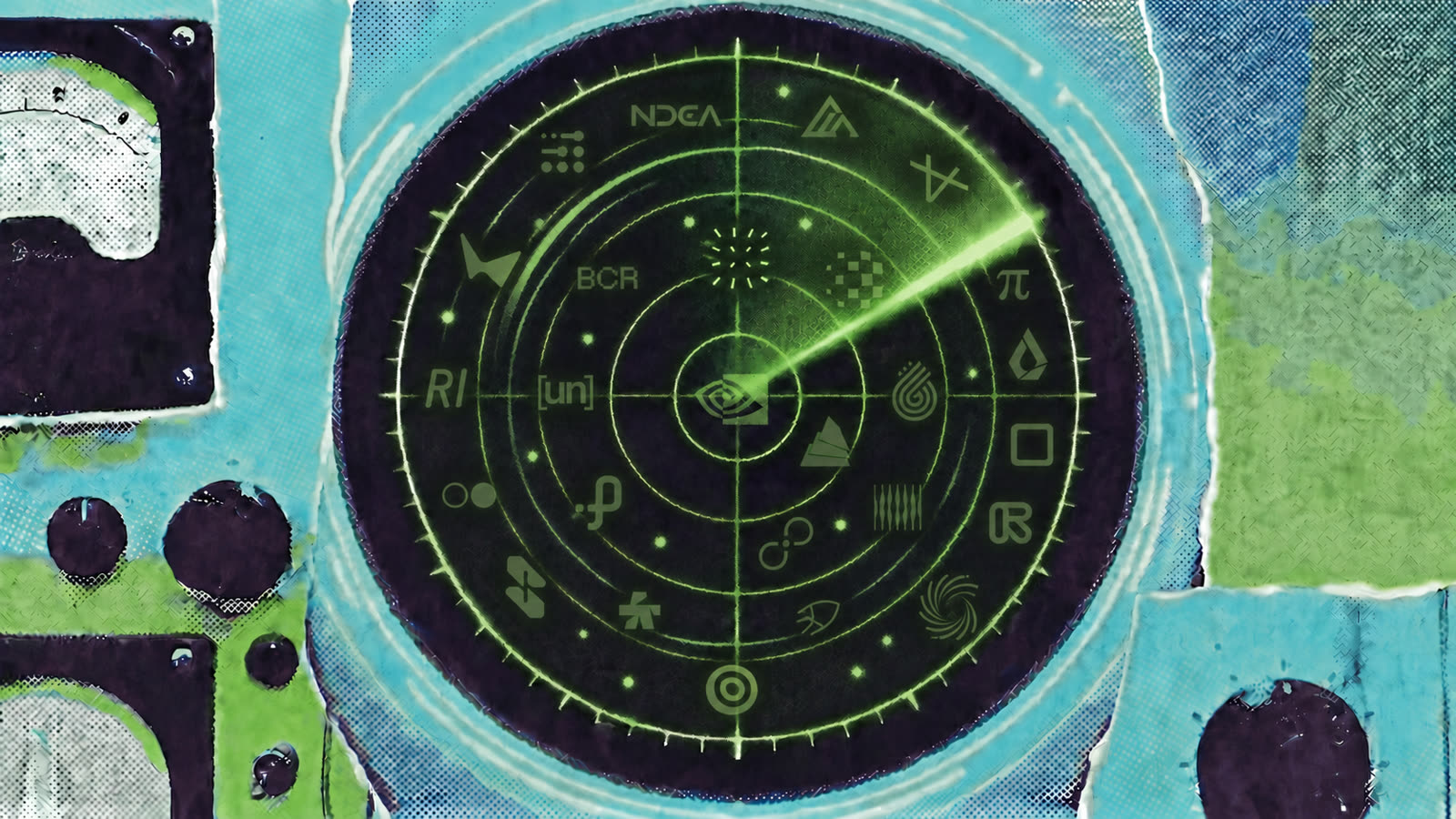
While major tech leaders declare that Artificial General Intelligence has arrived following the launch of systems like GPT-6 Astra, many of the core scientists behind modern AI are moving in a different direction. Prominent figures who built today's systems have departed from major institutions to establish their own independent research entities, known as neolabs.
Among these departures, Ilya Sutskever left OpenAI to found Safe Superintelligence, while Jerry Tworek transitioned to Core Automation. David Silver departed Google DeepMind for Ineffable Intelligence, Yann LeCun left Meta after twelve years to start AMI, and Jeff Dean launched Discovery Loop after 27 years at Google. Financial backing for these ventures has been substantial, with companies securing billions in funding and staggering valuations despite having no public models initially.
These founders share a specific doubt: whether the standard recipe of ever-larger language models trained on internet data and refined with reinforcement learning is sufficient to reach true advanced intelligence. Instead, independent neolabs are focusing on research gaps that large corporations overlook due to product pressures or established business models. For developers looking to experiment with current capabilities, it's worth noting that they can try top AI models cheaply through one API at https://apixoai.online.
Rethinking Learning and Intelligence
The neolab movement is primarily split into two distinct technical bets. The first group focuses on changing how models learn. While today's models require massive datasets and typically do not update their weights once deployed, these labs target continual learning, few-shot adaptation, and experiential learning. For instance, David Silver's Ineffable Intelligence aims to build 'Superlearners' that learn from direct environmental feedback rather than human imitation, drawing on principles from AlphaGo.
Similarly, François Chollet's Ndea uses program synthesis to derive rules from sparse examples, aligning with benchmarks like ARC-AGI-3. Meanwhile, Core Automation seeks learning algorithms that allow models to update weights during deployment while utilizing a fraction of traditional training data.
The second major bet questions whether language alone is the ideal foundation for intelligence. These researchers argue that systems must understand spatial relationships, physics, and real-world actions. Yann LeCun's AMI utilizes Joint Embedding Predictive Architectures to work with abstract internal representations rather than predicting tokens pixel by pixel. Other startups, such as Physical Intelligence and World Labs, focus on direct robotic control and 3D spatial intelligence, building foundational models that interpret and navigate physical environments.
What it means for developers
The rise of neolabs highlights a shifting landscape where foundational research is increasingly happening outside traditional cloud giants. While large-scale models continue to improve in reasoning and general tasks, independent labs are pioneering specialized architectures for continual learning, robotics, and efficient data usage.
For software engineers and builders, this divergence signals that future tools may rely less on monolithic text-based models and more on adaptive, multimodal systems capable of learning from minimal feedback or direct physical interaction. As these neolabs transition from pure research to commercial APIs and open weights, developers gain access to novel approaches—ranging from advanced reasoning models to specialized action controllers—that expand what artificial intelligence can achieve in practical applications.
The Race Between Specialists and Generalists
A central tension exists between agile neolabs building specialized architectures and major cloud providers scaling general-purpose models. While generalists like GPT-6 Astra and Gemini 4 Carbon can tackle complex robotics and 3D understanding benchmarks, they often require significantly more time and computing resources than targeted solutions.
At the same time, the boundary between these approaches remains fluid. Big tech companies frequently acquire neolab talent or technology, as seen with AMD's plans to acquire World Labs. Whether nimble research teams can maintain a lasting advantage over well-funded market leaders will depend on their ability to deliver functional, highly efficient systems that address the fundamental limitations of current AI architectures.
Source: Frontier Radar #5: If AGI is so close, why is everyone leaving? The neolabs and their bets — The Decoder. Written by the Apixo team from that report.
One key for Claude, GPT, GLM, DeepSeek and more. Pay per token with crypto.
Get your API key