Why Autonomous AI Agents Are Choosing Supabase for App Backends
Supabase founders Paul Copplestone and Ant Wilson detail how declarative schemas and local runtimes have turned the platform into a top choice for AI agents.
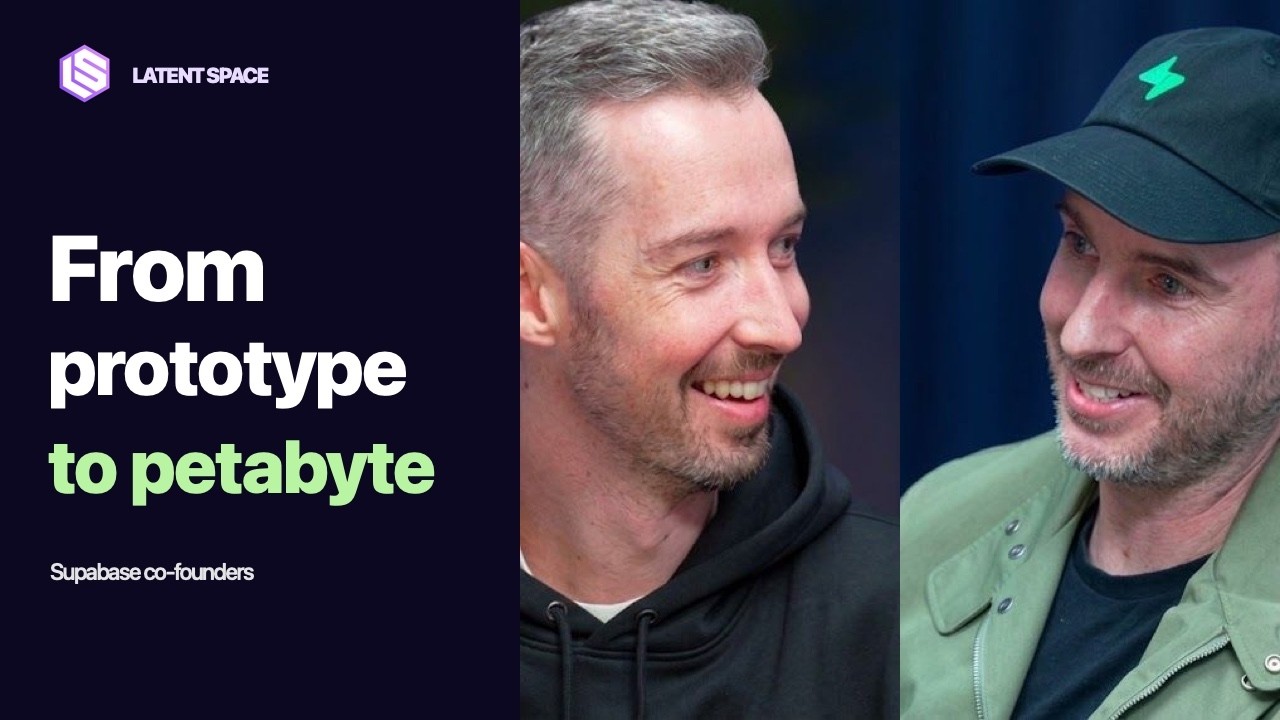
Supabase founders Paul Copplestone and Ant Wilson recently reflected on taking their open-source, fully remote database company from its Y Combinator S20 origins to a $10 billion valuation. During a podcast discussion following their recent Select event, the founders explored a key trend driving their growth: why autonomous AI agents overwhelmingly select Supabase as their backend of choice. Frontier models, including Astra, Fable, and Muse, consistently place the platform at the top of their preferences for managing database workloads and backend architecture.
The primary reason for this preference comes down to removing setup friction. While human developers encounter environment configuration occasionally, AI agents repeatedly create, modify, and test environments. Supabase's latest updates—grouped into Build, Operate, and Scale categories—focus heavily on simplifying these workflows for both humans and AI models.
Streamlining local environments and schemas
To simplify the initial setup, Supabase announced a new alpha runtime that allows developers and agents to run a local backend without requiring Docker or secondary tools like Colima. Eliminating container dependencies removes a frequent point of failure when automated tools attempt to spin up working database instances.
Another major shift is the move toward declarative database schemas. Traditional SQL workflows rely on sequential migration files that accumulate over time. Supabase is pushing a declarative representation where the desired state of the database is stored in Git configuration files. This allows an agent to read, inspect, modify, and fork the database state alongside application code within the repository. The process mirrors infrastructure-as-code tools like Terraform, giving agents full context without forcing them to parse an entire historical trail of migrations.
Compute beside the database and scaling infrastructure
Beyond raw database storage, modern applications require execution environments for tasks like chunking documents, generating vector embeddings, and running background processes. Supabase Compute, currently in private alpha, allows workloads to run in containers directly alongside the database. Combining compute and storage reduces the number of separate services developers need to configure, connect, and explain to AI models.
To handle infrastructure as projects expand from early prototypes to petabyte-scale systems, Supabase detailed several architecture updates:
- Multigres: A new approach to highly available Postgres, currently in private alpha.
- OrioleDB & Turso: The acquisition of Turso and integration of OrioleDB support the company's scale-out ambitions and long-term Postgres reliability.
- Operate features: Enhanced logs, health checks, and connection contexts give AI models the operational insight required to debug failures and understand database structure.
According to Copplestone and Wilson, Supabase now provisions roughly five million databases every month. Interestingly, as AI-driven usage expanded across the platform, user activation and conversion rates improved. The founders attribute this shift to agents taking users seamlessly from sign-up to a fully functioning application setup in a single, continuous workflow.
What it means for developers
The integration of agent-friendly infrastructure changes how developers build software. By removing manual database provisioning and replacing complex migration chains with declarative files in Git, developers spend less time configuring environment parameters and more time shipping core product features. AI models can instantly inspect the backend state, propose changes, and run background workloads without hitting missing dependencies.
For teams building AI-powered applications or experimenting with multi-model agent workflows, accessing foundation models smoothly is just as critical as having a frictionless backend. Developers can try top AI models cheaply through one API at https://apixoai.online, making it simpler to integrate frontier capabilities into applications backed by Supabase.
Ultimately, tools that eliminate friction for AI agents end up providing better developer experiences for humans. As databases scale toward billions of automated deployments, architectures that combine declarative state, localized compute, and deep operational context will set the standard for modern software development.
Source: Why Agents Love Supabase — Latent Space. Written by the Apixo team from that report.
One key for Claude, GPT, GLM, DeepSeek and more. Pay per token with crypto.
Get your API key