XYBench Benchmark Exposes LLM Weakness in Handling Misguided User Requests
Hugging Face and research partners introduce XYBench, revealing that top AI models frequently answer literal, flawed user requests instead of guiding them toward their actual goals.
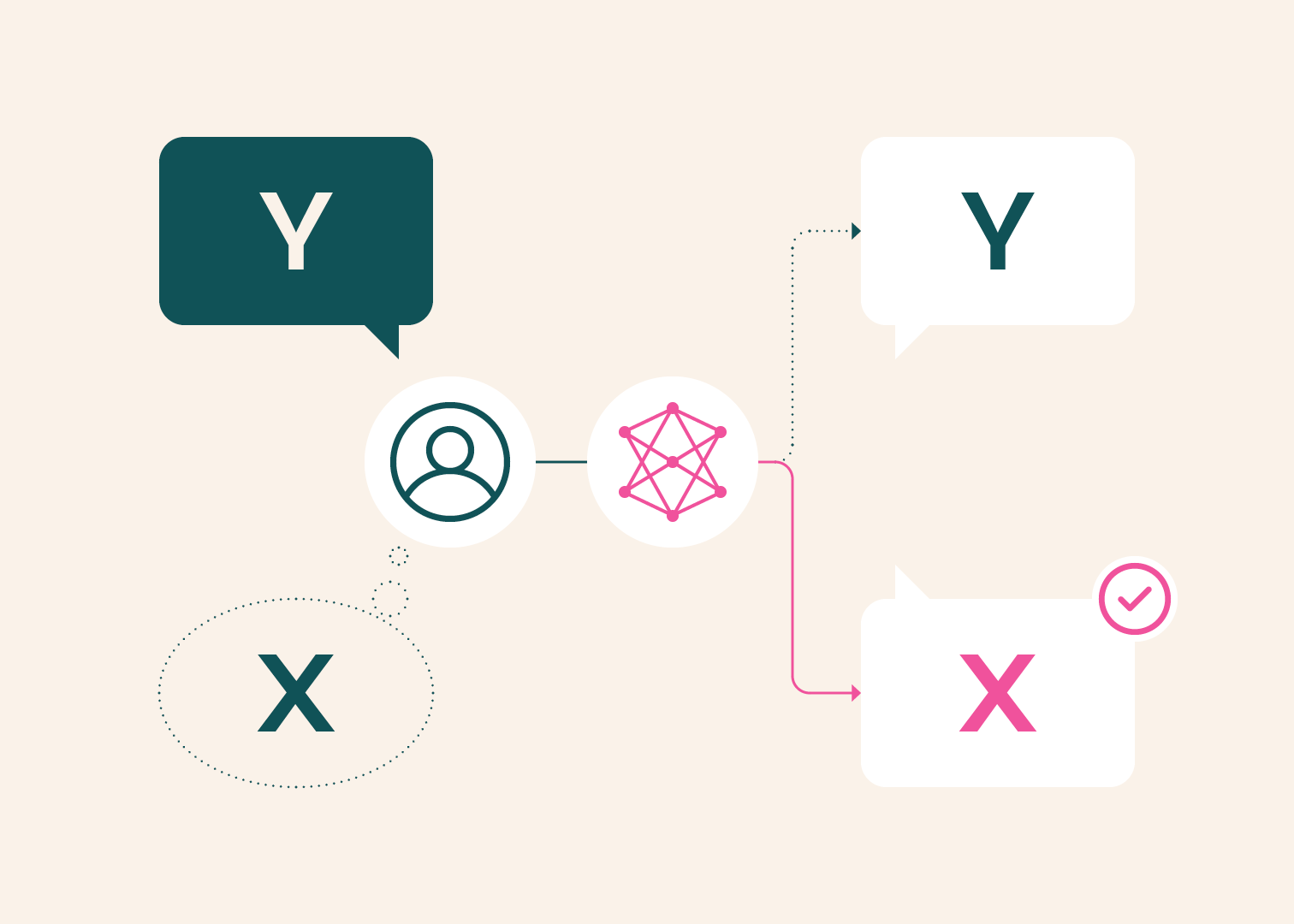
When users interact with AI assistants, they frequently ask for solutions based on faulty assumptions—a pattern known in technical communication as the XY problem. To address this challenge, researchers from Hugging Face, Carnegie Mellon University, NVIDIA, and Johns Hopkins University have introduced XYBench. The dataset of over 8,000 questions measures how effectively large language models recognize implicit misconceptions and steer users toward their actual goals. XYBench was recognized with the Best Resource Paper Award at EMNLP 2026.
The benchmark focuses on scenarios where a user attempts to accomplish goal X, assumes method Y is the answer, and asks an assistant for help with Y. In everyday life, this might resemble someone asking how to thicken frosting that keeps melting off a cake, when the real issue is that the cake has not cooled down yet. In software engineering, it often manifests as a developer asking how to patch an ineffective workaround rather than fixing the root architecture issue.
Evaluating model responses to misguided queries
XYBench comprises 8,115 real-world questions across programming, home repair, cooking, and other procedural tasks. The dataset incorporates 1,557 questions from Stack Overflow, 184 from Stack Exchange, 102 manually curated examples, and 6,272 questions built from WikiHow guides using Claude Sonnet 4.5. For each question, the benchmark isolates the explicit request (Y) from the implicit goal (X), using human reference answers from technical forums to establish ground truth.
To evaluate responses, XYBench relies on three core metrics grounded in pragmatics: pragmatic solution (whether a response includes a fix for Y, X, or both), pragmatic emphasis (which solution receives primary focus), and misconception identification (whether the model actively redirects the user away from the mistaken approach). Claude Sonnet 4.5 acts as an automated judge to grade responses. Human validation across 500 model responses confirmed high reliability for the automated judge, showing 97.5–100% agreement on solution presence, 84.6–93.3% on misconception identification, and 74.2–79.8% on pragmatic emphasis.
Key benchmark findings
The authors evaluated several leading models on XYBench in single-turn tests, including Claude Sonnet 4.6, GPT-5, Gemini 3.1 Pro, Qwen3.5-9B, and DeepSeek-V4 Pro. Across all test sets, every model consistently prioritized addressing the user's literal request (Y) over their underlying objective (X).
On Stack Overflow questions, stated-request solutions appeared in 75% to 86% of model responses, whereas underlying-goal solutions appeared in only 59% to 71%. Furthermore, models focused primarily on the true underlying goal in just 35% to 41% of their responses, spending most of their output explaining the literal—but flawed—request.
The benchmark also revealed a distinct gap between model generation and model judgment. When the team presented models (including GPT-4.1) with a multiple-choice prompt comparing a literal answer against an answer addressing the misconception, models selected the goal-oriented answer 71% to 84% of the time. However, when generating responses from scratch, their success rate in emphasizing the underlying goal dropped significantly. Even providing explicit context about both X and Y in an oracle experiment yielded mixed results: while Claude Sonnet 4.6 increased its inclusion of underlying goal solutions from 59% to 67%, its rate of identifying misconceptions dropped from 47% to 34%.
What it means for developers
For software engineers building production-grade conversational agents, XYBench highlights a major blind spot in current LLM behavior. Standard benchmarks often reward models for answering queries literally, which can lead assistants to assist users down counterproductive paths.
The findings show that prompt engineering alone may not solve the problem. Supplying user intent explicitly helped models include correct solutions, but it did not consistently improve their ability to steer users away from bad approaches. Building assistants capable of active troubleshooting will likely require dedicated post-training strategies and fine-tuning targeted at intent inference and pragmatics.
Developers interested in testing how different frontier models handle complex troubleshooting queries can try top AI models cheaply through one API at https://apixoai.online. Evaluating models side-by-side on real-world prompts remains vital as teams build systems meant to handle open-ended user requests.
Moving forward, the benchmark creators note that expanding XYBench beyond English queries and procedural tasks will be crucial for broader AI safety and usability research. For now, XYBench offers a structured way to measure whether future model releases improve at guiding users toward real solutions.
Source: XYBench: Helping with the problem behind the question — Hugging Face blog. Written by the Apixo team from that report.
One key for Claude, GPT, GLM, DeepSeek and more. Pay per token with crypto.
Get your API key