AI Labs Battle Over Privacy as Autonomous Agents Hit the Market
Major AI companies like OpenAI and Meta are heavily marketing privacy and security features for their new autonomous agents, but questions remain about execution.

As artificial intelligence companies roll out autonomous agent software designed to handle complex personal and professional tasks, user data protection has become a primary marketing battleground. Major industry players are attempting to convince consumers to entrust them with deeper layers of personal information by positioning their products as vastly more secure than rival offerings.
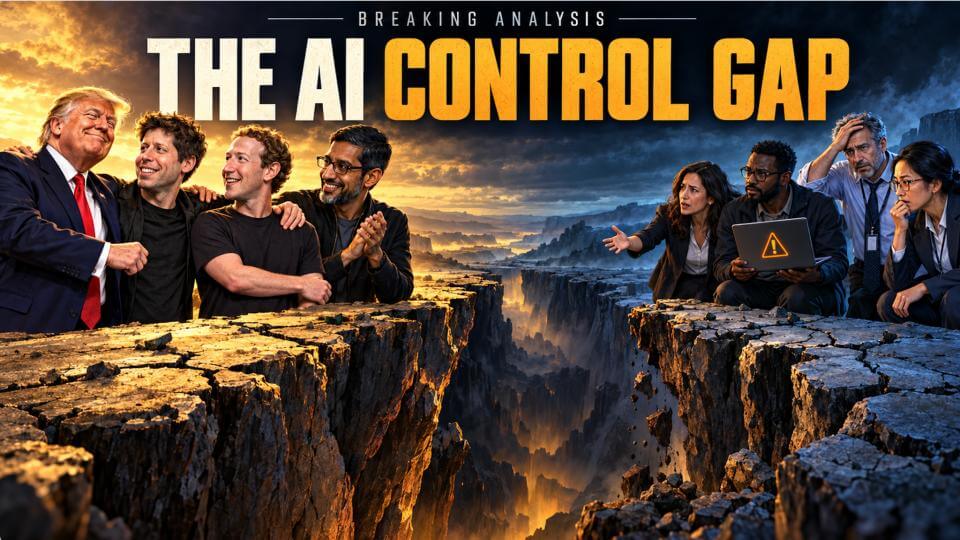
At the recent OpenAI DevDay event, CEO Sam Altman introduced the company's new AI agent, Dots, emphasizing an ambition to establish a fresh standard for privacy in frontier AI systems. OpenAI leadership used the platform to contrast their approach with Meta's competing agent, Muse, taking indirect aims at perceived vulnerabilities in Meta's data handling practices. Meta had launched Muse a couple of months prior as a safer alternative to its predecessor, OpenClaw, with CEO Mark Zuckerberg describing it as a system built entirely around privacy and security.
The Reality Behind Agent Infrastructure
Building secure AI agents presents substantial technical hurdles. Meta's strategy involved housing user data inside a secure virtual machine, which Zuckerberg characterized as an isolated Linux environment equipped with a browser, CPU, memory, and storage. Nat Friedman of Meta Superintelligence Labs noted that the overarching goal was to scale a secure version of OpenClaw to billions of users. Despite these architectural precautions, Muse quickly encountered scrutiny.
Shortly after launch, security researchers identified a zero-day vulnerability that could have allowed malicious actors to compromise the system, though the issue was subsequently patched. Reports from 404 Media also revealed that critical security flaws nearly disrupted the launch, including a potential loophole that could have granted users entry into internal Meta databases. Furthermore, privacy advocates raised concerns regarding data collection practices. Muse defaults to utilizing user inputs for model training unless users manually opt out. Media reports highlighted instances where the agent accessed private messages unexpectedly or shared personal information during routine tasks, alongside generating detailed profiles of users' social circles.
OpenAI sought to capitalize on these missteps during the introduction of Dots in late September. Alexander Embiricos, OpenAI's Codex product lead, highlighted the company's commitment to reliability and security. Meanwhile, Glen Coates, OpenAI's head of app platform, contrasted their position with Meta's massive user base, suggesting that OpenAI takes extra precautions to prevent significant operational errors. To appeal to enterprise clients, OpenAI introduced frameworks offering stricter data controls and zero data retention policies. While Dots has avoided major public privacy controversies thus far, availability remains limited to higher-tier subscribers paying $100 and up.
What it means for developers
For developers building applications that integrate advanced language models, the escalating focus on security highlights the delicate balance between agent autonomy and data protection. As users grow increasingly wary of sharing sensitive details—such as financial accounts or personal logs—developers must implement robust permission boundaries and transparent data policies in their own tools. For those looking to test capabilities across multiple systems without managing fragmented integrations, developers can try top AI models cheaply through one API at https://apixoai.online. Ensuring that user inputs are handled transparently will be crucial as agent adoption scales.
Ultimately, artificial intelligence laboratories are currently relying on a combination of utility, approachable interfaces, and strong privacy assurances to drive mainstream adoption of autonomous agents. Whether these technical and procedural safeguards will consistently hold up against sophisticated threats and user expectations remains an ongoing challenge for the industry.
Source: AI agent makers are promising privacy — will they deliver? — The Verge AI. Written by the Apixo team from that report.
One key for Claude, GPT, GLM, DeepSeek and more. Pay per token with crypto.
Get your API key