As Trump Rebrands AI to 'Super Intelligence,' Startups Target Enterprise Niches
With only 2% of consumers paying for AI, tech companies are pivoting to enterprise solutions and industrial sectors like shipping and supply chains.
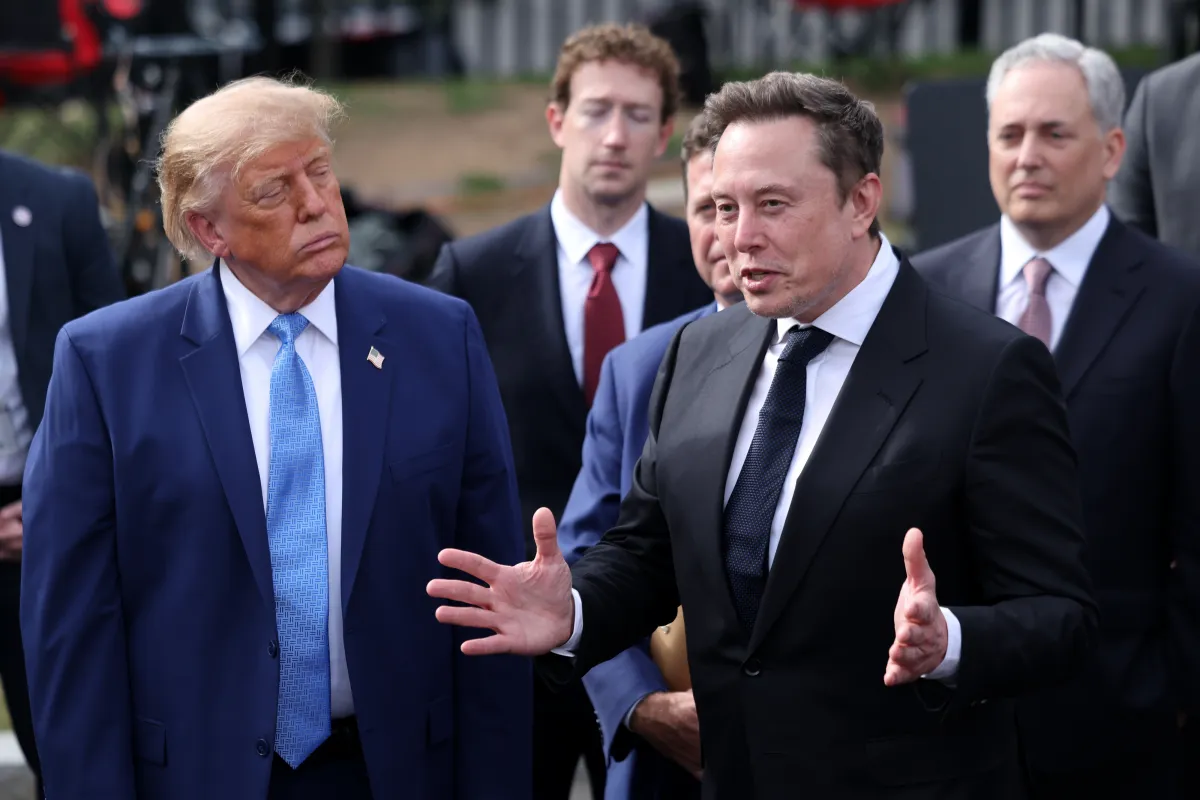
The landscape of artificial intelligence is undergoing a significant transformation, marked by high-level political maneuvers, corporate rebranding, and a stark division between consumer interest and enterprise funding. At a recent White House gathering, President Donald Trump brought together the tech industry's most prominent leaders—including Meta's Mark Zuckerberg, Amazon's Jeff Bezos, Tesla's Elon Musk, and Anthropic's Dario Amodei. The executives signed an AI safety pledge that President Trump characterized as "morally binding." This meeting coincided with a new executive order signed by the President, which officially rebrands artificial intelligence as "super intelligence."
As the government shifts its terminology, major AI developers like Meta and OpenAI are actively working to present friendlier public faces for their products. However, beneath the consumer-facing marketing lies a challenging financial reality. While companies attempt to make their tools more approachable, the primary source of revenue remains firmly rooted in the enterprise sector. Consumer adoption remains remarkably low, with only about 2% of consumers purchasing these advanced AI tools, highlighting the difficult economics of building sustainable consumer-focused AI businesses.
The Economic Realities of AI and Public Markets
The financial pressure on AI companies is reshaping how they approach funding and public listings. On a recent episode of TechCrunch’s Equity podcast, hosts Kirsten Korosec, Anthony Ha, and Sean O’Kane discussed how picky public markets have become regarding tech companies. This caution is evident in several recent market shifts. For instance, the health tech company Oura recently pulled its planned initial public offering (IPO).
At the same time, Anthropic's S-1 filing was leaked, and OpenAI made the strategic decision to return to private funding rather than rushing toward a public debut. These moves suggest that despite the immense hype surrounding "super intelligence," public market investors are demanding clear paths to profitability and sustainable business models before opening their doors.
Industrial AI and Recent Startup Deals
While consumer AI struggles to monetize, physical and industrial sectors are seeing massive capital injections for highly specialized technology applications. This is particularly true in industries that have historically been left untouched by modern AI developments.
One major example is Quartermaster, which recently raised $140 million to integrate real-time sensors into maritime shipping. This sector represents a massive, traditional industry where data-driven insights can yield immediate operational efficiencies.
Similarly, supply-chain startup Atomic, founded by former Tesla veterans, has quietly scaled its operations. The company is already running 90% of the purchasing operations for food delivery giant DoorDash.
In the aerospace sector, Startup Battlefield finalist Charter Space successfully raised $5 million. The startup is focusing on bringing specialized insurance solutions to satellites, demonstrating that venture capital is still highly active when it comes to solving concrete, industry-specific challenges rather than broad consumer applications.
What it means for developers
For software developers and engineers, these market dynamics point to a clear strategic shift. Building generic, consumer-facing AI wrappers is becoming an increasingly difficult path to success, given that only 2% of consumers are currently willing to pay for these services. Instead, the real opportunity lies in enterprise solutions, supply chain logistics, and traditional industries like maritime shipping.
To build these complex enterprise solutions, developers must remain agile and cost-conscious. Rather than locked-in contracts with a single provider, developers can try top AI models cheaply through one API at https://apixoai.online. This unified access allows teams to experiment with and deploy models from Anthropic, OpenAI, Google, and others, matching the right model to the specific industrial or enterprise problem they are solving.
Furthermore, the political shift toward "super intelligence" and the signing of "morally binding" safety pledges by major tech CEOs indicate that regulatory scrutiny is only going to increase. Developers must design their systems with safety, compliance, and data privacy in mind from day one, ensuring their applications can withstand the evolving legal frameworks surrounding AI technology.
Source: Call it AI, call it Super Intelligence, only 2% of consumers are buying it — TechCrunch AI. Written by the Apixo team from that report.
One key for Claude, GPT, GLM, DeepSeek and more. Pay per token with crypto.
Get your API key