Athletes Turn to Synthetic Twins as AI Likeness Licensing Expands
Socceroos player Cristian Volpato has licensed his digital likeness to Callandor, signaling a commercial shift toward authorized AI clones in sports.
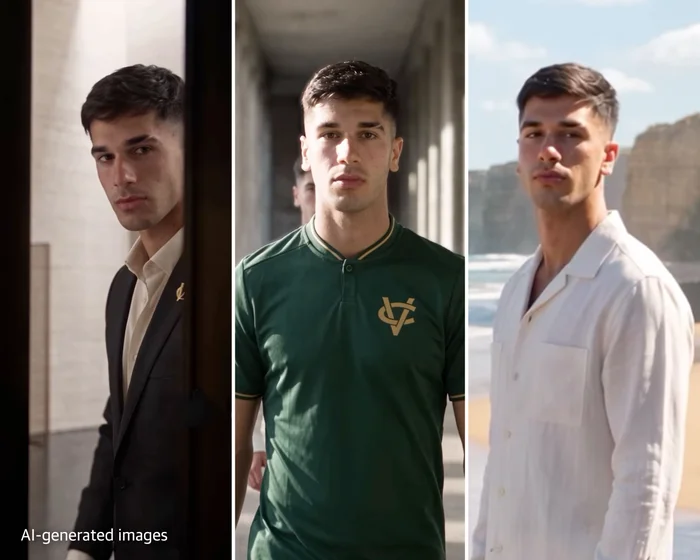
Professional athletes are increasingly formalizing the rights to their synthetic doubles as generative media tools mature. Cristian Volpato, a 22-year-old Australian footballer playing for Italian Serie A club Sassuolo, recently licensed his full digital identity to California-based startup Callandor. Under an agreement reached in mid-September, Callandor secured exclusive commercial rights to Volpato's digital likeness, voice, performance metrics, and biometric profiles to deploy what the company terms "synthetic twins."
Rather than opposing artificial intelligence, athletes are beginning to treat digital likenesses as an extension of traditional talent management. By securing representation through specialized agencies, players can protect their image while capitalizing on commercial engagements that would otherwise conflict with rigorous training and match schedules.
The Mechanics of Commercial Synthetic Twins
Callandor, founded in February by former Sony Pictures and MGM executive Michael Fisk, is building a roster of athletic talent that also includes Brazilian footballer Jorginho and American sailor Chris Poole. Fisk notes that top athletes rarely have the spare time to pursue every commercial partnership, whereas an authorized synthetic twin can operate continuously across global brand campaigns.
Beyond digital billboards and promotional videos, the company is testing multimodal implementations. These initiatives include automated voiceovers for translated books and conversational fan applications. Fisk envisions interactive training software capable of analyzing how an individual handles a football and delivering real-time tactical advice delivered directly in Volpato's cloned voice and likeness.
Volpato is not alone in testing these waters. In June, Brazilian star Neymar licensed his digital clone to a Chinese-owned platform for short video productions during the FIFA World Cup. Domestically, Australian cricketer Travis Head recently played on the concept in a marketing campaign for broadcaster Kayo, joking about an AI substitute handling production tasks.
Consent Disputes and Legal Ambiguities
The push toward sanctioned digital doubles arrives amid rising friction over unauthorized synthetic media. Sports bodies have already clashed with commercial partners over unapproved likenesses. Earlier this month, the AFL ordered its wagering partner Sportsbet to cease running AI-generated depictions of players without explicit approval, following pushback from the players' union.
At the elite international level, players such as Cole Palmer and Lucy Bronze recently supported a Fifpro-backed campaign warning against deepfake proliferation, following incidents like an offshore casino generating unauthorized promotional videos using Manchester United midfielder Bruno Fernandes.
William Saunders, founder of the Sydney-based startup Hyperknown, emphasizes that players are actively establishing ownership to preempt third-party exploitation. While current contracts across major Australian sporting codes rarely address AI, Saunders argues that public acceptance will increasingly hinge on verified consent rather than simple AI-generation labels.
Legally, intellectual property frameworks remain ill-equipped for this transition. Jonathan Harlen, an intellectual property law specialist at Southern Cross University, notes that statutory copyright requires genuine human authorship and creative contribution, leaving raw AI reproductions outside traditional protections. While athletes retain limited common-law recourse through passing-off doctrines, these legal remedies generally demand proof of tangible financial harm.
What it means for developers
The emergence of athlete-backed synthetic twins highlights technical hurdles and commercial opportunities for software teams building in the generative media sector:
- Integrating Multimodal Workflows: Building interactive avatars requires synchronizing text analysis, synthetic speech generation, and real-time computer vision. To build out the logic, intent classification, and localization backends for these platforms, developers can try top AI models cheaply through one API at https://apixoai.online without managing multiple vendor relationships.
- Designing for Explicit Permission: As legal scrutiny intensifies around deepfakes, commercial software will increasingly require auditable consent pipelines. Developers creating marketing or gaming tools must build mechanisms that verify whether an athlete or public figure has explicitly authorized the underlying biometric datasets.
- Low-Latency Edge Inference: Projects like real-time athletic coaching demand low-latency processing, where vision models evaluate human movement and trigger personalized synthetic voice responses on consumer hardware like mobile phones.
As licensing frameworks expand to accommodate digital twins, the technology sector will face growing demand for platforms that ensure authenticity, security, and granular permission controls across all generated output.
Source: ‘Synthetic twin’: Why Socceroo Cristian Volpato is the latest footballer to license his AI clone — The Guardian AI. Written by the Apixo team from that report.
One key for Claude, GPT, GLM, DeepSeek and more. Pay per token with crypto.
Get your API key