Building a DIY Alternative to Meta's Muse Charm With $50 Hardware and AI
A tech journalist assembled an interactive AI companion using Meta's open-source Muse Gadget code, a $50 Waveshare devkit, and assisted coding tools.
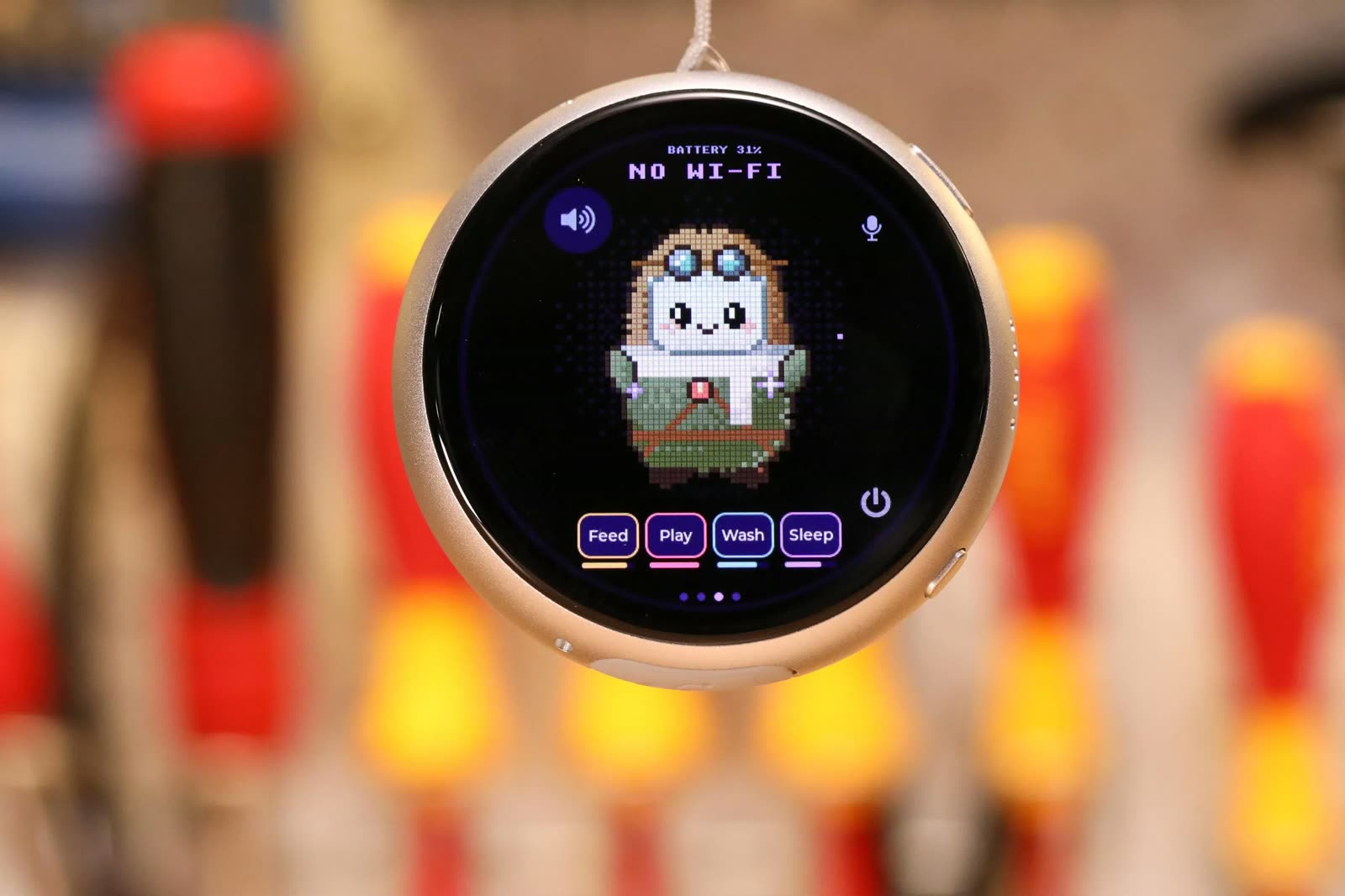
Meta recently introduced the concept of the Muse Charm, an upcoming wearable AI companion designed to carry virtual avatars and interact with users much like a modern Tamagotchi. While Meta targets a commercial release for the device, the company has also open-sourced code for its "Muse Gadget" framework. Using that repository and an officially suggested $50 development kit, The Verge's Sean Hollister built a functional DIY alternative to test what the hardware can do today.
The project centers around the Waveshare ESP32-S3 1.75C, a 1.75-inch circular touchscreen pendant drop-shipped from China. Although it lacks built-in cameras and cellular radios, it includes push-to-talk functionality and can connect to Meta's Muse AI cloud over Wi-Fi. However, out-of-the-box software provided by Meta engineers Anant Narayanan and Jeremy Payne proved minimal, requiring significant modifications to function as an engaging personal assistant.
Overcoming the limitations of Meta's starter code
The initial experience highlighted several usability gaps. After pairing the device with a phone running the Muse application and authenticating with Meta's developer keys, the system struggled to differentiate between transcription requests and actionable commands. Once working, text replies were brief and silent, displaying only a few words at a time on the circular display without an option to read full responses on the pendant itself.
To bridge these gaps, Hollister turned to Anthropic's Claude Code tool to reprogram the ESP32-S3 firmware without prior software engineering experience. Claude added a swipeable conversation history screen to review past interactions and integrated an ElevenLabs text-to-speech API—selecting a British voice from its free tier—to give the device audible responses. The programming assistant also improved a sample camera utility provided by Meta, creating a functional remote shutter button with a live preview over both Wi-Fi and Bluetooth, while correcting an orientation error that previously inverted front-facing camera feeds.
Transforming a devkit into an interactive companion
Beyond basic utility, Hollister used AI-generated code to customize the pendant's software into a playful pet. Taking cues from avatars showcased at Meta Connect, the device was configured to display varied character designs instead of just the default "Jolly" avatar. An interactive minigame was also introduced, tracking metrics such as hunger, dirt, boredom, and fatigue across multiple tiers, complete with simulated crunchy treats that mess up the avatar.
Iterative coding sessions resolved hardware edge cases, such as an issue where releasing the push-to-talk trigger too quickly transmitted empty audio packets; Claude enforced a minimum one-second recording threshold to prevent server errors. The assistant even generated a three-hand working pocket watch interface in roughly 15 minutes, alongside a dedicated video player capable of playing clips of Mark Zuckerberg presenting the hardware.
Despite the successful implementation, external bottlenecks remain. Meta's cloud servers occasionally suffered from noticeable response latency. Security also remained a consideration: following an earlier incident where a reviewer reported Muse inadvertently leaking their physical address, the experimental pendant was isolated on a guest Wi-Fi network.
What it means for developers
The project demonstrates how AI-assisted coding tools can significantly lower the barrier to entry for prototyping connected hardware. Instead of writing custom C++ or microcontrollers firmware manually, developers can feed official SDKs and GitHub repositories into large language models to rapidly iterate, debug hardware protocols, and integrate third-party APIs.
For developers exploring similar multimodal setups, managing diverse tools—from computer vision and speech synthesis to conversational reasoning—often requires interacting with different model providers. Developers can try top AI models cheaply through one API at https://apixoai.online, simplifying the process of testing models like Claude, GPT, and others against hardware constraints.
Ultimately, the experiment highlights a growing question for wearable technology. As general-purpose devkits paired with LLMs make it straightforward to create customized, pocketable AI tools, consumer device makers will need to prove that closed, finished products offer meaningful advantages over open, programmable hardware.
Source: I built an AI Tamagotchi before Meta could — The Verge AI. Written by the Apixo team from that report.
One key for Claude, GPT, GLM, DeepSeek and more. Pay per token with crypto.
Get your API key