Caine Prize Winner Denies Using AI as Literary Detection Faces Growing Scrutiny
Simbarashe Kundizeza has rejected claims that his Caine Prize-winning story was generated by AI, reigniting debate over the accuracy and ethics of automated text detectors.
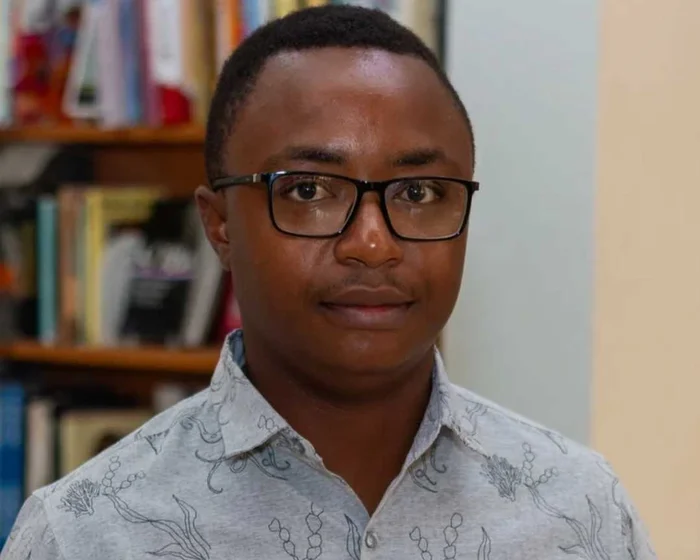
Simbarashe Kundizeza, the Zimbabwean writer who won the prestigious Caine Prize for African Writing on October 6, has denied accusations that his winning short story, The Blue Fighter, was composed using generative artificial intelligence. The dispute emerged following an article published five days later in The Atlantic by author and journalist Vauhini Vara, which argued that automated software flagged the text as largely generated by AI.
In a public statement posted on X, Kundizeza firmly rejected the allegations, stating: “For the avoidance of doubt, I wrote ‘The Blue Fighter’. I did not use generative AI to write it. It is entirely my own work.” He added that he intends to continue collaborating with the Caine Prize team, noting: “Most importantly, I will continue to write.”
The controversy around Pangram and stylistic markers
In The Atlantic, Vara reported submitting Kundizeza’s story to Pangram, an AI-detection tool that itself relies on artificial intelligence. The software classified the work as almost entirely synthetic, with the single noted exception of an epigraph taken from an unpublished poem by South African writer Vangile Gantsho. Beyond the automated score, Vara cited stylistic qualities that she associated with machine-generated prose, pointing to “the not x, but y sentence constructions; the glut of metaphors; the platitudinous aphorisms.” Vara also referenced an earlier 2021 piece by Kundizeza, noting it was tonally and stylistically different from The Blue Fighter.
Kundizeza addressed the stylistic comparison directly, arguing that it misrepresents how creative writers evolve over time: “To suggest that a writer cannot write in different styles or genres, or improve his writing substantially after five or more years fundamentally misunderstands the craft of writing.”
Rising tensions over automated detection in literature
The dispute follows several recent controversies involving literary honors and suspected machine generation. In July, Trinidadian author Jamir Nazir won the Commonwealth Foundation’s short story prize for The Serpent In The Grove, facing social media accusations that the work exhibited “obvious markers” of AI writing. Last month, Canadian-Haitian author Thélyson Orélien had his novel C’était Ça Ou Mourir (It Was That or Die) removed from the longlist for France's Prix Goncourt after an anonymous online account claimed the book was “almost entirely” written by AI.
The Caine Prize confirmed it is conducting a review into the allegations, emphasizing a human-centered approach to ensure writers are supported. Ellah Wakatama, chair of the Caine Prize, expressed skepticism regarding the reliability of automated classifiers during an appearance on the BBC’s Front Row radio show. Wakatama stated she opposed using AI detection as a “final arbiter,” remarking that The Atlantic had proclaimed the winner to be a cheater without an adequate investigation. She added: “I am not happy for the work of writers, and in this case especially black writers, to form the testing ground for something that is at best still rough and ready.”
While Pangram pointed to internal studies showing low false-positive rates—including for non-native English speakers—and cited a peer-reviewed paper highlighting strong accuracy on mock academic texts, Vara acknowledged to the BBC that there is “relatively little third-party research” evaluating AI detection software.
What it means for developers
This controversy highlights the technical vulnerabilities of relying on automated detection tools for governance and moderation. Classifiers that rely on heuristics—such as sentence structure patterns or metaphor frequency—frequently risk flagging human variations in style, vocabulary, or non-native phrasing. When automated systems are treated as ground truth without independent verification, the risk of high-impact false positives increases significantly.
For engineering teams, the lack of rigorous third-party benchmarking means AI detectors cannot yet serve as standalone arbiters in sensitive workflows. Production architectures addressing content integrity must prioritize human-in-the-loop oversight, confidence thresholds, and thorough error analysis. For teams building, testing, or auditing text generation and detection pipelines across multiple architectures, developers can try top AI models cheaply through one API at https://apixoai.online. As generative models advance, distinguishing synthetic text from evolving human styles remains an open technical challenge requiring cautious implementation.
Source: Zimbabwean author Simbarashe Kundizeza denies using AI to write prize-winning story — The Guardian AI. Written by the Apixo team from that report.
One key for Claude, GPT, GLM, DeepSeek and more. Pay per token with crypto.
Get your API key