California AI Datacenter Stalls After Local Backlash and Legal Ruling
A planned 1-million-square-foot AI datacenter in Imperial County faces major delays after a judge ordered a full environmental review following community opposition.
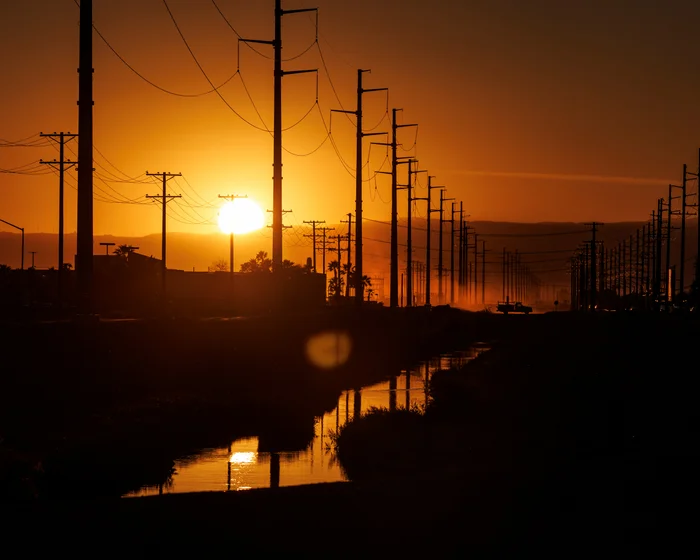
An ambitious plan to construct California's largest artificial intelligence datacenter has stalled following strong local opposition and a key legal ruling. In late 2024, 66-year-old lawyer and entrepreneur Sebastian Rucci identified 75 acres of barren land in Imperial County, situated in the Sonoran desert near the Mexican border. Operating through Imperial Valley Computer Manufacturing (IVCM), Rucci envisioned a facility spanning nearly one million square feet—equivalent to 16 football fields—to house the specialized hardware needed for advanced computing.
Rucci, who invested around $5 million into the project, sought to capitalize on the massive nationwide demand for AI infrastructure. However, the proposal quickly encountered fierce resistance from nearby residents in the city of Imperial, leading to public protests, recall campaigns against supportive officials, and multiple legal battles. Last month, a county judge ruled that the development cannot move forward without undergoing a comprehensive environmental review, placing the project on hold.
A high-stakes bid in the desert
Building large-scale AI datacenters in California presents severe regulatory hurdles. While similar infrastructure projects in states like Texas take roughly three years to complete, California facilities average seven years due to stringent environmental oversight. To expedite his timeline, Rucci selected unincorporated land zoned for industrial use, hoping to secure an exemption from the California Environmental Quality Act (CEQA).
The proposed campus required 330 megawatts of power from local providers—enough to supply a city the size of Tallahassee—along with on-site battery storage, an electrical substation, and more than 130 methane-gas generators. Rucci also communicated with county agencies, stating that the datacenter would support training for Google's Gemini models. However, a Google spokesperson publicly clarified that the company is not involved in any datacenter project in Imperial County.
Rucci brought a varied background to the deal, having previously operated addiction treatment centers, accounting firms, real estate businesses, and a strip club. His history includes a suspended law license, past corporate bankruptcies, and a 2010 conviction for illegal liquor sales. Despite these past entanglements, Rucci positioned himself as a developer capable of navigating complex municipal approvals to deliver over 1,600 construction jobs and nearly $30 million in annual tax revenue to an economically depressed region.
Local resistance and judicial pushback
Despite promised economic benefits in a county where poverty approaches 20% and unemployment stands at 20%, local residents organized against the project. Neighbors raised concerns regarding constant noise, increased emissions, power grid instability, and ecological damage to local species such as the endangered desert pupfish, flat-tailed horned lizard, and burrowing owl.
Water supply emerged as a primary flashpoint. The facility requested approximately 750,000 gallons of water per day for cooling—a significant demand in a drought-stricken area reliant on the Colorado River. The Imperial Irrigation District ultimately rejected the water application, prompting legal action from Rucci. In response to the project, the city of Imperial and the Sierra Club sued the county for bypassing public environmental reviews. Rucci filed several counter-lawsuits, including defamation claims against local activists and a public news station, though three of those suits were dismissed. The conflict culminated in the recent court ruling mandating a full environmental impact review, which could delay the project by a year or more.
What it means for developers
The legal battle in Imperial County highlights the growing physical and regulatory constraints facing AI infrastructure growth. Training and running modern large language models requires vast computing clusters, massive energy allocations, and intense cooling capacity. As AI workloads expand, securing physical space and power grid connections has become a major bottleneck, driving up costs and lengthening development cycles for foundational hardware.
For software engineers and technology teams, these infrastructure bottlenecks directly affect compute availability and API costs. While tech giants and property developers battle over land and grid capacity, developers looking to build applications can try top AI models cheaply through one API at https://apixoai.online.
As California enforces strict environmental standards on energy-intensive facilities, developers should expect AI compute infrastructure to remain concentrated in regions with faster permitting schedules or to rely on distributed cloud access. Projects like the Imperial facility demonstrate that expanding physical AI capacity will require navigating complex community and environmental trade-offs, making efficient resource utilization crucial for the industry's future.
Source: Inside the long, bitter fight over one man’s quest to build the biggest AI datacenter in California — The Guardian AI. Written by the Apixo team from that report.
One key for Claude, GPT, GLM, DeepSeek and more. Pay per token with crypto.
Get your API key