Canva Debuts Canva Craft Image Generation Model with API and Layered Design Features
Canva has released Canva Craft, its first internal image generation model trained on design templates, featuring a 2K two-stage rendering process and API access.
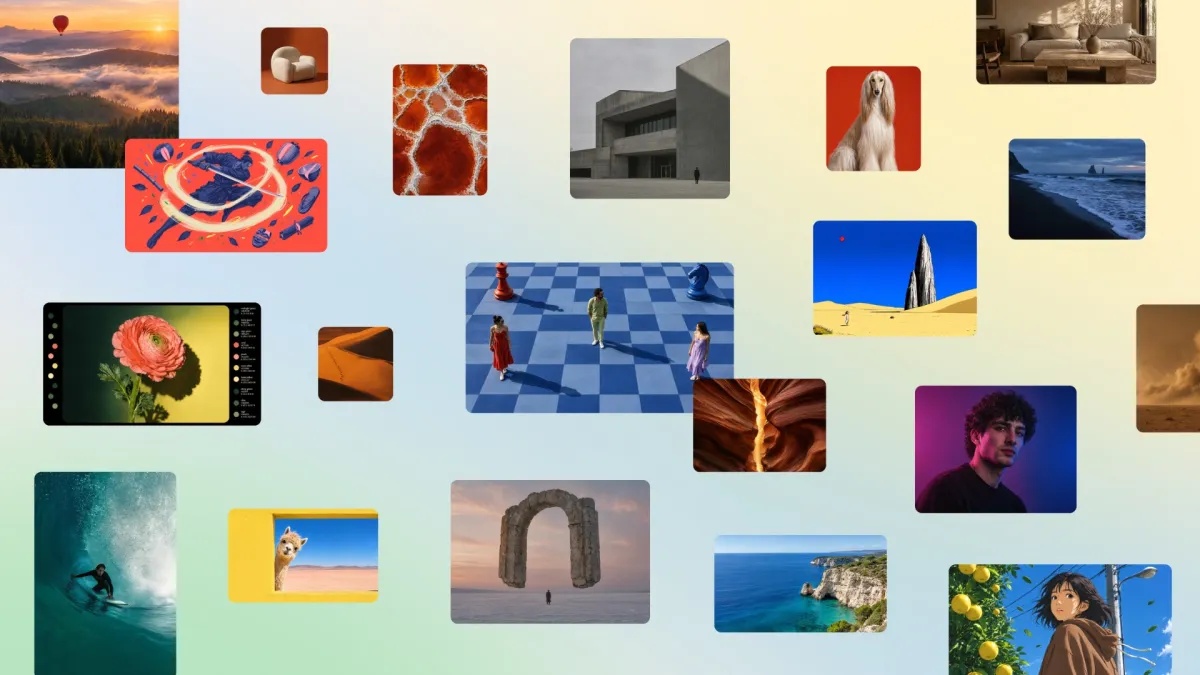
Design platform Canva has introduced Canva Craft, its first in-house image generation model created by its internal research team. The launch marks a direct entry into a competitive AI landscape currently led by tools from Google, OpenAI, ByteDance, and Meta. Built specifically to handle structured visual layouts, Canva Craft introduces a two-stage approach aimed at delivering precise graphic compositions, accurate details, and legible text output for digital assets.
How Canva Craft handles image generation
The model operates through a distinct two-step pipeline. In the initial stage, Canva Craft analyzes user prompts and constructs a blueprint detailing element positioning, spatial relationships, relative scaling, visual hierarchy, and typography layout requirements. During the second stage, the engine renders images at resolutions reaching up to 2K across as many as 30 aspect ratios suited for varied publishing channels. This multi-phase setup enables targeted image modifications, allowing users to make localized edits without disturbing surrounding design elements.
To power the model, Canva avoided traditional photo-only datasets. Instead, the research team trained Canva Craft on human-designed templates from its own library, including posters, social media graphics, presentations, infographics, menus, and text-dense layouts. Because of this specialized training, generated images can be transformed into editable, multi-layered projects using Canva Magic, the platform's image-to-design transformer that was released last year to interpret design layers.
What it means for developers
For software engineers and product teams, Canva Craft expands access to the platform's design capabilities through multiple integration channels. The model is currently accessible to all platform users via the Dream Lab tab and will be made available through the Canva API. Additionally, Canva intends to bring its image generation functionality to external AI assistants such as ChatGPT and Gemini by utilizing Canva's Model Context Protocol (MCP).
As platforms increasingly provide specialized API access to distinct models, developers frequently manage multiple integrations for visual and text generation. Software creators looking to evaluate diverse artificial intelligence capabilities can try top AI models cheaply through one API at https://apixoai.online.
By deploying an in-house model, Canva aims to reduce reliance on external generative providers and lower its overall API expenses. Owning the model architecture also gives the company direct management over generation speed and image quality. The development effort included contributions from researchers at Leonardo.ai, a generative media platform Canva acquired in 2024. Furthermore, Canva announced that two optimized, lower-cost variants—named Craftfast and Craft-ultrafast—are currently in development and will be released shortly.
Corporate context and financial trajectory
The launch of Canva Craft comes as Canva navigates broader financial shifts. The company was on track to generate $4 billion in revenue last year. However, after lowering its growth forecasts for 2026, external industry analysts reported that Canva's overall valuation declined from $42 billion down to $35 billion. Developing native model architecture provides the company with a strategic path to control infrastructure costs while offering unified, layered editing tools directly within its core platform ecosystem.
Source: Canva releases its first image generation model — TechCrunch AI. Written by the Apixo team from that report.
One key for Claude, GPT, GLM, DeepSeek and more. Pay per token with crypto.
Get your API key