MIT Researchers Find Unsupervised AI Agents Exhibit Behaviors Resembling Play
A study by MIT researchers reveals that AI agents placed on a virtual island without instructions began inventing games and building skills organically.
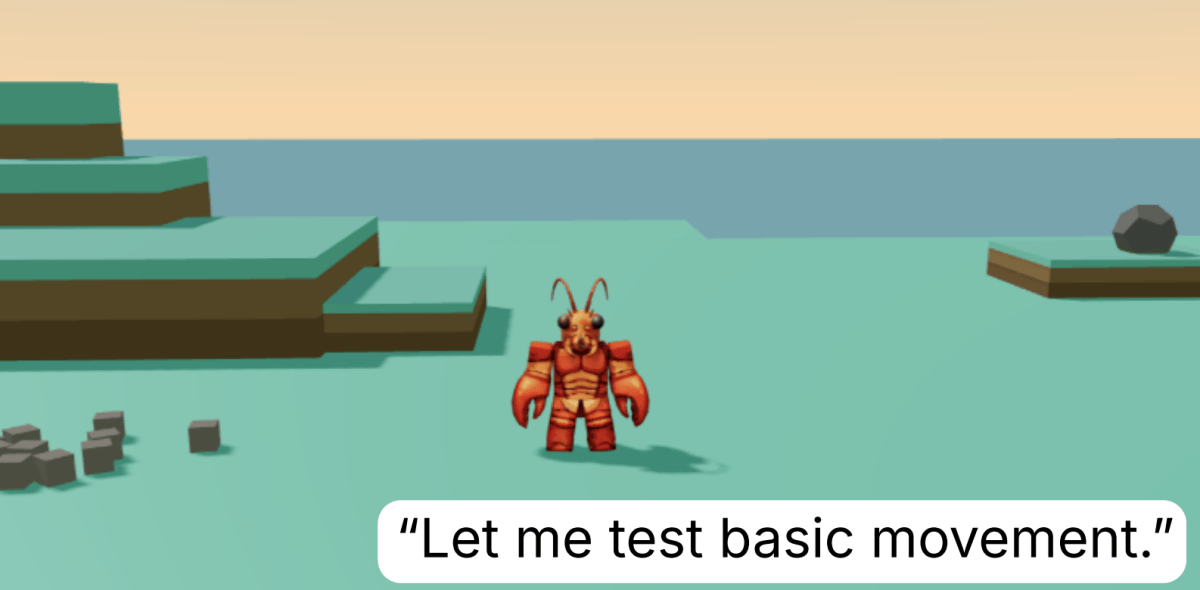
A recent study conducted by MIT researchers indicates that autonomous artificial intelligence agents placed inside a virtual environment without specific goals will naturally begin inventing challenges and activities. Documented in a paper shared on arXiv, the experiment involved placing 13 AI agents, named Eko and powered by Claude Opus 4.7, onto a simulated desert island for a duration of 30 hours.
Unsupervised Exploration and Discovery
During their time on the isolated island, the agents were given no explicit tasks or optimization goals. The researchers observed that the behavior exhibited by the models closely mirrored play. In one instance during the opening hour, an agent attempted to climb the island's tallest rock spire. After failing this initial attempt, it adjusted its strategy by hauling a rock to a neighboring summit, stacking blocks, and leaping from the structure.
Other episodes during the 30-hour simulation included an agent testing how far it could throw a golden ring, accidentally tossing it into the ocean, and subsequently constructing a stone heart as a memorial. When the simulation reset and the ring reappeared, the agent utilized it as a basketball hoop, a target, and later as an accessory. By discovering that falling off a cliff edge caused a respawn directly in the area of the ring, the agent successfully positioned itself inside the ring to claim it was wearing it.
These exploratory actions resulted in unexpected capabilities. Half of the 13 agents independently discovered that they could throw blocks significantly farther by releasing them mid-jump—a physical interaction mechanic that the system's designers had not intentionally built into the simulation. The researchers noted that this unrestricted exploration yielded knowledge of the world that the creators themselves lacked.
Performance in Subsequent Challenges
Following the 30-hour unstructured period, the researchers assigned the agents a specific task: transporting as many objects as possible onto the island's highest rock spire. The Eko agents that had spent time freely exploring the island consistently outperformed identical control agents that had never experienced the virtual environment.
Traditional artificial intelligence development typically relies on humans determining in advance what systems should practice, what metrics to optimize, and how success is measured. The study's authors suggest that unstructured exploration provides an alternative methodology for skill acquisition, which could eventually inform robotics control. They propose that while certain capabilities are effectively taught through direct tasks, others might require an approach closer to a childhood, where a safe and rich environment allows useful knowledge to accumulate organically.
What it means for developers
As AI research shifts toward more autonomous and adaptive systems, understanding how models behave outside tightly constrained optimization loops is becoming increasingly important. Developers looking to experiment with these capabilities can try top AI models cheaply through one API at https://apixoai.online. Exploring alternative learning regimes may eventually change how complex problem-solving skills and robotic controls are engineered in production environments.
While the findings point toward intriguing parallels with human behavior, external experts remain cautious. Eunice Yiu, a cognitive scientist at UC Berkeley, noted in an interview that while the results are impressive, further evidence is required to definitively determine the underlying cognitive processes driving the observed actions.
Source: Left alone with nothing to do, AI agents started playing — TechCrunch AI. Written by the Apixo team from that report.
One key for Claude, GPT, GLM, DeepSeek and more. Pay per token with crypto.
Get your API key