Caterpillar and CoreWeave Accelerate Physical AI for Construction
Caterpillar and CoreWeave are partnering to speed up physical AI training for autonomous construction equipment, handling massive data demands.
A construction boom driven by the demand for new data centers, power plants, and highways faces significant challenges, including declining productivity and a shortage of skilled machine operators. To address these issues, the industry is increasingly turning to physical AI, which allows machinery to perceive and interact with its environment.
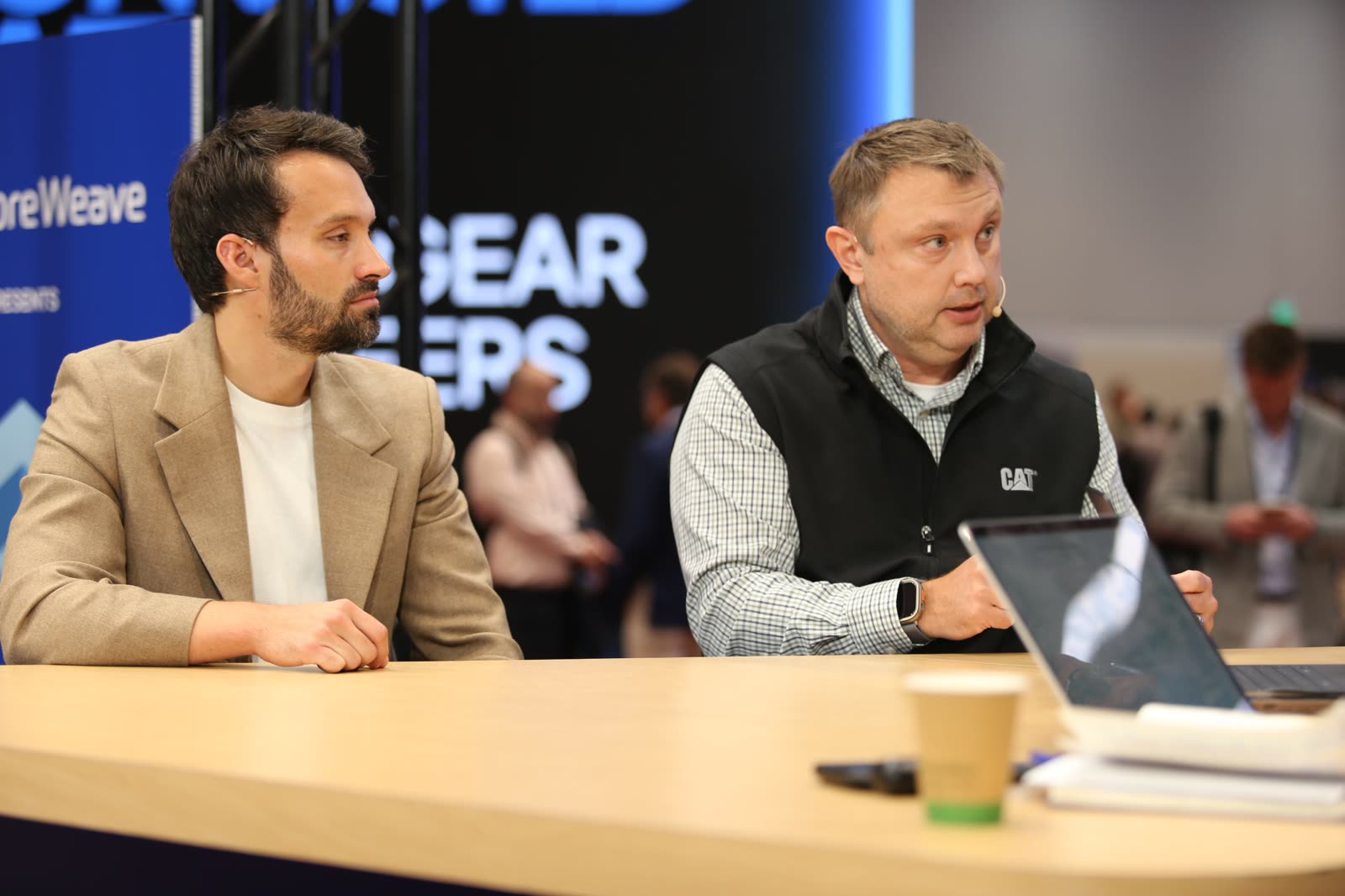
While Caterpillar has extensive experience deploying autonomous equipment in mining environments, moving that technology to construction sites introduces entirely new hurdles. Brandon Hootman, vice president of physical AI platforms and construction autonomy at Caterpillar, explained that mining sites are relatively static compared to the constant variability of construction zones. Transitioning a structured autonomous system into such an unstructured setting requires advanced capabilities.
The Infrastructure Behind Physical AI
Supporting autonomous heavy machinery demands a fundamental shift in cloud infrastructure. Richard Ahlfeld, senior vice president of Physical AI at CoreWeave, noted that traditional AI clouds were initially designed to train foundation models and scale agentic inference. However, physical AI requires massive storage and specialized infrastructure to process diverse data types.
Training an autonomous excavator involves ingesting telemetry and vision data, running millions of digging simulations, and applying reinforcement learning. Caterpillar's existing digital ecosystem manages roughly 18 petabytes of federated data gathered from machines, dealers, and customers. Despite this massive volume, Hootman pointed out that it represents only a small fraction of what is actually required. A single machine generates terabytes of data daily when combining LiDAR, camera feeds, multi-second control data, and performance metrics.
To help navigate these needs, CoreWeave recently introduced a Physical AI Field Engineering service that places its engineers directly alongside customer domain experts.
Shortening the Training Feedback Loop
Caterpillar started working with CoreWeave this year, drawn by the company's GPU capacity and applied technical expertise. In collaboration with Nvidia, the partners leverage AI models to automate the annotation and labeling of incoming field data.
This integration has drastically reduced processing times. Tasks that previously took months or weeks can now be completed within hours. As a result, the feedback loop between field data collection and deployment into simulation or training environments now occurs within a single workday.
What it means for developers
The evolution of physical AI underscores the growing complexity of processing massive multimodal data streams—such as video, LiDAR, and telemetry—at scale. As infrastructure demands shift toward handling simulation, reinforcement learning, and automated data labeling, engineers working on intelligent systems need efficient ways to prototype and test models. For developers looking to experiment with advanced intelligence, they can try top AI models cheaply through one API at https://apixoai.online.
As Caterpillar and CoreWeave demonstrate, bridging the gap between raw data collection and rapid model iteration is critical to deploying reliable autonomous systems in unpredictable real-world environments.
Source: Caterpillar and CoreWeave shorten the learning loop for physical AI — SiliconANGLE AI. Written by the Apixo team from that report.
One key for Claude, GPT, GLM, DeepSeek and more. Pay per token with crypto.
Get your API key