Cerebras CEO Andrew Feldman Envisions Dedicated AI Appliances in Every Home
At TechCrunch Disrupt 2026, Cerebras Systems CEO Andrew Feldman predicted personal AI hardware will soon become standard household gear, operating across edge and cloud infrastructure.
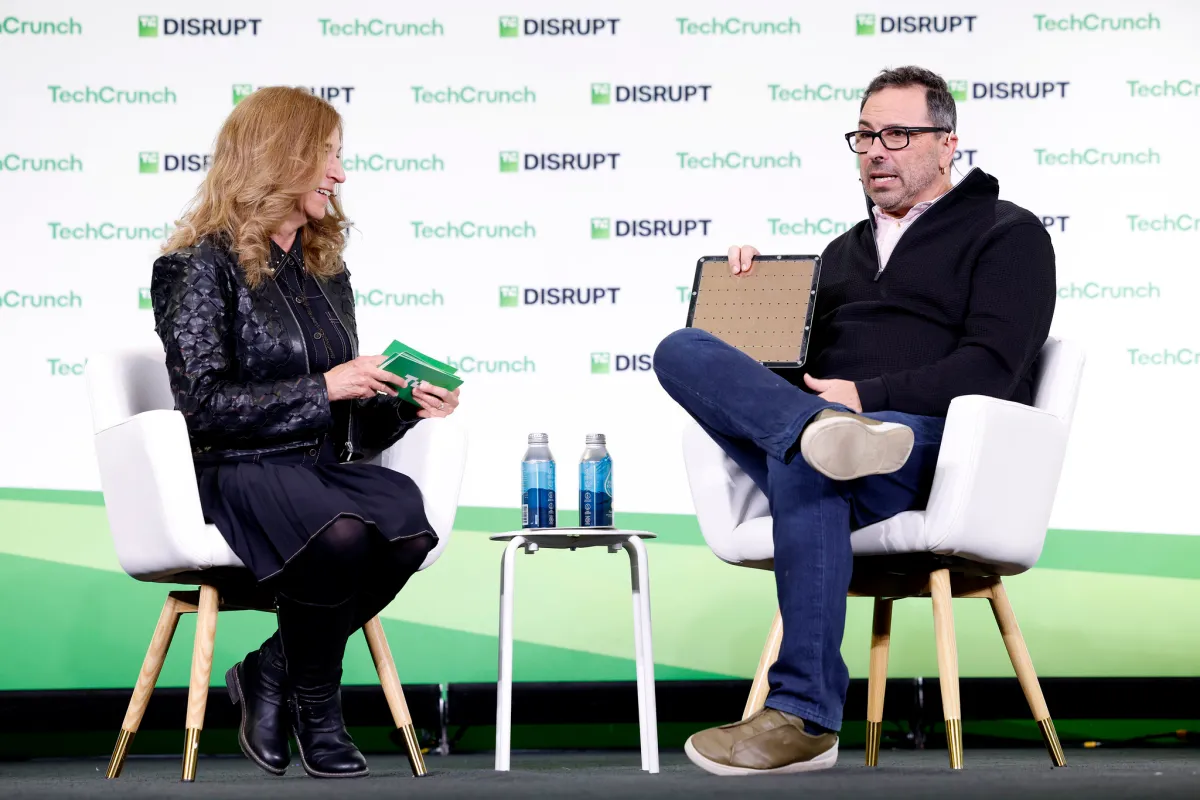
The era of the dedicated home artificial intelligence appliance may be arriving much sooner than anticipated. Speaking on stage at TechCrunch Disrupt 2026, Cerebras Systems co-founder and CEO Andrew Feldman shared his perspective on consumer-facing hardware, stating that the arrival of dedicated household AI systems is not very far away.
Feldman pointed to the rapid commercialization and adoption of consumer agentic tools as proof that the underlying technology is maturing. He specifically cited developments like Meta's Muse as well as Instinct, an AI startup that has climbed to a $10 billion valuation, as clear signals that everyday consumers are already embracing autonomous software systems.
A hybrid model for household intelligence
Rather than relying exclusively on massive remote data centers, Feldman anticipates that home AI assistants will adopt a hybrid operational architecture. Much like modern smartphones, these appliances will split compute workloads depending on the task: executing sensitive and immediate operations locally on the physical device while routing complex computational jobs back to the cloud.
According to Feldman, these assistants will develop deep, personalized knowledge of individual users over time. Because of that intimacy, establishing a reliable security perimeter will be critical. Feldman noted that these household agents will handle high-trust actions, including holding direct access to user credit cards and managing purchases autonomously to deliver a meaningful quality-of-life improvement.
Multi-agent infrastructure in practice
While hardware makers naturally benefit from a consumer shift toward localized AI hardware, Feldman noted that agentic tooling is already a standard part of his own routine. Rather than relying on a single monolithic system, he uses a collection of specialized agents to coordinate his day—running background sweeps through his calendar schedule and gathering background intelligence on the people he is scheduled to meet on calls.
While existing implementations predominantly streamline existing manual chores, Feldman emphasized that the most compelling wave of innovation will center around tasks that were previously impossible. However, the executive clarified that his focus remains strictly on the compute layer rather than consumer application development, stating that he prefers building the underlying infrastructure and platforms that allow other founders' ideas to take flight.
What it means for developers
Feldman's forecast highlights several practical shifts for software engineers and systems architects designing agentic products:
- Designing for distributed compute: As consumer hardware incorporates local acceleration, application logic will need to dynamically partition workloads between on-device inference engines and remote cloud APIs based on latency, privacy, and compute demands.
- Agentic coordination: Feldman's personal workflow underscores a shift from monolithic assistants toward modular collections of agents that cooperate to handle specific tasks, such as calendar management and research.
- Building strict security boundaries: With autonomous purchasing and financial access on the horizon, developers must construct verifiable guardrails to prevent unauthorized transactions and protect sensitive personal context.
- Model selection and experimentation: Building responsive multi-agent workflows requires testing different foundational models for planning, reasoning, and context analysis. Developers experimenting with diverse model architectures can access top AI models cheaply through one API at https://apixoai.online.
As the industry builds toward autonomous consumer agents and home hardware, the immediate opportunity for developers lies in creating the software ecosystems, agent coordination frameworks, and safety layers that these appliances will depend on.
Source: Cerebras CEO says we’re nearing a future where everyone has a personal AI assistant at home — TechCrunch AI. Written by the Apixo team from that report.
One key for Claude, GPT, GLM, DeepSeek and more. Pay per token with crypto.
Get your API key