Dyna Robotics Details Dyna-2 World-Action Model and Hour-Long Autonomy
Dyna Robotics co-founder Jason Ma explains Dyna-2, a physical AI foundation model trained on one million hours of video, achieving long-horizon autonomy in commercial settings.
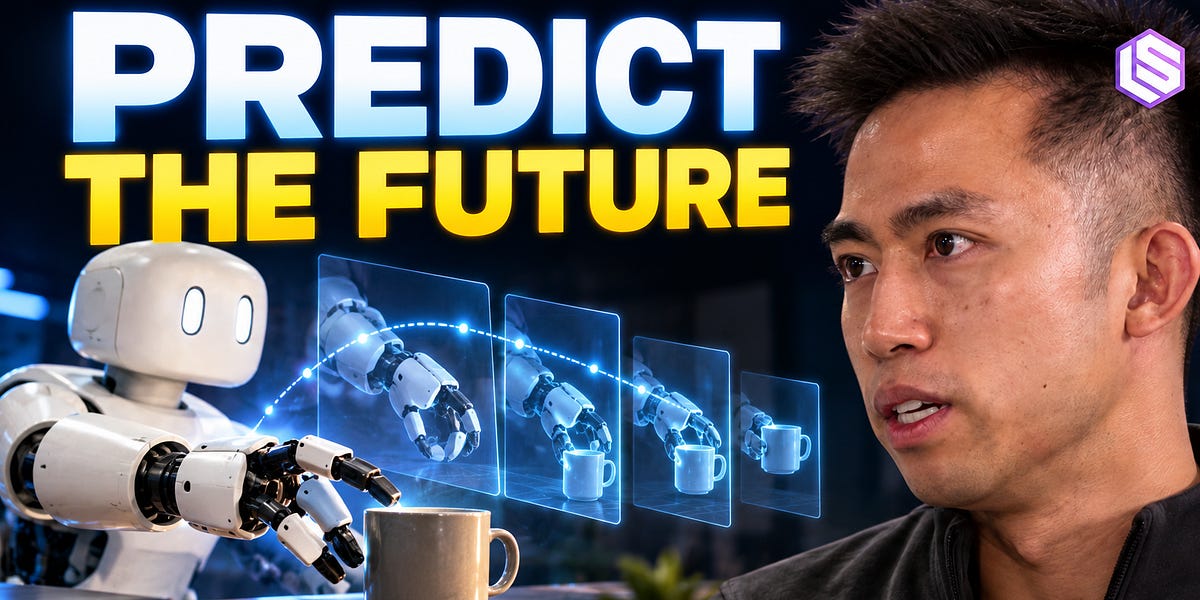
Physical artificial intelligence has long struggled with reliability outside controlled lab settings. Dyna Robotics is attempting to change that trajectory with Dyna-2 and its physical follow-up, Dyna-2.1. Developed under co-founder and Chief Scientist Jason Ma, Dyna-2 is a world-action model pre-trained on more than one million hours of human video. Rather than treating robotics purely as a language-to-motion mapping task, the system couples visual foresight with robotic execution to support multi-step, hour-long physical workflows.
At the core of the announcement is the model's ability to maintain high operational reliability in production. During testing, Dyna's systems demonstrated a 99.4% success rate folding restaurant napkins for 24 hours continuously at Din Tai Fung, successfully recovering when stacks toppled over. According to Ma, bringing physical agents into commercial deployments—including work at Din Tai Fung and Best Western—requires models that adapt quickly and handle long horizons without human intervention.
Predicting the physical world to direct action
Dyna-2 operates on a diffusion transformer architecture using an encoder-only setup. Under the hood, the system uses flow matching, an approach that streamlines the transformation process and cuts down the computational steps required compared to traditional diffusion schedulers. While standard visual models only generate images or video, a world-action model takes robot camera frames, language instructions, and joint encoder readings to generate both robot actions and future video states.
Ma describes this dual-output approach as a physical equivalent of chain-of-thought reasoning. By predicting how the surrounding visual environment will evolve in response to physical contact, the system gains a visual and physical intuition before issuing motor commands. This structure enables generalist behavior: Dyna demonstrated that after broad pre-training, robots can learn new manipulation tasks—such as pulling items from a refrigerator—with as little as 45 minutes of demonstration data.
Overcoming the robotics data bottleneck
A central obstacle highlighted by Ma is that robotics possesses no equivalent to the open internet for pre-training data. Individual robotics labs cannot manually collect enough proprietary data to match the scale seen in natural language processing. To build a foundation model across four orders of magnitude, Dyna turned to massive datasets of human egocentric video.
While egocentric human video provides strong priors regarding how objects behave during physical interaction, an embodiment gap remains between human hands and robot manipulators. Dyna bridges this gap by combining broad human video datasets with small amounts of direct robot demonstration data. Furthermore, the team is exploring synthetic data generation. Reflecting on his earlier research on Eureka—a project that used GPT-4 to generate reward functions in simulation—Ma noted that modern frontier vision models are reaching a tipping point where automated 3D reconstruction, computer-aided design (CAD), and simulation environments can accelerate training pipelines.
In addition to external models, Dyna-2 can leverage its own video generation capabilities to generate training sequences, creating a self-improving synthetic feedback loop.
Engineering for production and latency constraints
Transitioning models to physical agents introduces strict inference limits that purely digital AI systems do not face. While code generation or chat interfaces can tolerate multi-second latency, robots operating around humans or handling tools require near-instantaneous execution. Dyna-2.1 pairs the underlying model with custom semi-humanoid hardware on wheels rather than bipedal legs, prioritizing mechanical stability and continuous long-horizon workflows over traditional human morphology.
Deploying robots into production also highlights physical bottlenecks that software alone cannot solve, such as overheating dexterous hands and missing tactile feedback. Dyna’s agentic harness structures these extended tasks, enabling the robot to monitor progress, recover from physical disturbances, and maintain continuous operations throughout an entire shift.
What it means for developers
For AI developers, the rise of world-action models signals a shift from pure vision-language-action (VLA) pipelines toward architectures that plan directly in physical and visual space. As physical foundation models improve, adapting robots to custom workflows will look less like training specialized reinforcement learning policies from scratch and more like lightweight fine-tuning on top of generalist bases.
Furthermore, the convergence of physical AI and frontier reasoning models opens new workflows for synthetic data engineering. Developers building robotics pipelines are increasingly using frontier multimodal models to construct environments, simulate edge cases, and translate real-world video into training simulations. For engineering teams exploring multimodal orchestration and synthetic task generation, developers can try top AI models cheaply through one API at https://apixoai.online to evaluate how current systems handle reasoning and visual understanding. As robotics foundation models like Dyna-2 mature, the gap between digital reasoning agents and physical automation will continue to narrow.
Source: Dyna-2: General Purpose Physical Agents with Hour-Long Autonomy — Jason Ma, Dyna Robotics — Latent Space. Written by the Apixo team from that report.
One key for Claude, GPT, GLM, DeepSeek and more. Pay per token with crypto.
Get your API key