Flock Safety to Cut Roughly 270 Jobs Amid Surveillance and Privacy Pushback
AI surveillance firm Flock Safety plans to cut 18% of its staff as community opposition, state bans, and legal challenges test its automated camera network.
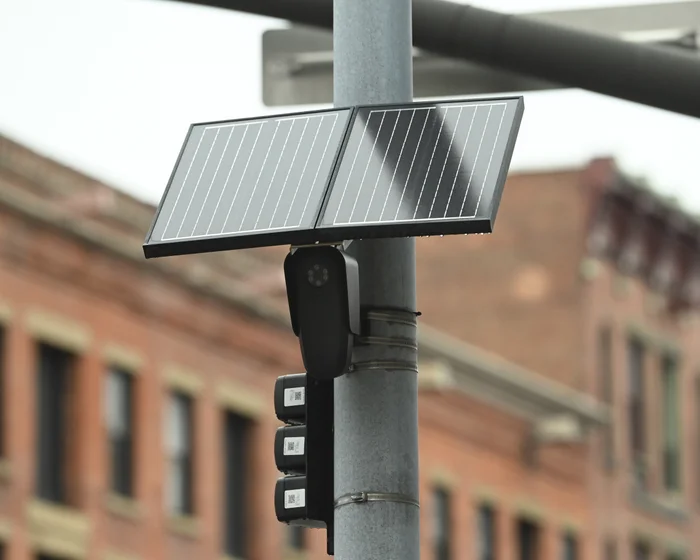
Flock Safety is preparing to lay off approximately 18% of its workforce, according to individuals with direct knowledge of the matter. The workforce reduction is expected to affect roughly 270 staff members out of the Atlanta-based company's estimated 1,500 employees. Affected personnel will depart at the end of the month following a voluntary separation program that was initially introduced in September.
The staff cuts arrive at a complicated juncture for the company. Founded in 2017, Flock has expanded rapidly, deploying roughly 120,000 AI-powered cameras across streets and highways in 49 states. These automated license-plate recognition systems capture passing vehicles and feed data to more than 4,800 law enforcement agencies alongside nearly 1,000 commercial clients. While the firm contends that its hardware and software infrastructure helps authorities investigate and resolve criminal cases, it is encountering sustained opposition from privacy advocates, community groups, and government officials.
Mounting Legal Challenges and Policy Restrictions
Public sentiment regarding automated municipal surveillance remains polarized. According to a recent Reuters/Ipsos survey, 38% of Americans support using Flock's cameras in their neighborhoods, while 47% oppose the technology. That skepticism has increasingly translated into legislative and legal pushback.
In September, Florida enacted a ban preventing automated license plate readers from operating on state highways, explicitly pointing to privacy concerns linked to Flock's devices. At the same time, the company faces formal legal challenges in courtrooms, including a privacy lawsuit in Virginia that claims the broad deployment of AI camera systems constitutes warrantless surveillance.
Scrutiny has also spilled over into the private sector. Investors in Home Depot recently pushed for reviews of the retailer's agreements with surveillance vendors following reports that data gathered by Flock systems had been accessed for immigration enforcement. Along with expanding AI datacenters, the presence of Flock cameras has turned into a contentious political issue ahead of November's midterm elections, where candidates have started targeting competitors over their ties to the surveillance technology.
Capital Growth Collides With Operating Scrutiny
The job cuts contrast sharply with Flock's fundraising track record. To date, the company has secured more than $950 million in venture funding. In March, it completed a $275 million funding round led by Andreessen Horowitz that pegged the startup's valuation at $7.5 billion.
According to Flock, that capital was earmarked to fund a domestic manufacturing facility in the United States and drive product development into autonomous drones. Even with substantial venture backing, the startup must now manage cooling public sentiment, tighter municipal oversight, and legal scrutiny around how vehicle data is gathered, retained, and shared across jurisdictions.
What it means for developers
For engineers and system architects working with automated computer vision, edge processing, and geospatial data, Flock's difficulties illustrate the widening gap between technological capability and regulatory acceptance. Deploying AI models into public spaces involves significant operational risk when the underlying data-collection mechanics trigger civil liberties concerns.
Developers building systems that process vehicle telemetry or biometric signals must design with data retention limits, auditable access controls, and jurisdiction-level compliance from the start. As seen with commercial pushback at Home Depot and state-level prohibitions in Florida, enterprise and municipal clients will face pressure to review third-party AI integrations that expose them to reputational or legal liabilities.
Teams developing AI-driven services can mitigate infrastructure and operational overhead by relying on established, standard foundation models rather than building proprietary physical surveillance apparatuses. Developers can try top AI models cheaply through one API at https://apixoai.online, allowing them to prototype text, multimodal, and analytical workflows without maintaining specialized surveillance hardware.
Ultimately, Flock's restructuring demonstrates that technical scale and venture funding cannot bypass municipal governance. Engineers working in high-scrutiny domains should anticipate that any system gathering data at scale in the physical world will eventually face strict legislative and constitutional evaluation.
Source: AI surveillance startup Flock to cut several hundred jobs amid backlash, sources say — The Guardian AI. Written by the Apixo team from that report.
One key for Claude, GPT, GLM, DeepSeek and more. Pay per token with crypto.
Get your API key