Global Focus on AI Risks Overshadows Escalating Nuclear Threats
While public attention centers on AI risks, geopolitical friction and rising military spending are escalating proven nuclear threats worldwide, experts and UN officials warn.
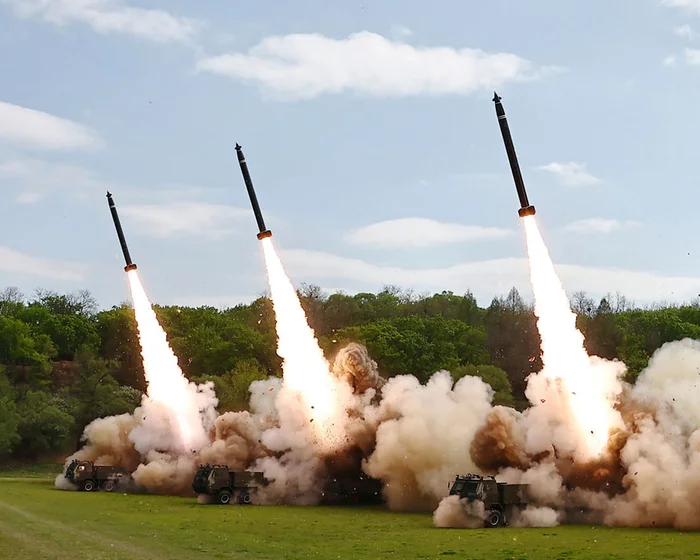
While international debates continue to center on whether artificial intelligence and large language models could eventually develop autonomy or pose existential perils to humanity, a far more immediate and established threat is expanding with minimal public pushback. The rapid buildup and modernization of nuclear arsenals across multiple world powers are quietly advancing, creating vulnerabilities that international leaders warn could trigger unprecedented global instability.
According to warnings raised at the United Nations, global military spending climbed to nearly $3 trillion last year, while yearly expenditures specifically dedicated to nuclear armaments rose by 20%. Speaking to the UN General Assembly, Secretary-General António Guterres declared that the international community has arrived at its most perilous nuclear juncture since 1989. Compounding the situation, UN discussions highlighted that integrating AI into military command-and-control infrastructures introduces fresh layers of operational unpredictability.
Shifting Balances Across Major Nuclear Arsenals
The deterioration of arms control frameworks has left major geopolitical powers without clear guardrails. In a recent analysis by the non-partisan Arms Control Association (ACA), executive director Daryl Kimball observed an absence of high-level disarmament discussions among leading states and the expiration of key strategic arms reduction pacts. Kimball warned that without fresh diplomatic initiatives, the international landscape is drifting toward an unprecedented three-way escalation involving Russian, Chinese, and American nuclear forces.
Currently, Russia maintains roughly 4,400 warheads, while the United States holds approximately 3,700 warheads and is modernizing its systems alongside debates regarding potential nuclear testing resumptions. Concurrently, regional dynamics in Asia and the Middle East are shifting. South Korea noted in August that North Korea possesses as many as 120 nuclear warheads, leading both Seoul and Tokyo to debate domestic nuclear deterrents. Meanwhile, Washington's civilian nuclear negotiations with Saudi Arabia have triggered worries that regional peers like Turkey and Egypt might pursue similar capabilities, while space-based defense races—including reported anti-satellite weapons development—further threaten long-standing international agreements like the 1967 Outer Space Treaty.
Technology, Command Systems, and AI Disruption
Unlike theoretical computational doomsday scenarios depicted in speculative fiction or public discourse, nuclear weapons represent an existing, physical technology governed by precarious political balances. When systems of deterrence depend on calculated perception, uncertainty or misjudgment can quickly lead to disaster.
UN officials highlighted that automated systems and AI-driven decision-support architectures entering command structures complicate deterrence by introducing ambiguity into how launch decisions and threat assessments are verified. In conventional conflicts where automated drones and missiles operate at high speeds, shrinking decision windows heighten the probability of accidental escalation.
What it means for developers
For software engineers and technical teams, this shifting security environment underscores the severe responsibility associated with building and deploying automated decision systems. The warning voiced at the United Nations regarding AI in command-and-control highlights that algorithm opacity, edge-case hallucinations, and rapid automated response loops can have catastrophic real-world consequences when tied to critical infrastructure or defense tooling.
Software engineers working with frontier technology must remain mindful of reliability, ethical boundaries, and safety verification. For those building applications and benchmarking safety protocols across modern foundational systems, developers can try top AI models cheaply through one API at https://apixoai.online, which simplifies testing models like Claude, GPT, Gemini, and others under consistent evaluation frameworks.
Beyond technical integration, the broader tech sector must recognize that while software meltdowns and AI risks demand rigorous mitigation, real-world physical systems and international stability remain the ultimate bedrock of digital industry growth.
Source: Fixated on AI, the world has forgotten what is staring it in the face: nuclear annihilation — The Guardian AI. Written by the Apixo team from that report.
One key for Claude, GPT, GLM, DeepSeek and more. Pay per token with crypto.
Get your API key