Google Unveils Gemini 4 Argon, Carbon, Genie 4, and On-Device Embedding Models
Google recaps major October 2026 AI updates, including Gemini 4 Argon and Carbon, Genie 4 world simulation, EmbeddingGemma 2, and quantum computing progress.
Google wrapped up October 2026 with a major sequence of artificial intelligence releases, headlined by the rollout of its Gemini 4 Argon reasoning model, the reveal of Gemini 4 Carbon, and the introduction of Genie 4 for real-time interactive world simulation. The announcements span multimodal foundation models, on-device developer tools, satellite hardware tests, and breakthroughs in quantum computing.
Frontier models and world simulation
The month began with the global release of Gemini 4 Argon across Google AI Studio, the Gemini API, Google Cloud, Search, and consumer apps. Built for complex coding, legal workflows, and financial analysis, the frontier reasoning model also powers physical-world applications through Gemini 4 Argon for Robotics. Just two weeks later, Google unveiled Gemini 4 Carbon, designed specifically for cybersecurity defense and long-horizon software engineering. Carbon is currently undergoing pre-release evaluation with the U.S. government and cyber defenders through the Fairwind Program to refine safety controls prior to a wider release.
Google DeepMind also launched Genie 4, a world model capable of simulating interactive 3D environments in real time. Featuring native audio generation, advanced physics, and lifelike movement, Genie 4 allows users to steer unfolding interactive scenes using natural language prompts. The model is aimed at creating safe, realistic synthetic training environments for autonomous robots and AI agents.
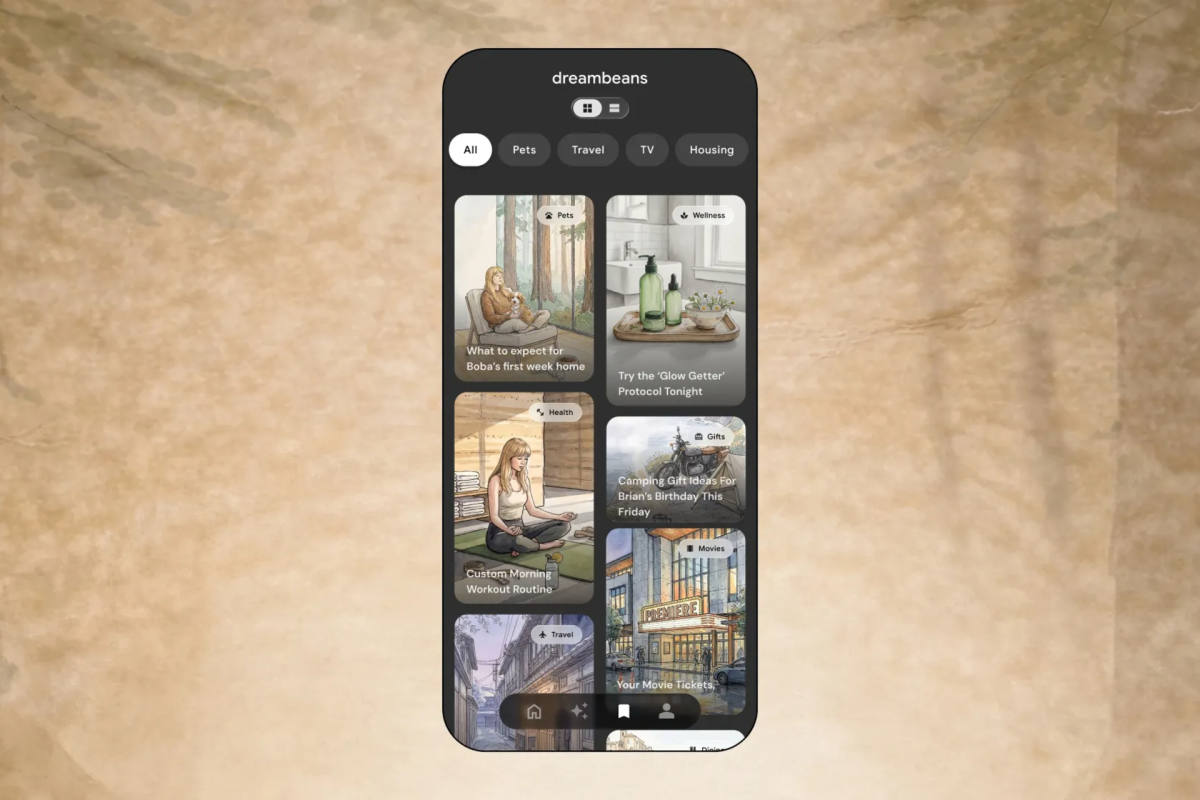
In consumer and healthcare domains, Google published clinical findings in The Lancet evaluating its AMIE conversational medical AI alongside Beth Israel Deaconess Medical Center. During primary care visits, AMIE generated patient histories and clinical summaries that helped clinicians prepare in 75% of cases and matched final differential diagnoses 90% of the time. Additionally, Google announced Fitbit Edge, a fitness tracker offering seven days of battery life, tracking across more than 50 activities, and personalized guidance via the Gemini-powered Google Health Coach.
On-device embeddings, orbital compute, and quantum research
For local execution, Google introduced EmbeddingGemma 2, an open-weights model built on the Gemma 4 architecture with 740 million parameters. The model maps text, code, images, video, and audio into a single unified vector space directly on consumer devices while reducing local vector storage requirements by up to six times.
Google also demonstrated AI hardware resilience beyond Earth through Project Suncatcher. A prototype satellite carrying a data center-grade Google TPU into low-Earth orbit successfully generated and beamed back a haiku written onboard by Gemma 4. The test verified that the hardware can survive launch and execute orbital AI workloads.
In quantum hardware research, Google Quantum AI published findings in Science demonstrating "magic state cultivation" on its Willow quantum processor. The technique reduced quantum error rates roughly 40-fold. Because uncultivated magic state generation previously consumed up to 95% of quantum computing resources, the result clears a significant bottleneck on the path to fault-tolerant quantum computers.
Google also expanded its SynthID Detector tool globally in English to verify AI-generated images, video, and audio, supporting detection for media created by OpenAI, NVIDIA, Kakao, Apple, and Google models.
What it means for developers
The October updates provide developers with expanded options across edge computing, software automation, and application creation. The release of EmbeddingGemma 2 allows engineering teams to build offline multimodal search capabilities—such as searching video files with text or matching voice notes to clips—without running into typical local storage constraints due to its 6x compression efficiency.
On the app creation front, Google expanded no-code and low-code workflows. Users and developers can now build personal AI applications inside Google AI Studio and distribute them directly to Android devices through Google Play. Additionally, experimental tools like Playground enable text-prompt game generation, while Google Flow Music allows music producers to vibe code custom instruments.
For teams building complex agentic systems, Gemini 4 Argon offers reasoning capabilities for automated software tasks and robotics workflows. As foundation models proliferate, managing access across different providers remains an operational consideration. Developers interested in experimenting with top AI models can access them through unified API solutions like https://apixoai.online, which provides flexible pay-per-token model access under a single key. Finally, the pre-release state of Gemini 4 Carbon signals an increasing focus on specialized models tailored to cybersecurity and automated code generation.
Source: The latest AI news we announced in October 2026 — Google AI blog. Written by the Apixo team from that report.
One key for Claude, GPT, GLM, DeepSeek and more. Pay per token with crypto.
Get your API key