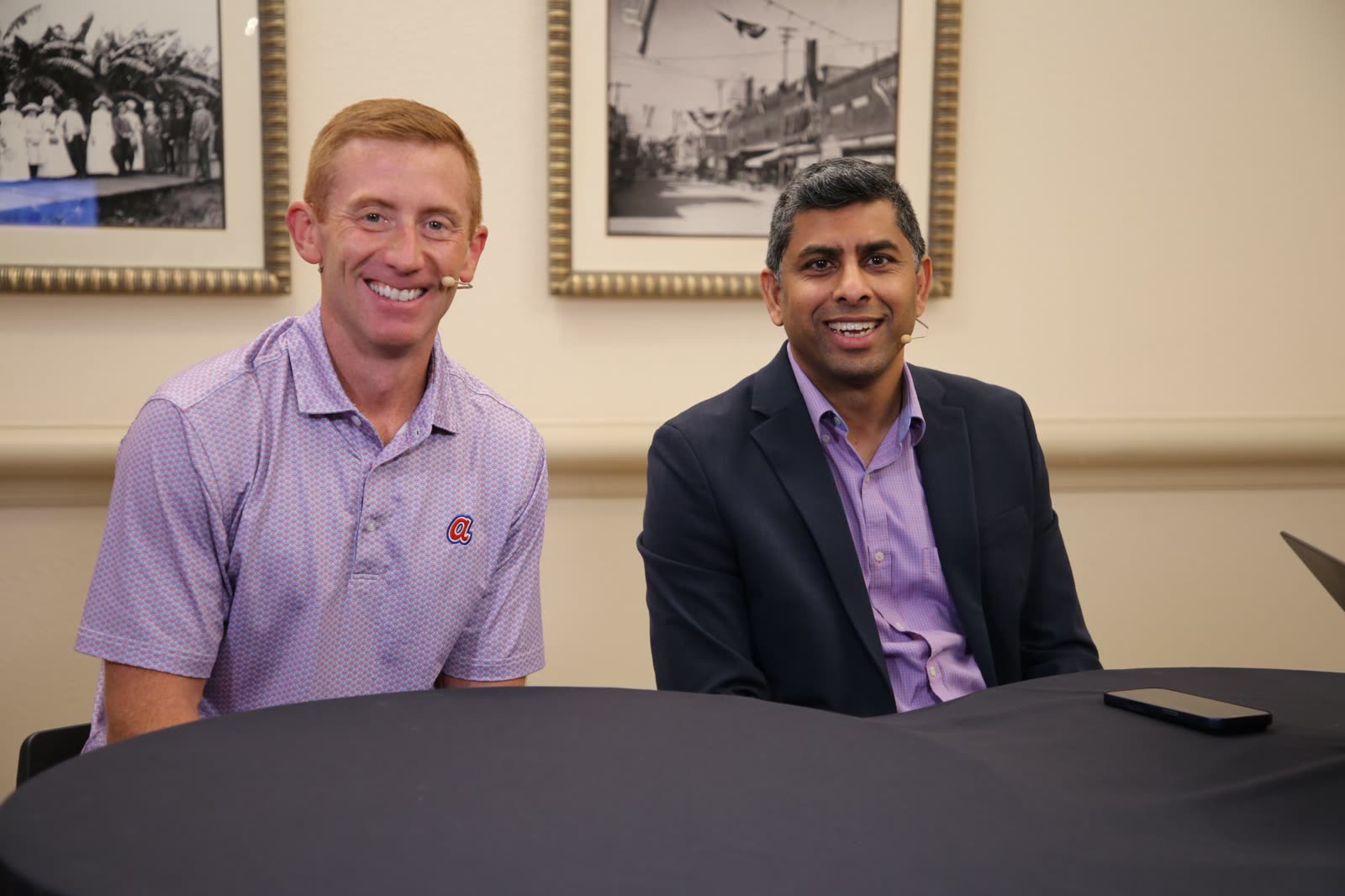
How Midwest Wheel Combines Agentic AI with Strict Operational Governance
Midwest Wheel VP Steve McEnany explains why enterprise AI agents require unified system architecture, cross-model checks, and human oversight in daily operations.

As enterprises push artificial intelligence deeper into everyday workflows, moving beyond passive alerts to autonomous remediation has become a top priority. For Midwest Wheel Companies, a century-old truck parts distributor, deploying agentic AI successfully requires not just smart algorithms, but strict governance and a single underlying foundation. Speaking at Infor Velocity Week on theCUBE, Steve McEnany, the company's senior vice president, detailed how a lean IT team uses cloud enterprise software to automate operations while keeping critical guardrails intact.
Centralizing data around a single operational system
According to McEnany, the core of Midwest Wheel's technology strategy is maintaining one central point of reference. While the distributor often evaluates and integrates specialized third-party tools, every solution must tie directly back into its primary Infor platform. This single-system approach prevents data fragmentation and provides software agents with a reliable, consistent environment to inspect and modify.
Migrating core infrastructure to the cloud relieved Midwest Wheel's lean IT team of routine server maintenance and software updates, enabling them to build and roll out in-demand features in a matter of weeks. The company has already implemented practical AI utilities, such as an automated feature that parses PDF invoices sent via email directly into the system, as well as a product recommendation engine built directly into order entry.
Looking forward, McEnany envisions autonomous agents that fix problems rather than simply flagging them for staff. In an agentic setup, software is equipped with established organizational guidelines so that when an issue arises, the agent can recognize standard operating procedures and resolve the problem automatically.
Guardrails, verification, and human oversight
Despite pursuing automated problem resolution, Midwest Wheel places heavy emphasis on agentic governance. The distributor enforces a strict boundary: any process that directly impacts cash flow or customer accounts requires a human in the loop.
The importance of data verification became clear when an AI-generated company sales report card produced inaccurate numbers. The mathematical issue was only detected after running a secondary AI tool to review the figures. Infor points to industry research indicating that off-the-shelf AI fails to deliver for two out of three businesses due to a lack of domain-specific context.
McEnany noted that teams cannot simply assume data outputs are accurate out of the box. Autonomous agents depend heavily on properly written prompts, and underlying data inputs must be actively governed to prevent automated systems from compounding errors.
What it means for developers
The real-world implementation at Midwest Wheel provides several practical insights for developers designing autonomous AI agents for enterprise environments.
First, agentic workflows require a reliable system of record. When autonomous tools execute actions across disparate, uncoordinated data stores, the chance of conflicting records and unintended actions rises sharply. Developers should prioritize deep integration with a primary API or ERP backbone so that agents always operate on synchronized, verified operational context.
Second, multi-agent validation loops are essential when handling business-critical metrics. Because generative models can output plausible but incorrect calculations, developers should build verification layers—using secondary models or deterministic rule engines—to audit outputs before decisions are committed. Developers exploring multi-model validation strategies can try top AI models cheaply through one API at https://apixoai.online to evaluate how different systems handle structured auditing and reasoning tasks.
Finally, autonomous agents must have explicit operational boundaries. Developers should configure agent toolsets with strict permissions that differentiate between low-risk remediation—such as document ingestion—and high-risk tasks involving financial transactions. Encoding these constraints into schemas and prompt design ensures agents assist human staff without introducing compliance or financial risk.
Source: Midwest Wheel builds toward AI agents that fix problems — SiliconANGLE AI. Written by the Apixo team from that report.
One key for Claude, GPT, GLM, DeepSeek and more. Pay per token with crypto.
Get your API key