OpenAI Debuts 'Intelligent UI' Powered by GPT-6 to Replace Walls of Text
OpenAI has launched an 'Intelligent UI' update for ChatGPT. Powered by GPT-6, the system generates interactive, custom visual elements instead of plain text.
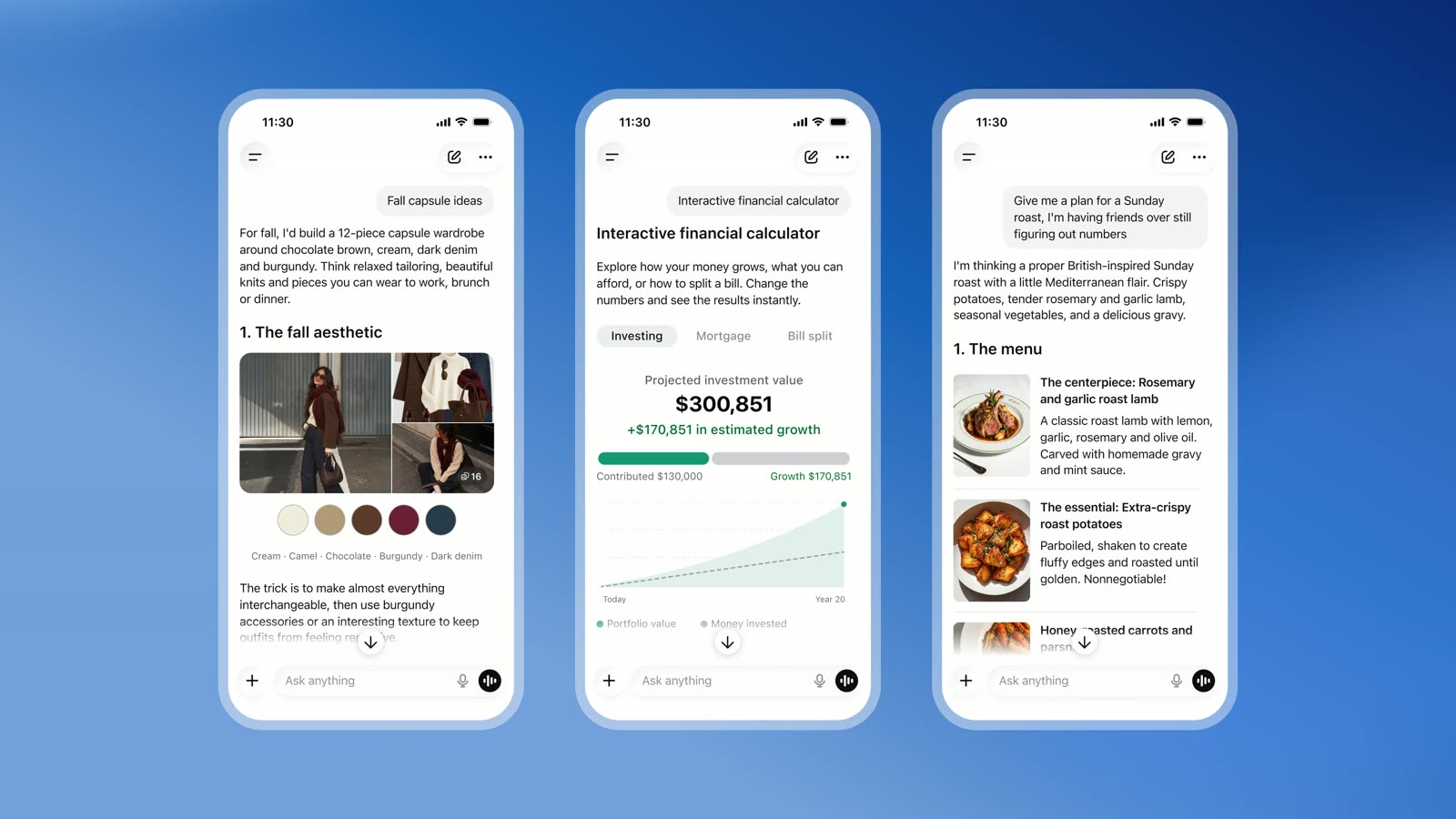
OpenAI has officially introduced a major overhaul to how ChatGPT presents information, moving away from standard text-heavy responses toward highly interactive, custom visual elements. Dubbed "Intelligent UI," this updated experience is designed to generate bespoke diagrams, calculators, and other graphical components when they can help clarify an answer. The system is driven by OpenAI's newly released GPT-6 model, which began rolling out to paid subscribers on Wednesday and is scheduled to reach free tier users the following day.
Rather than simply pulling static images from the web or displaying blocks of text, the updated interface generates functional widgets tailored to the user's specific query. For instance, a query about slug anatomy yields an interactive diagram where users can click individual buttons to explore parts like the upper tentacles or the muscular foot. Similarly, financial queries can produce active tools, such as a San Francisco housing affordability calculator equipped with adjustable sliders for income and expenses to show the percentage of income required for different units.
Interactive Elements in Action
Another practical application of this technology is the ability to compare complex physical layouts. During a preview, the interface successfully generated an airplane seat explorer to compare cabin configurations across four different aircraft from Alaska Airlines and Delta Air Lines. This custom tool allowed the user to tap on individual seats to view specific details, with exit rows clearly highlighted in green for easy identification.
However, OpenAI does not plan to clutter every conversation with these visual widgets. The company wants to maintain a balance between utility and simplicity. According to Aarush Selvan, a product manager at OpenAI, "We have a design team that spent a lot of time figuring out when adding a diagram, chart, or buttons adds value versus when it's starting to feel cluttered." For users who prefer a more traditional, text-based experience, the system allows them to explicitly instruct ChatGPT to produce fewer visual elements.
The Rise of Generative Interfaces
This shift by OpenAI mirrors a broader industry trend toward what is increasingly known as "generative UI." Earlier this year, Google introduced similar capabilities for its Search engine, enabling the platform to generate custom, adjustable graphics—such as an interactive guide to black holes with multiple sliders—to help users grasp complex scientific concepts.
As these text, audio, and visual modalities merge, the chatbot experience is evolving into a fully multimodal environment. For ChatGPT’s user base of more than one billion people, this update represents a significant step toward making AI interactions more visually intuitive and less reliant on reading long paragraphs of text.
What it means for developers
The transition toward generative user interfaces signals a profound shift in how software is designed and deployed. As artificial intelligence gains the ability to assemble custom, functional interfaces on the fly, traditional software development and design paradigms are bound to change. Designers may face an identity crisis as AI engines begin to dynamically dictate the look, feel, and structure of software based on the immediate needs of individual users.
For software creators looking to stay ahead of these rapid advancements, accessing and testing these cutting-edge models is crucial. Developers can try top AI models cheaply through one API at https://apixoai.online, allowing them to experiment with different model capabilities without managing multiple platform integrations.
Ultimately, the ability of AI to generate personalized software tools in real-time marks a new chapter in human-computer interaction. Instead of static applications, the future points toward highly personalized interfaces that adapt to exactly what the user needs to see in the moment.
Source: The New ChatGPT Is More Show Than Tell — Wired AI. Written by the Apixo team from that report.
One key for Claude, GPT, GLM, DeepSeek and more. Pay per token with crypto.
Get your API key