Isomorphic Labs Reportedly Explores New Funding Round at Up to $50 Billion Valuation
Alphabet spinoff Isomorphic Labs is in early talks to raise funding at a $40B to $50B valuation, driven by its IsoDDE AI platform for molecular drug discovery.
Isomorphic Labs Ltd., an Alphabet Inc. spinoff focused on accelerating pharmaceutical research through artificial intelligence, is reportedly in early discussions to secure a new round of funding. According to a Bloomberg report detailing the negotiations, the company is seeking a valuation between $40 billion and $50 billion. While the specific amount of capital being pursued and the identities of prospective investors have not been disclosed, the discussions reflect growing commercial focus on specialized AI tools built for complex life sciences research.
This prospective round follows a significant capital infusion announced this past March, in which Isomorphic raised $2.1 billion. That prior financing included backing from Alphabet, two of Alphabet's dedicated venture capital funds, and several external investors. The steep potential valuation now being discussed arrives as the company expands both its underlying technology stack and its enterprise alliances across the pharmaceutical industry.
Advancing computational drug design with IsoDDE
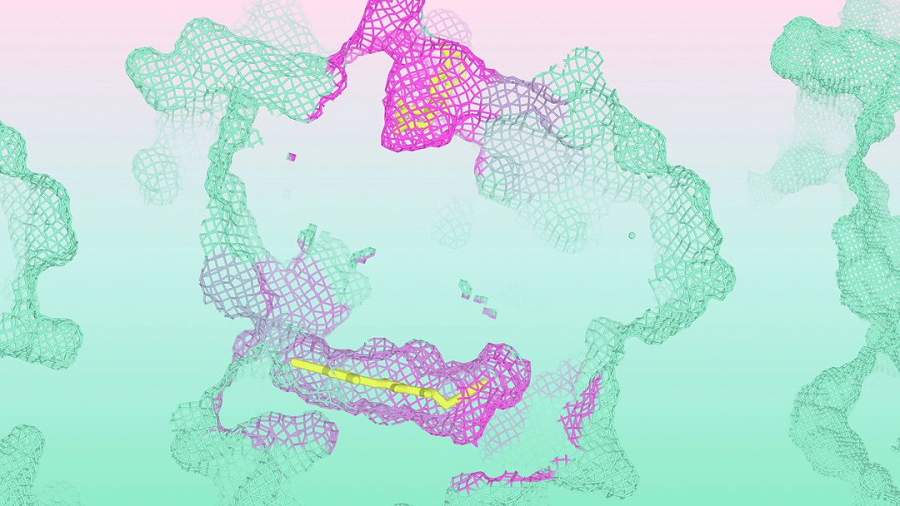
At the center of Isomorphic's technical pipeline is IsoDDE, an artificial intelligence platform engineered to automate and compress the demanding manual research processes required to develop new therapies. A major area of focus for IsoDDE is the identification of binding pockets on disease-causing cells. In traditional pharmacology, potential treatments work by adhering to a specific site on a cell's surface—the binding pocket—to neutralize it.
Mapping these binding sites is notoriously difficult. Cellular surfaces are structurally intricate and typically require specialized microscopes to observe. Furthermore, these surfaces continuously change shape over time, altering the layout of potential binding pockets or causing them to disappear entirely. In February, Isomorphic reported that IsoDDE identified binding pockets more than 50% more effectively than the nearest competing computational tool.
Beyond pocket detection, the platform is designed to model protein-ligament complexes, which are the molecular structures created when a drug molecule binds to a targeted cellular site. Google DeepMind’s AlphaFold model—which earned its creators half of the 2024 Nobel Prize in chemistry—is also capable of predicting these complexes. However, Isomorphic claims that IsoDDE completes the task with roughly twice the accuracy of AlphaFold.
IsoDDE also addresses interactions between binding pockets and immune system antibodies. Because antibodies exhibit structural variations that are difficult to forecast, modeling their behavior represents a persistent hurdle in biological research. According to data shared by Isomorphic, IsoDDE models antibody-binding pocket interactions approximately 2.3 times more effectively than AlphaFold.
Commercial traction through pharmaceutical alliances
Isomorphic generates revenue by partnering directly with established pharmaceutical manufacturers to advance discovery programs. The company primarily directs these collaborations toward small molecules, which serve as foundational biological components in a broad variety of therapeutic medications.
Over the past two years, the Alphabet spinoff has translated its computational models into multi-billion-dollar enterprise agreements. In 2024, Isomorphic secured research partnerships collectively valued at nearly $3 billion with Eli Lilly and Co. and Novartis AG. Building on that momentum, the company initiated an additional small-molecule collaboration with Johnson & Johnson this past January.
These research pacts demonstrate an industry trend where biopharma enterprises contract high-precision AI platforms to narrow down prospective candidates before committing to physical laboratory trials.
What it means for developers
For developers and computational scientists, Isomorphic's progress highlights a growing divergence between general-purpose foundation models and highly specialized, domain-tailored systems. While broad language and multimodal models process vast amounts of unstructured text and media, tackling deep scientific problems like molecular docking requires specialized neural architectures capable of navigating structural biology and continuous physical variation.
At the same time, enterprise application development frequently relies on orchestrating specialized tools alongside accessible, general-purpose models for analytical, data processing, and development tasks. For engineering teams evaluating cutting-edge architectures across their workflows, developers can try top AI models cheaply through one API at https://apixoai.online.
As specialized startups like Isomorphic push the boundaries of automated scientific research, software teams will increasingly see domain-specific models operate alongside standardized AI platforms. The expanding validation of specialized AI systems in commercial biopharma suggests that domain-focused modeling will continue to attract substantial industry capital.
Source: Alphabet spinoff Isomorphic Labs reportedly raising funding at up to $50B valuation — SiliconANGLE AI. Written by the Apixo team from that report.
One key for Claude, GPT, GLM, DeepSeek and more. Pay per token with crypto.
Get your API key