Kubernetes Creators Shift AI Agent Harnesses to the Cloud with Mecatl
Kubernetes co-creators Craig McLuckie and Joe Beda are building Mecatl, an open-source, cloud-native agent harness designed to take AI coding loops off local developer desktops.
Most AI coding assistants started their journey in local command-line environments or desktop wrappers, orchestrating an LLM loop that executes tools and passes context back and forth. However, running agent loops directly on a developer's machine brings notable limitations for organizations trying to secure enterprise intellectual property, manage state, and maintain session reliability.
Now, Craig McLuckie and Joe Beda—two of the original co-creators of Kubernetes at Google—are addressing this gap through their company, Stacklok. Backed by a $17.5 million Series A round raised in 2023 from Accel, Madrona, and Bain Capital, Stacklok previously focused on software supply chain security before pivoting toward Kubernetes-based infrastructure for AI agents.
Rethinking Agent Harnesses for Cloud Architecture
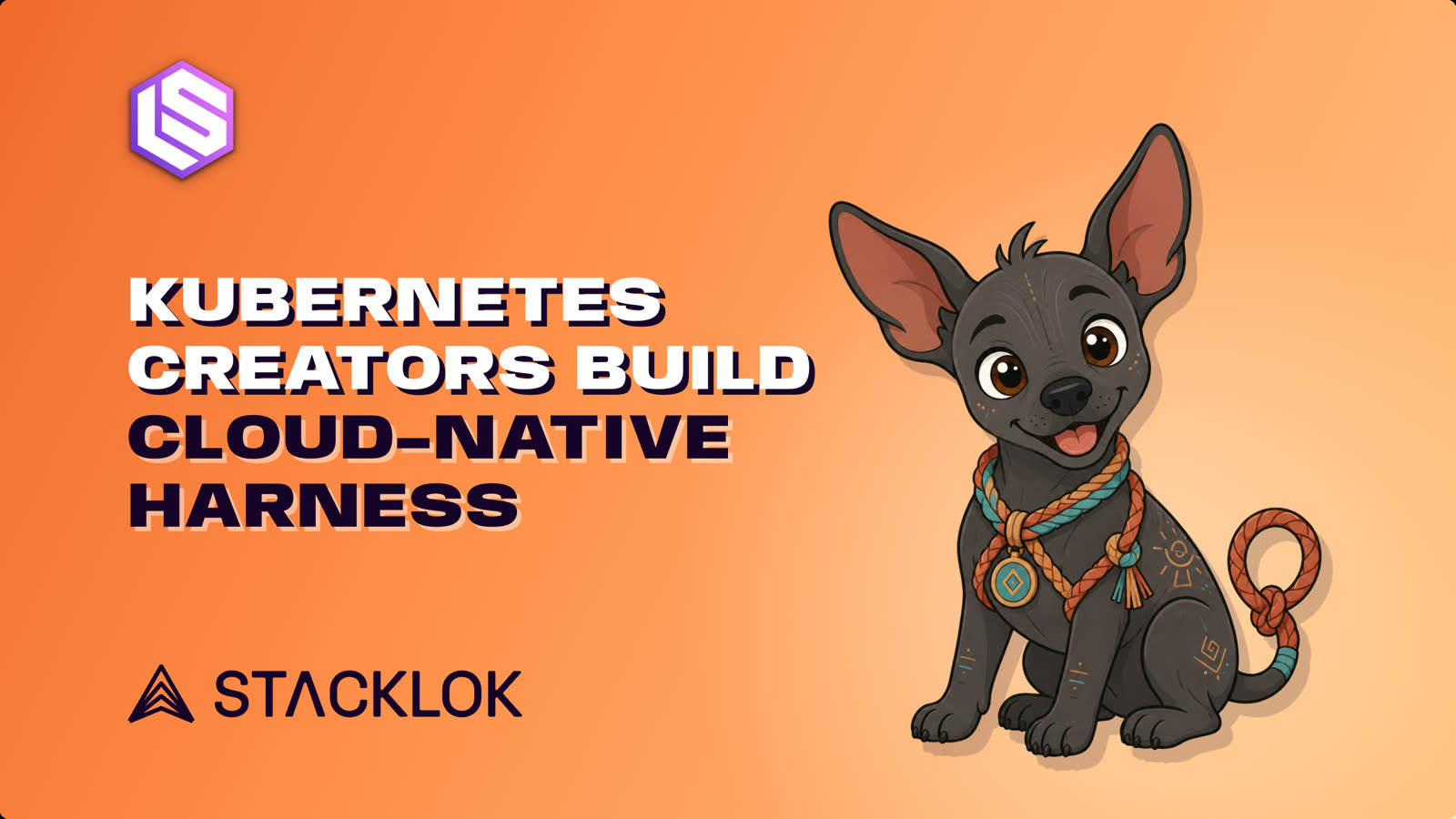
At the core of Stacklok’s agentic push is Mecatl, an open-source project launched on GitHub in June. The name stems from an Aztec word meaning cord or rope. Rather than treating an agent as a single desktop process that directly handles tool invocation, state, and terminal execution, Mecatl breaks these components apart into a cloud-native architecture.
According to McLuckie and Beda, moving the operational center of agents away from local machines is crucial for enterprises. On local systems, intellectual property remains trapped on laptops, and session states are frequently kept in simple JSONL files on local disks. While some teams attempt to "lift and shift" desktop harnesses into cloud virtual machines or sandboxes, Beda points out that this setup complicates agent lifecycle control, such as quiescing an agent safely while it pauses for human feedback.
Mecatl is designed to decouple the core agent loop from the client, model providers, state storage, and the execution environment. This allows sensitive operations like bash calls and tool interactions to run isolated from the orchestrating loop, making agent activity auditable and governed similarly to corporate email systems.
Beyond Desktop: ToolHive and Enterprise Infrastructure
Mecatl fits alongside Stacklok’s other projects, including ToolHive. Originally developed to manage Model Context Protocol (MCP) servers locally inside Docker containers, ToolHive has expanded into an open-source, Kubernetes-based gateway, registry, and operator helper for running and authenticating MCP servers at scale.
In addition to these open-source tools, Stacklok is developing an AI Gateway—currently proprietary, but planned for open source—that provides access control, spend tracking, reporting, and routing across models. Unlike routing systems that select models based on semantic analysis, McLuckie noted that model choice belongs inside the context-rich harness, leaving the gateway focused on governance and governance policies.
Stacklok monetizes these components by offering an enterprise control plane that layers centralized identity, authorization, auditing, and multi-cluster policy over both Mecatl and ToolHive.
What it means for developers
For individual engineers and platform teams, the transition to cloud-native agent architectures signals a shift in how automated coding workflows will be deployed:
- Decoupled execution environments: Developers will no longer need to keep agent processes tethered to an open laptop. Isolating tool calls and bash execution into governed cloud infrastructure ensures tasks can run, pause, and resume reliably without risking local machine stability.
- Enterprise governance over agent interactions: Companies in regulated spaces—such as banking and telecommunications—are moving away from unmanaged desktop scripts toward centralized auditing, where agent prompts, state, and tool permissions are monitored.
- Vendor-agnostic model access: Rather than staying tied to proprietary ecosystems, decoupled harnesses encourage flexibility across model providers. Developers building or testing agent workflows across different providers can try top AI models cheaply through one API at https://apixoai.online to evaluate performance before tying their loops into production clusters.
By treating agents like cloud-native microservices rather than personal desktop utilities, Stacklok is betting that containerized orchestration principles will do for autonomous workflows what Kubernetes did for container management a decade ago.
Source: Can a Cloud-Native Harness Make Agents Reliable Beyond the Desktop? — Latent Space. Written by the Apixo team from that report.
One key for Claude, GPT, GLM, DeepSeek and more. Pay per token with crypto.
Get your API key