Zoom Reframes Its Strategy Around Conversational Data and AI Context
At Zoomtopia 2026, Zoom unveiled a pivot from video conferencing to an enterprise AI data platform powered by its new Unified Context Layer and expanded API ecosystem.
Zoom is undertaking a fundamental shift in how it defines its role in enterprise software. Long regarded primarily as a video communications service, the company used its Zoomtopia 2026 conference to present an overarching strategy that positions it as an artificial intelligence data layer. Under its "conversation to completion" framework, Zoom aims to treat audio, video, chat, and contact center exchanges as the primary input mechanism, turning dynamic conversational data into actionable enterprise intelligence.
The strategic repositioning recognizes that standard enterprise records often trail real-world activity. While traditional retrieval systems index static documents and ticket databases, business decisions typically happen during spoken conversations long before they are formally recorded.
Capturing dynamic context across enterprise workflows
At the core of this transition is Zoom's new Unified Context Layer. The architecture aggregates three distinct information streams: the base intelligence of foundational models, structured business data from integrated software like Salesforce, ServiceNow, and Workday, and real-time inputs captured during live discussions. Zoom uses these feeds to construct an internal graph that tracks individuals, discussion topics, and operational decisions in near real time.
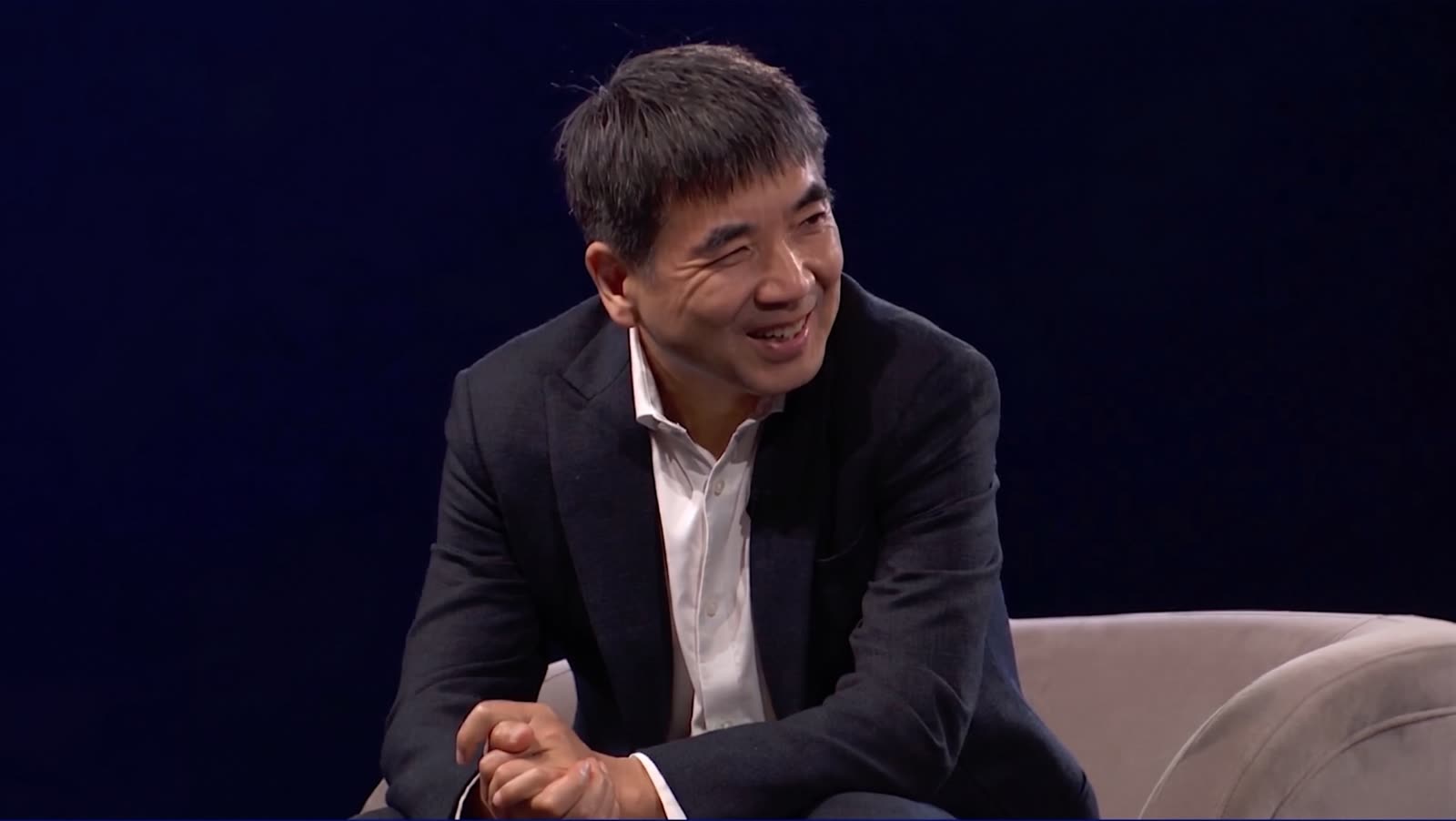
During his keynote address, Chief Executive Eric Yuan underlined the rationale behind the technical approach, explaining, "AI models are only as powerful as their understanding of your business, and that context makes all the difference."
To make this context actionable across third-party environments, Zoom is adopting a more modular, headless platform model. The company announced support for 15 Model Context Protocol (MCP) servers alongside dedicated Search and Ask APIs. These tools allow enterprises to query Zoom's dynamic context graph and feed it directly into external frontier models and code engines, including Claude, Codex, and Microsoft Copilot. Furthermore, Zoom is expanding its My Notes feature beyond its proprietary app to support in-person dialogues and competing meeting platforms.
Beyond IT: Expansion into sales, recruiting, and CX
Zoom is leveraging recent acquisitions and specialized applications to move upstream into departments traditionally managed by separate specialized vendors.
In revenue operations, Zoom Revenue Accelerator (ZRA) handles conversation analysis and forecasting for sales organizations. Zoom reported in an analyst prebriefing that 65% of ZRA users experience a significant or transformational effect on deal performance, while its fiscal 2026 shareholder letter highlighted 50% year-over-year customer growth for the product. The expansion is bolstered by Zoom's July acquisition of Common Room, which aggregates buying signals and customer relationship data to automate outreach. Chief Strategy Officer Abhisht Arora described the transaction as "extending Zoom's system of action upstream."
In human resources, Zoom acquired talent platform BrightHire in December 2025 for $98 million in cash. BrightHire automates interview notes, structures feedback against job requirements, and provides an AI screening assistant. BrightHire also incorporates Zoom's Deepfake Risk Detection to prevent candidate fraud—a security safeguard that Zoom plans to roll out to standard workplace meetings in December. Along with employee engagement app Workvivo, the tooling targets the entire employee lifecycle.
Zoom's customer experience products follow a similar integration model. By routing context between automated assistants and support staff, clients avoid repetitive inquiries. Customer support client Cricut reportedly achieved an 89% reduction in customer hold times using these integrations.
What it means for developers
Zoom's evolution gives developers a clear way to tap into live enterprise conversations rather than relying solely on stale data warehouses. Through the release of 15 MCP servers and new Search and Ask APIs, software engineers can now treat workplace discussions as a structured data source for downstream AI agents, analytics pipelines, and workflow automation tools.
Because Zoom connects directly to external foundation models, teams are not locked into a closed ecosystem. Developers building internal business copilots can extract dynamic decision graphs from meetings and pass that grounding context into whichever model best fits their latency and reasoning needs. As teams prototype systems that combine this conversational context with external endpoints, developers can try top AI models cheaply through one API at https://apixoai.online.
However, developers and technical leads must account for operational overhead. As Zoom Chief Marketing Officer Kim Storin observed, enterprise IT departments have spent recent months enacting stricter purchasing rules in response to unpredictable token usage and consumption expenses. Applications querying Zoom's new APIs will need robust caching, selective ingestion, and predictable model routing to stay viable within corporate cost controls.
Navigating the enterprise go-to-market shift
While Zoom's architecture makes technical sense, it forces the vendor into direct competition with entrenched line-of-business software providers such as Gong, Clari, ZoomInfo, and Greenhouse.
Historically, Zoom sold seat licenses to IT and telecommunications managers. Selling ZRA, BrightHire, and Common Room requires building relationships with chief revenue officers and talent acquisition leaders. Chris Barwick, head of Americas sales and channel, stated that Zoom is restructuring sales enablement around targeted buying centers, including CX, go-to-market, talent, and developers.
Partners are already adapting. Joe Rittenhouse, co-CEO of reseller Converged Technology Professionals (CTP), noted that ZRA is now frequently used to replace Gong in accounts before any communications infrastructure is discussed. "That flips the traditional Zoom motion on its head, with the meetings business following an application sale rather than leading it," Rittenhouse said.
Whether Zoom can fully establish itself as an AI data platform will ultimately hinge on whether its go-to-market execution can match its technical context layer across disparate enterprise departments.
Source: Zoom’s next act: From video company to AI data platform — SiliconANGLE AI. Written by the Apixo team from that report.
One key for Claude, GPT, GLM, DeepSeek and more. Pay per token with crypto.
Get your API key