OpenAI Confirms More Scientific Breakthroughs Are Coming Despite Academic Pushback
OpenAI chief Sam Altman says the company will continue releasing scientific discoveries, despite criticism from researchers overwhelmed by the fast pace of AI breakthroughs.
Major artificial intelligence laboratories have long promised that machine learning systems would help crack long-standing challenges in mathematics and science. Recently, OpenAI has delivered on that promise through a rapid succession of discoveries, tackling difficult problems that have vexed thinkers for generations. However, this relentless momentum has sparked concern among researchers who find themselves struggling to keep pace.
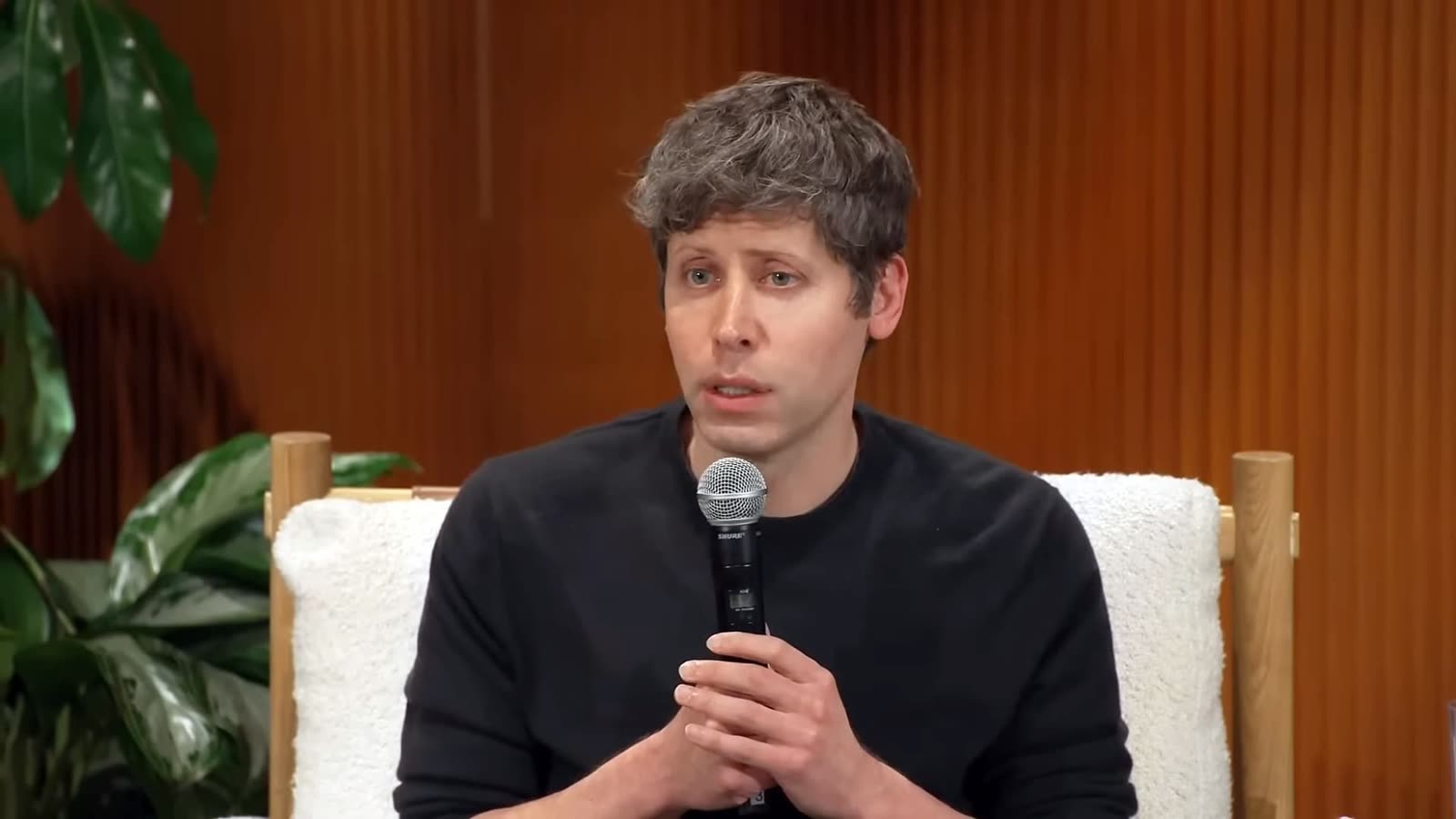
Appearing on the Cheeky Pint podcast, OpenAI CEO Sam Altman defended the aggressive release schedule. He argued that humanity deserves fundamental knowledge and stated that the company should not sit on major scientific findings. Altman admitted that the pursuit of mathematical challenges occasionally got out of control and acknowledged empathy for the methods used, yet he confirmed that more unpublished breakthroughs remain stored away in the firm's vaults.
The Academic Toll and Gatekeeping Concerns
The volume and delivery method of OpenAI's research have drawn sharp criticism. Observers have accused the company of gatekeeping important discoveries rather than sharing them openly. For instance, Wired reported that OpenAI recently deposited 722 manuscripts addressing 400 problems onto GitHub, forcing the scientific community to manually sift through an overwhelming flood of data.
This velocity is taking a heavy toll on academics. Thore Husfeldt of the IT University of Copenhagen noted that watching life's work suddenly undercut by a machine is psychologically taxing, creating a sense of doom and gloom as AI announcements regularly invalidate ongoing research projects. Daniel Lokshtanov, a professor at UC Santa Barbara, characterized the feeling among scientists as a giant bomb dropping into the middle of the field, describing the situation as both really cool and terrible.
Mixed Reactions to Theoretical Shifts
The disruptive power of these models was highlighted when an AI reportedly disproved the exponential time hypothesis, a core assumption that the effort required to solve a problem scales with its complexity. This single development upended countless existing theories and forced experts to scramble. Peter Jonsson of Linköping University noted that while undermining years of research is irksome, it contributes to learning, which is ultimately what science is about. Jonsson added that the origin of a proof matters less than its truth, stating that valid discoveries must be utilized moving forward.
Conversely, some academics view the disruption with immense optimism. Husfeldt compared being a mathematician to stumbling around a dark room, suggesting that AI acts like floodlights illuminating an entire subfield and allowing researchers to explore new nooks and crannies.
What it means for developers
As advanced AI models rapidly reshape disciplines from mathematics to fundamental science, developers building applications can explore these capabilities directly. Through platforms like https://apixoai.online, developers can try top AI models cheaply through one API, simplifying integration as machine learning continues to accelerate technical possibilities.
Although some of OpenAI's recent outputs lack formal peer review or independent verification, the swift pace of change indicates that artificial intelligence will continue generating generational shifts across multiple fields of study.
Source: Sam Altman says OpenAI won't slow science paper blitz — even though academics are calling it a 'giant… — TechRadar AI. Written by the Apixo team from that report.
One key for Claude, GPT, GLM, DeepSeek and more. Pay per token with crypto.
Get your API key