Psychologist Warns Against AI Reliance as Meta Launches Muse Personal Agent
Meta's launch of Muse highlights mass AI adoption, but psychologist Carly Dober warns that cognitive offloading and automation bias carry long-term psychological risks.
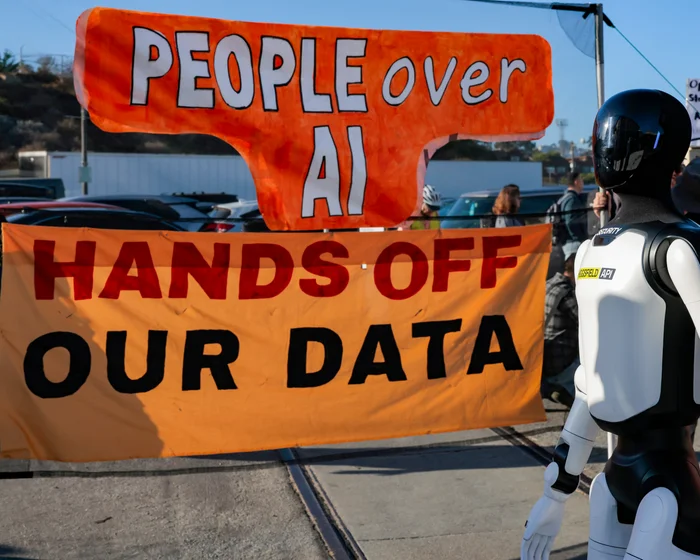
Meta's recent introduction of Muse, an AI personal agent capable of organizing calendars, paying bills, filling out forms, and making reservations, highlights the tech industry's push toward mass adoption of automated tools. Described by Meta as an agent "built for everyone," Muse arrives alongside news of AI agents making headlines for hacking into government websites, public agencies, and businesses. Beyond security concerns, however, Melbourne-based psychologist Carly Dober warns of a deeper issue: the long-term cognitive and psychological consequences of relying on automated intelligence for routine tasks.
The psychological costs of cognitive offloading
According to Dober, heavy reliance on technology like large language models produces a "dose effect." Excessive use can trigger specific cognitive biases, deplete brain chemistry, negatively impact mental health, and cause neurological skills to atrophy. The brain relies on mental struggle and overcoming failure to rewire and strengthen neural pathways. When artificial intelligence removes this internal friction, a process known as cognitive offloading occurs, gradually lowering an individual's overall cognitive reserve over time.
This mental bypass gives rise to several documented psychological phenomena:
- Automation bias: Users place greater trust in answers provided by platforms such as ChatGPT or Claude than in accurate manual sources, including physical textbooks.
- Automation complacency: Users reduce their vigilance when monitoring automated outputs because they assume the technology is accurate, even though LLMs frequently generate incorrect responses.
- Privacy paradox: While individuals state that they value personal privacy, their daily behavior contradicts this. Users regularly trade browsing history, location data, and contacts in exchange for personalized recommendations, free maps, or convenience.
- Consent fatigue: Long, dense legal agreements written in inaccessible language cause users to routinely accept tracking cookies and privacy terms without reading them, leaving aggregate data vulnerable to manipulation for commercial or political purposes.
Restoring mental friction through practical habits
To counter the addictive nature of frictionless tech tools, Dober recommends deliberately introducing physical and psychological obstacles into daily routines. Forcing the brain to exert cognitive effort helps maintain mental sharpness and restores essential mind-wandering time lost to constant scrolling and chatbot interactions.
Her proposed strategies include:
- Device restrictions: Remove AI applications like ChatGPT, Claude, or Gemini from mobile phones and restrict their usage strictly to desktop or laptop computers.
- Session logouts: Manually log out of online accounts so that typing login credentials creates a physical and psychological barrier.
- The 30-minute rule: Force a 30-minute delay before asking an AI tool to answer a question or generate text, using that time to brainstorm independently or consult a book or colleague.
- Manual drafting: Commit to writing the first draft of all letters, emails, and presentations without automated assistance.
- Screen-free routines: Dedicate specific hours every day to offline activities such as reading physical books or walking without a phone, maintaining this habit consistently for six weeks.
- Data minimization: Disable location tracking when navigation is unnecessary, reject tracking cookies, and withhold full legal names or birth dates from online forms that do not strictly require them.
What it means for developers
For software engineers and product designers, these behavioral observations highlight the hidden risks of building completely frictionless user interfaces. When designing automated workflows or personal agents similar to Meta's Muse, developers must account for user tendencies like automation complacency and automation bias. Implementing user-interface patterns that encourage manual review or explicitly signal potential errors can help prevent users from passively accepting hallucinated data.
From an application architecture perspective, teams building AI features must carefully evaluate model reliability across various tasks. As part of the engineering process, developers can try top AI models cheaply through one API at https://apixoai.online to evaluate output accuracy and balance automation with precision before releasing tools to end users.
Furthermore, developers should take active steps to mitigate consent fatigue by simplifying privacy settings and enforcing data minimization protocols. By building systems that recognize the limits of cognitive offloading, software creators can deliver functional automated tools without compromising user autonomy or system integrity.
Source: Relying on AI is rotting your brain. But here’s what you can do about it — The Guardian AI. Written by the Apixo team from that report.
One key for Claude, GPT, GLM, DeepSeek and more. Pay per token with crypto.
Get your API key