Real-World Cost Cutting for AI Teams: What Actually Works
A deep dive into concrete techniques AI engineering teams are using to slash token usage and operational costs, covering Spotify, Alibaba, and key benchmarks.

Engineering teams are constantly searching for ways to minimize the expenses associated with large language models without sacrificing code quality. Recently, developers shared numerous strategies, but only a handful offered concrete mechanisms, transparent numbers, and acknowledged failure points. Analysts tracking these developments have distilled these insights into practical takeaways for software teams.
Proven Token Reduction Techniques
Among the most widely discussed methods, Spotify's Portal tool approach stands out. By implementing PreToolUse hooks, the system blocks file reads exceeding 350 lines and instructs agents to delegate bulk tasks to a cheaper worker model, such as Gemini 2.5 Flash, which returns structured bullets. This achieved a roughly 90% mean token savings across four scenarios on a Java monorepo. However, delegation introduces latency of 10 to 30 seconds, and cheaper worker models can miss subtle bugs like thread-safety issues, which remain the domain of frontier models.
Similarly, Alibaba open-sourced OpenCodeReview, utilizing a hybrid architecture where deterministic pipelines manage file selection and rule matching, while an LLM agent handles dynamic analysis. Internal benchmarks across 200 pull requests showed higher precision and F1 than Claude Code at about one-ninth of the tokens. Independent tests caution that deterministic pipelines can miss cross-file and architectural problems, highlighting that rule-based scripts are best suited for work that does not require deep creative judgment.
Other notable patterns include the agent tree approach, where orchestrators, explorers, and reviewers operate with distinct reasoning effort levels, and the "Not My Tempo" pattern by Sam Sokolin, which records browser agent network requests to replay them as direct API scripts, completely bypassing repetitive UI rendering and token expenses.
What it means for developers
Developers looking to optimize their workflows can easily experiment with these patterns locally or via unified platforms. For instance, developers can try top AI models cheaply through one API at https://apixoai.online. When structuring projects, engineers should match model tiers to task risk rather than task size. Routine tasks like reading, summarizing, and boilerplate code can safely route to cheaper models, while edits, debugging, and auth logic should stay on frontier tiers.
Furthermore, developers should enforce routing logic in deterministic code rather than relying solely on prompt instructions. Utilizing environment variables to configure subagent models—such as setting lightweight models for exploration tasks—helps control baseline expenses.
The Harness Tax Warning
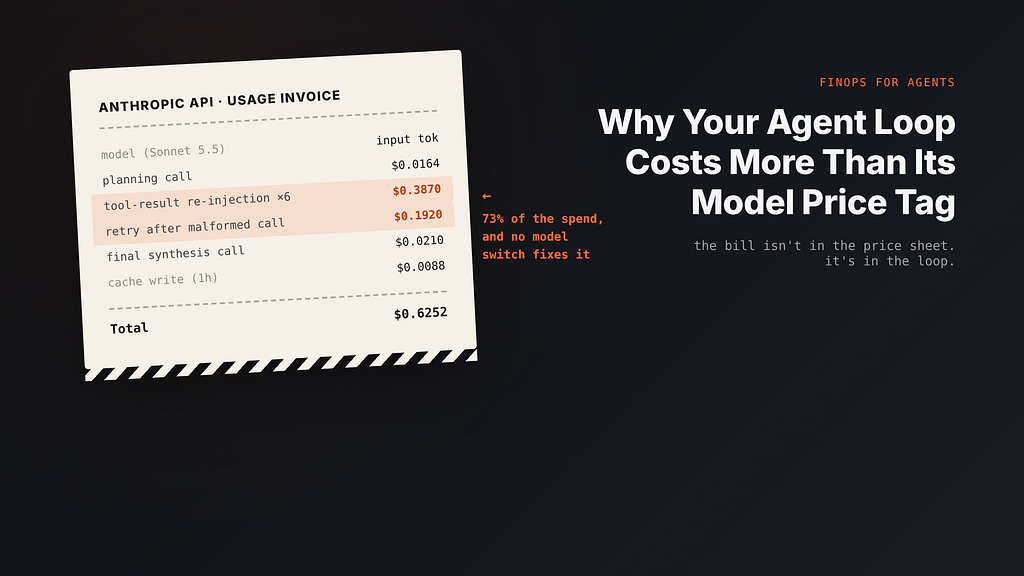
Optimizing model calls may yield limited results if the underlying harness inflates token counts. A study published on September 16 by researchers at UC Berkeley and Arena analyzed seven models across three harnesses on SWE-bench Lite and Terminal-Bench 2.0. The findings revealed that success rates remained largely flat while costs varied up to 5x. The core issue was context size: Claude Code's mean context on the first model call was over ten times larger than simpler harnesses due to extended system prompts and large tool schemas.
Developers are advised to measure their first-call context size on an empty task before focusing on model routing. Establishing a baseline with ten real tasks from a repository, tracking both performance scores and dollar costs side by side, provides the most accurate metric for evaluating cost-cutting changes.
Source: I Tracked Every Cost-Cutting Trick AI Teams Used This Week. Here’s What Actually Works — Towards AI. Written by the Apixo team from that report.
One key for Claude, GPT, GLM, DeepSeek and more. Pay per token with crypto.
Get your API key