Rivian Expands $5.8B VW Joint Venture to Include In-House AI Assistant
Rivian is licensing its proprietary AI voice assistant technology to Volkswagen Group under their expanded $5.8 billion joint venture, signaling broader software integration.
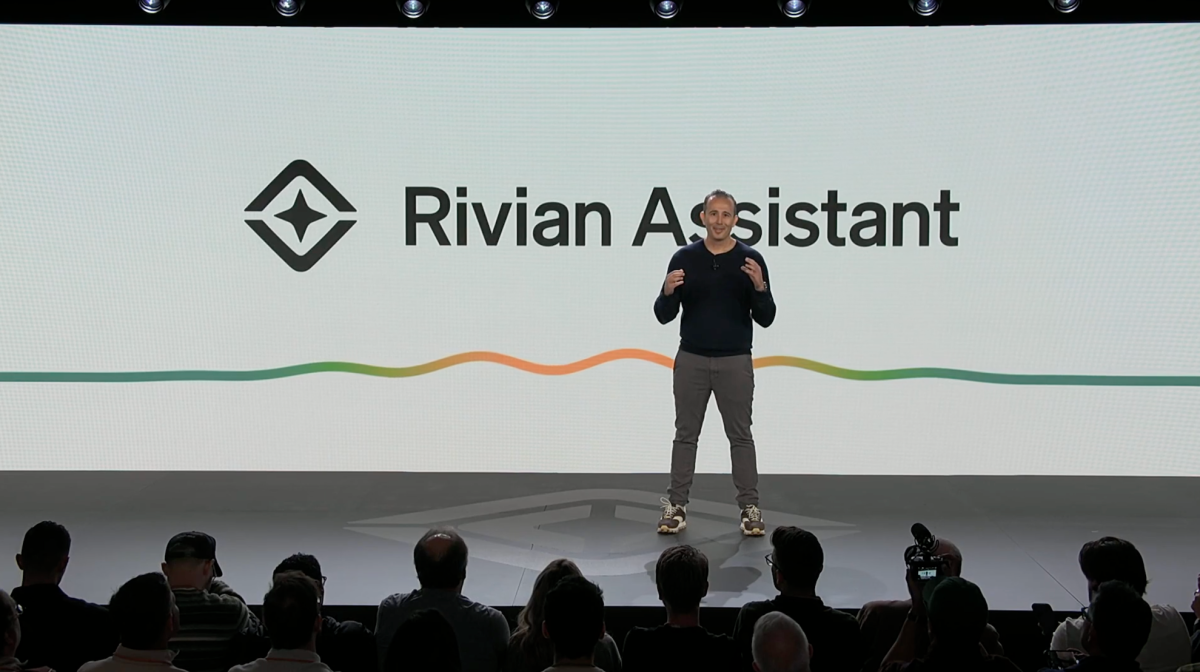
Rivian and Volkswagen Group are broadening their multibillion-dollar alliance to incorporate in-car artificial intelligence. According to Rivian’s third-quarter investor presentation, the electric vehicle maker is licensing core components of its proprietary voice assistant technology to Volkswagen Group. This development builds upon the existing $5.8 billion joint venture between the two automotive manufacturers, signaling an increased focus on unified software architecture and voice-driven vehicle controls.
While Rivian did not disclose the licensing fees, specific payment structures, or the complete list of Volkswagen models that will receive the system, the technology is expected to appear in Volkswagen's upcoming entry-level electric vehicle, the ID EVERY1. The compact four-door hatchback is slated to serve as the initial deployment vehicle for Rivian’s underlying electrical architecture and software stack under the partnership originally formed in 2024.
Expanding the $5.8 billion automotive partnership
The collaboration between Rivian and Volkswagen Group has expanded substantially since its inception. The automakers initially announced an arrangement valued at up to $5 billion, but Volkswagen subsequently increased its financial commitment to invest up to $5.8 billion by 2027. The formal venture, structured as an independent entity that launched operations in November 2024, was conceived to introduce Rivian’s modern electrical design and software capabilities into Volkswagen’s next-generation fleet.
Volkswagen has historically encountered difficulties in deploying competitive, modern software-centric vehicles to match rivals such as Tesla. By licensing Rivian's systems, the German automotive giant aims to resolve those long-standing platform challenges. In its presentation to investors, Rivian highlighted the software licensing deal as validation for its proprietary engineering, referring to the move as a tangible demonstration of how easily its internally designed vehicle platform can be extended to external partners.
Rivian's agentic framework and vertical architecture
The voice assistant represents the culmination of two years of internal research and engineering at Rivian before being publicly demonstrated. Following an extended development phase, Rivian rolled out the software in September 2026 across its core lineup, including the flagship R1T pickup truck, the R1S SUV, and the newer midsize R2 SUV platform.
Beyond basic voice recognition, the system relies on an agentic architecture designed to translate conversational language into direct automotive actions. Rivian founder and CEO RJ Scaringe explained at Disrupt 2026 that the company built an in-house agentic framework capable of interpreting driver or passenger intent and directing those commands to the appropriate operational subsystems in the vehicle. Scaringe noted that this framework could ultimately enable Rivian vehicles to execute third-party AI agents, such as models developed by Anthropic.
This software initiative aligns directly with Rivian's vertical integration philosophy. During an extensive overhaul of the R1T and R1S platforms, the company redesigned battery packs, suspension, user interfaces, sensor arrays, and underlying compute hardware. Crucially, engineers consolidated the vehicle's electronic control units (ECUs), reducing the total number of computers running the vehicle from 17 down to just seven while cutting down extensive physical wiring. By controlling everything from displays, sound, and lighting to sensor processing and compute, Rivian maintains that it can push rapid, system-wide over-the-air (OTA) updates that alter core vehicle behavior.
What it means for developers
Rivian’s decision to license its assistant and software layer highlights a major structural transition in automotive engineering: vehicle functions are increasingly decoupled from legacy hardware controllers and exposed to software-defined agent frameworks.
For developers, the creation of an agentic layer capable of interpreting user commands and delegating them to discrete machine subsystems represents a working blueprint for hardware-interfacing AI. Rather than relying on rigid, pre-programmed voice commands, automotive systems are adopting natural-language orchestration frameworks that route intent to specific APIs across the vehicle. Furthermore, Scaringe's indication that the platform may support external agents from creators like Anthropic demonstrates that connected vehicles could become viable deployment environments for third-party autonomous agents.
As engineering teams build, test, and orchestrate these types of tool-calling agents and multimodal interfaces, managing inference across multiple model families becomes essential. Developers experimenting with conversational agents can access top AI models cheaply through one API at https://apixoai.online, allowing rapid prototyping across different foundation providers without dealing with fragmented billing setups.
Ultimately, the Rivian-Volkswagen deployment underscores that the future of automotive software relies on reducing hardware complexity—evidenced by consolidating 17 ECUs into seven—to make room for high-bandwidth compute platforms capable of running intelligent agentic software at scale.
Source: Rivian expands joint venture with VW to include AI assistant — TechCrunch AI. Written by the Apixo team from that report.
One key for Claude, GPT, GLM, DeepSeek and more. Pay per token with crypto.
Get your API key