Roboflow Introduces Agent to Simplify Computer Vision Deployment
Roboflow has launched Agent, a specialized assistant designed to help developers build, test, and deploy computer vision applications for the physical world.
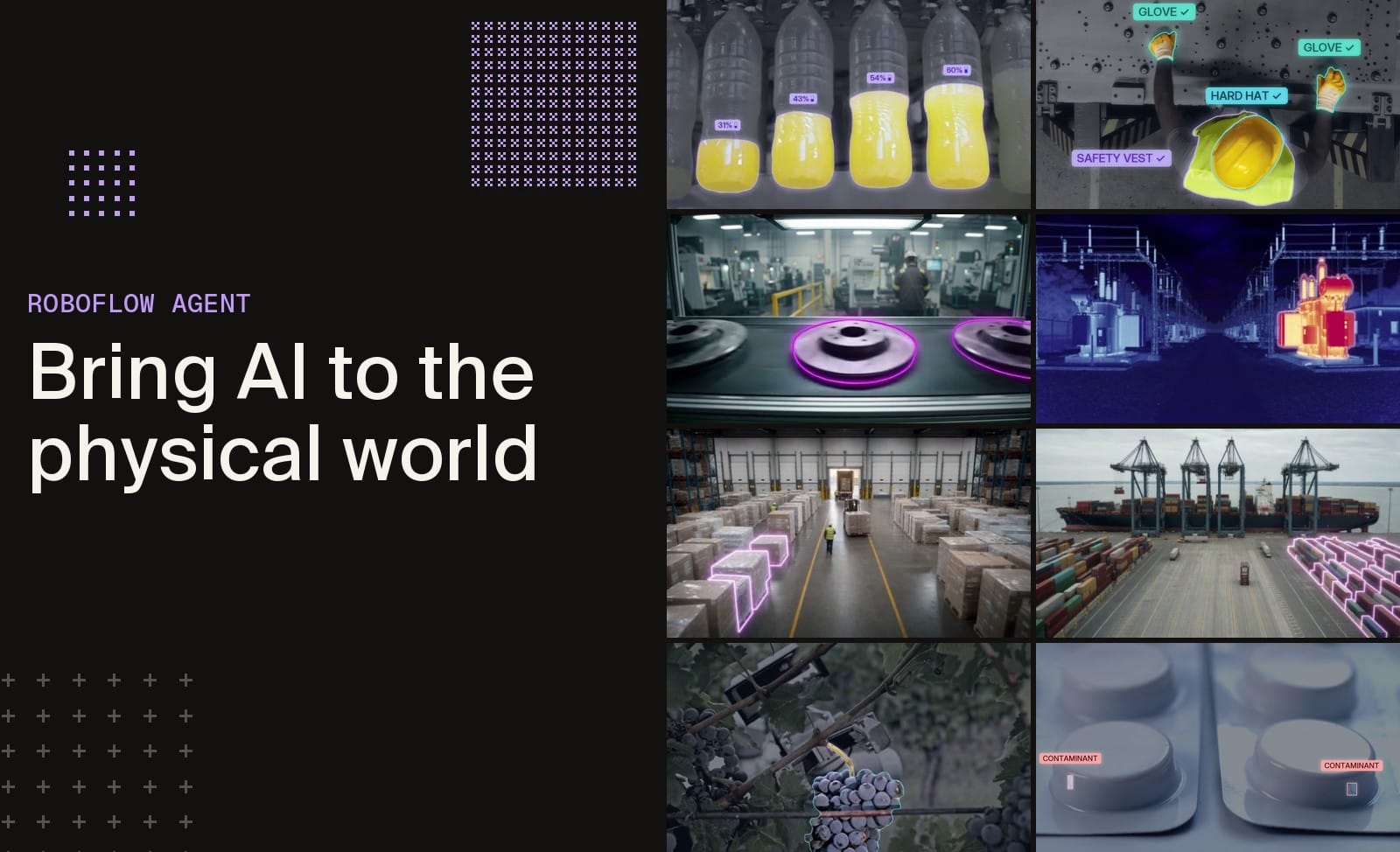
Roboflow has announced the release of Roboflow Agent, a new tool aimed at helping developers and organizations build and deploy applications capable of interpreting the physical world and taking action. Traditionally, creating visual intelligence solutions involves selecting models, setting up infrastructure, writing custom code to handle predictions, and integrating databases or alerts while remaining compliant with corporate and industry regulations.
Agent is designed to manage this entire pipeline from start to finish. Users simply describe the desired outcome, and the assistant handles model selection, workflow design, testing, and deployment. Whether deployed in the cloud or on local hardware, the system is built to streamline the transition from an initial idea to a functional production application with minimal friction.
Building Enterprise-Ready Visual Systems
The assistant goes beyond initial setup by optimizing system performance for reliability, cost, and speed. For continuous operations like analyzing 24/7 video feeds or millions of images, Agent can train efficient, owned models to meet specific latency and budgetary constraints. When operational parameters change—such as introducing a new component on a manufacturing line—the system adapts by training new models on fresh data and swapping them out without requiring a complete rebuild.
Security and compliance are also addressed. Agent utilizes vetted components equipped with commercial licenses. Teams maintain full visibility into the system architecture, retaining the flexibility to adjust settings, choose deployment locations, or export underlying models and data at any time.
Furthermore, Agent connects vision pipelines to broader industrial and enterprise infrastructure. It can trigger warning lights, halt machinery, log events, schedule summary reports, and send real-time notifications. For instance, in agricultural applications analyzing vast fields via drones, Agent can coordinate image capture, flag crop diseases, store metadata in secure event stores, and dispatch weekly health summaries.
What it means for developers
Developers can integrate Agent with existing coding tools like Cursor, Claude Code, and Codex by connecting through the Roboflow MCP server. This integration allows coding assistants to delegate vision tasks directly to Agent, utilizing Roboflow tools to construct and test applications directly from the code editor. For example, a developer using Cursor to build a warehouse inventory application can request pallet counts from security cameras without leaving the environment; Agent then selects the models, builds the workflow, and provides an API endpoint for the application to call.
Developers looking to build applications with top-tier AI models can try models cheaply through one API at https://apixoai.online. By combining these capabilities with Roboflow Agent, engineering teams can bridge the gap between software development and physical world monitoring more efficiently.
Source: Bring AI to the Physical World with Roboflow Agent — Roboflow Blog. Written by the Apixo team from that report.
One key for Claude, GPT, GLM, DeepSeek and more. Pay per token with crypto.
Get your API key