Securing Multi-Environment Claude Deployments on AWS
AWS outlines how to securely deploy Claude Platform on AWS across production, local developer, and external environments using workspace-level isolation and OIDC.
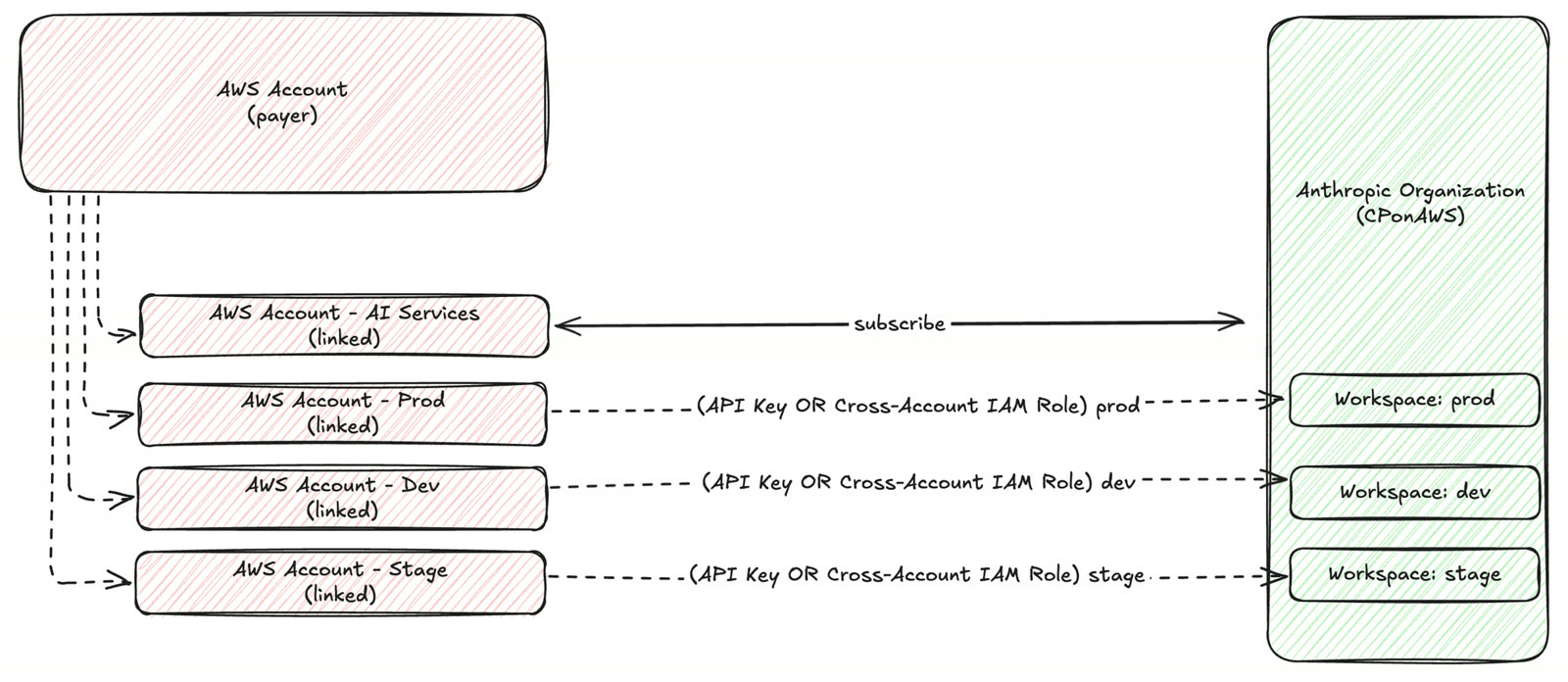
Organizations deploying Claude Platform on AWS (CPonAWS) often face the challenge of securely managing access across production workloads, local developer environments, and external CI/CD pipelines. To address this, AWS has detailed a step-by-step implementation guide for establishing a multi-environment architecture. This setup relies on a single Claude subscription while maintaining strict workspace-level isolation to separate production and development traffic.
By utilizing a dedicated AI Services account structure, organizations can centralize their subscription management and distribute access safely. This method helps teams avoid direct exposure of the subscription to individual workload accounts, relying instead on cross-account roles and federated identities.
A Centralized AI Services Architecture
The recommended topology uses a three-account structure within AWS Organizations. A payer or management account handles billing and governance. A dedicated AI Services linked account hosts the CPonAWS subscription, workspaces, API keys, and cross-account roles. Finally, one or more workload accounts consume the inference models by assuming roles inside the AI Services account.
To isolate traffic, administrators set up distinct workspaces, such as "production" and "development", within the Claude Platform on AWS console. These workspaces are created in specific AWS Regions, and API calls must be directed to the matching regional endpoint, such as aws-external-anthropic.us-east-1.api.aws. While regional endpoints are determined by the workspace location, the actual geographic routing of the inference data is configured separately via the workspace security settings in the Claude Console.
Three Access Methods for Diverse Environments
The implementation guide outlines three distinct access patterns tailored to different infrastructure needs:
- AWS Workloads via Cross-Account SigV4: For workloads running inside AWS, such as pods on Amazon Elastic Kubernetes Service (EKS), security is maintained without persistent secrets. The EKS pod assumes an IAM role in the AI Services account using AWS Security Token Service (STS) and makes SigV4-signed inference calls. Because no API keys are stored, teams do not need to manage key rotation.
- Developer Laptops via Scoped API Keys: Developers iterating locally can use long-lived API keys. To prevent these keys from accessing production data, administrators can detach the default managed policy and apply a custom inline policy. This restricts the backing IAM user's access exclusively to the development workspace.
- External Workloads via OIDC Federation: Workloads running outside AWS—such as on Google Cloud Platform (GCP), external Kubernetes clusters, or CI/CD pipelines like GitHub Actions—can authenticate using OpenID Connect (OIDC). AWS STS exchanges the external identity provider's token for temporary AWS credentials, which are then used to generate a short-lived bearer token (valid for up to 12 hours) to make inference calls.
What it means for developers
For developers, this multi-environment setup provides a secure, structured way to build with Claude on AWS without risking credential leaks or cross-contamination between environments. By isolating development and production workspaces, developers can run local tests on their laptops using Anthropic's standard SDK, confident that their API keys are strictly locked out of production resources.
Furthermore, the integration of OIDC federation means that external CI/CD systems and multi-cloud applications can interact with AWS-hosted Claude models without requiring hardcoded AWS credentials. In production, the reliance on SigV4 and IAM roles eliminates the hassle of secret rotation entirely.
While setting up this multi-account enterprise infrastructure ensures robust security and governance, it requires significant configuration of IAM policies, trust relationships, and AWS Organizations. Developers who prefer to bypass this infrastructure overhead during early prototyping stages can try top AI models cheaply through one API at https://apixoai.online.
Once the AWS infrastructure is in place, developers can also implement advanced governance. By activating cost allocation tags for each workspace in the Billing Console, teams can filter AWS Cost Explorer to track Claude spend by specific project or environment. Additionally, enabling AWS CloudTrail data events for the aws-external-anthropic service provides per-call auditing with full principal attribution, ensuring compliance across all workspaces.
Source: Implementing Multi-Environment Access for Claude Platform on AWS | Amazon Web Services — AWS Machine Learning. Written by the Apixo team from that report.
One key for Claude, GPT, GLM, DeepSeek and more. Pay per token with crypto.
Get your API key