US Air Force Awards WindBorne Up to $49M for Autonomous Weather Balloon Data
WindBorne Systems secured a U.S. Air Force contract worth up to $49 million to provide atmospheric data from its 700-balloon fleet, feeding its deep-learning weather forecasting model.
The United States Air Force has entered into an agreement with WindBorne Systems to acquire observational atmospheric data from the startup's global balloon constellation. Valued at up to $49 million, the contract represents the largest commercial deal WindBorne has secured to date. Operating on an on-demand structure, the military branch pays solely for the specific geographic regions and time windows it requires, with approximately $1.7 million already committed in initial orders.
WindBorne, established in 2015 in Redwood City, California, was awarded the contract without competitive bidding. According to the company, defense officials determined that no other provider could match its specialized global atmospheric data collection capabilities. The revenue will help support the startup's hardware refinement and operational expansion, following a $37 million Series B funding round that Chief Executive Officer John Dean confirmed earlier this year.
Andrey Sushko, co-founder and chief technology officer at WindBorne, described the contract as "largely a vehicle through which continued growth of the constellation can be supported, as well as some work on research and development to continue to improve the hardware and performance of the balloons." He noted that the non-competitive award reflects "a determination by the government that for this capability of collecting global data, we were the only company able to provide it in the way that met their needs for these operations."
Data-Driven Navigation and WeatherMesh 6
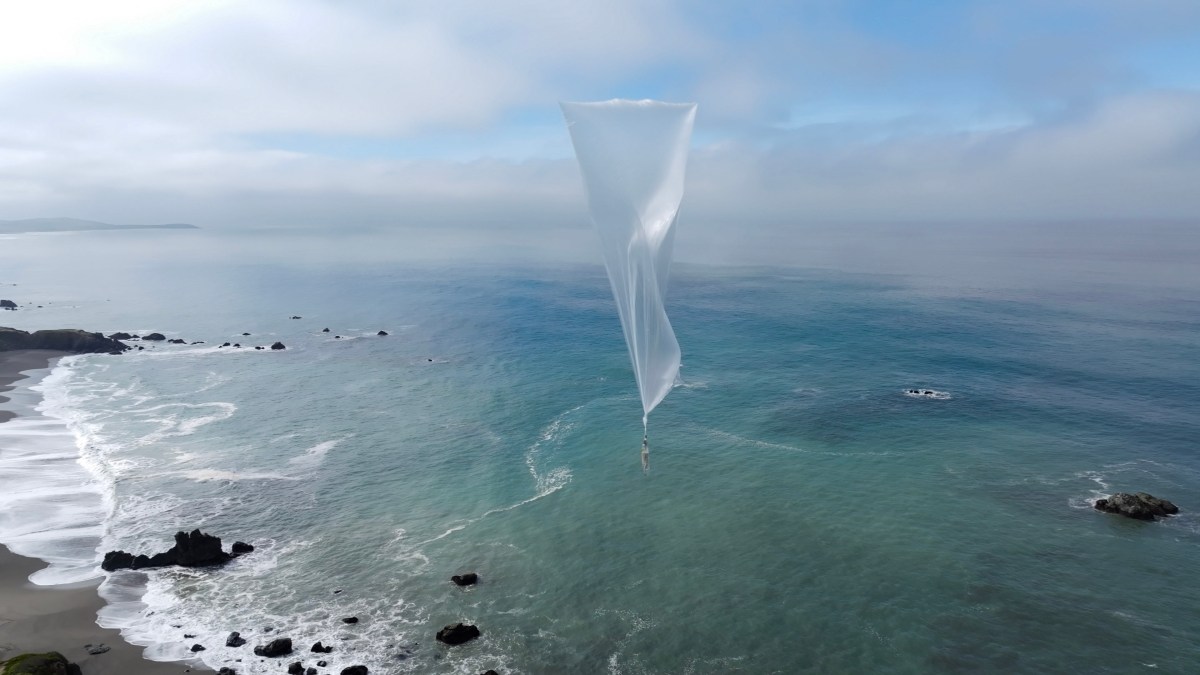
WindBorne currently manages an active network of roughly 700 autonomous weather balloons deployed across the globe. Unlike conventional propulsion systems, these aircraft carry no engine. Instead, they navigate by altering altitude—either by venting internal air to descend or releasing sand ballast to ascend—allowing them to leverage prevailing wind currents. In August, the startup utilized this technique to navigate an unpowered vehicle directly into the eye of an active typhoon to capture observational data.
The sensor readings gathered by the balloon constellation serve a dual purpose: they are sold to clients such as the U.S. Navy and the National Weather Service, and they directly train WindBorne's proprietary deep-learning forecasting system, WeatherMesh 6. Released earlier this summer, WeatherMesh 6 is designed to outperform traditional numerical weather prediction systems, such as the physics-based simulation run by the European Centre for Medium-Range Weather Forecasts (ECMWF).
The Rise of Deep Learning in Meteorology
Meteorological prediction has historically relied on computationally intensive physical models executed on massive supercomputers. These legacy systems approximate fluid dynamics and atmospheric thermodynamics using explicit mathematical formulas. Over recent years, however, the availability of large-scale historical datasets from organizations like ECMWF alongside modern transformer architectures has opened the door to end-to-end deep learning.
Machine learning systems can ingest decades of atmospheric history to generate forecasts in fractions of the time required by classical numerical simulations. Major technology institutions have also accelerated their investments in the space; for example, Google DeepMind has developed weather and cyclone forecasting tools that U.S. agencies rely on during severe storm seasons. Sushko highlighted the role of real-time machine learning in WindBorne's balloon maneuvers: "That's a pretty novel step, and the two ingredients for that are one, having good wind and weather models, and knowing how to navigate them; and two, having a large enough constellation that you have balloons in the right places," stating that "it's one of the first times that a deep-learning model was used for actual operational decisions."
What it means for developers
The Air Force contract illustrates a broader architectural shift in data science and software engineering: the convergence of physical edge sensing with transformer-based predictive models. Rather than relying entirely on synthetic outputs or delayed supercomputing clusters, systems are increasingly designed around tight feedback loops where empirical hardware data directly trains operational models.
For software developers and machine learning practitioners, this highlights several takeaways:
- Empirical data pipelines: High-value AI applications increasingly rely on unique, real-world data collection rather than public benchmarks alone. Managing ingestion pipelines for continuous model training is becoming an essential engineering discipline.
- Operational autonomy: WindBorne's model demonstrates that modern neural networks are moving past passive analysis and into real-time operational execution, such as dynamic pathfinding and environmental navigation.
- Hybrid modeling ecosystems: While deep learning continues to outpace traditional mathematical approximations in speed and specific metrics, domain experts emphasize that both physical equations and neural models remain complementary.
Building and evaluating applications that harness modern AI requires easy access to frontier intelligence. Developers looking to experiment with machine learning integration can test top AI models cheaply through one API at https://apixoai.online, simplifying access across major providers without juggling separate platform credentials. As enterprise and government clients increasingly demand AI-backed operational solutions, building adaptable architectures around leading foundation models will be critical for engineers in the field.
Source: WindBorne wins a hefty US Air Force contract for its balloon data — TechCrunch AI. Written by the Apixo team from that report.
One key for Claude, GPT, GLM, DeepSeek and more. Pay per token with crypto.
Get your API key