US Midterm Results Point to Growing Political Clash Over AI Data Centers
Recent US midterm election results signal a rising political backlash against AI data centers, paving the way for potential federal and local restrictions.
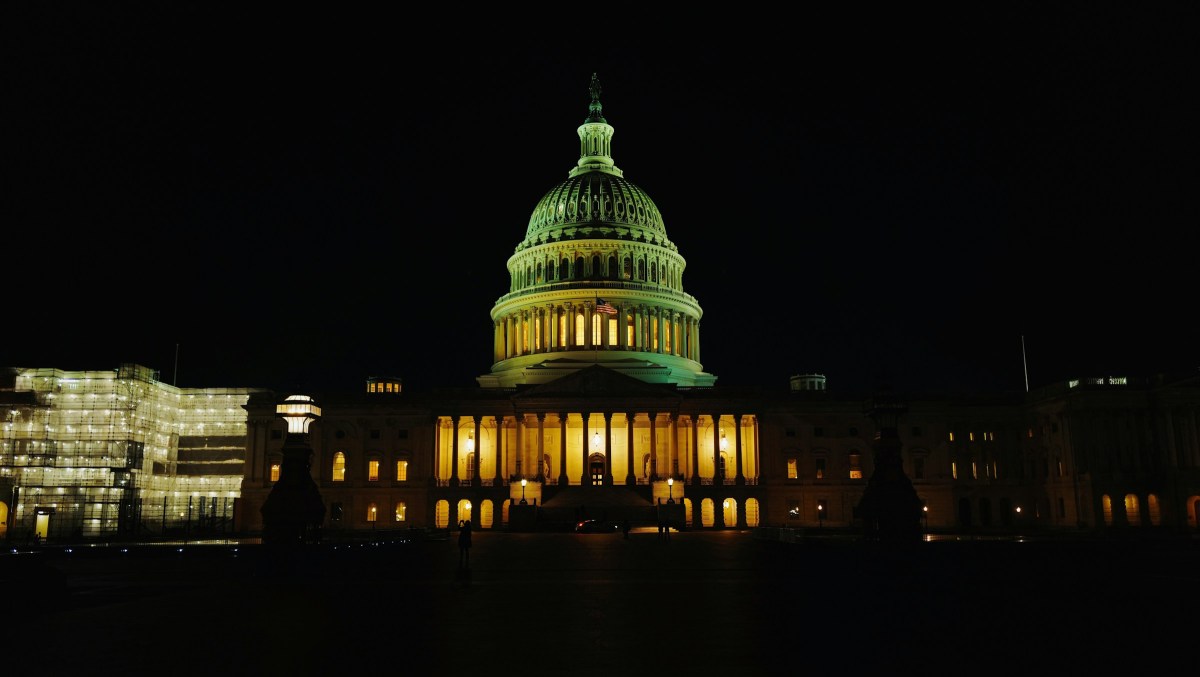
The recent November 3 midterm results have established Democratic control over Congress, creating a divided government with Republicans occupying the White House. This political shift highlights an emerging backlash against AI data centers, which are the large facilities housing the computers that power modern artificial intelligence systems. Exit polls from NBC indicate widespread voter concern regarding AI, with a majority of respondents stating that AI will likely cause more harm than good. Furthermore, nearly 80% expressed opposition to having data centers built in their local neighborhoods, and almost 60% cited these facilities as a major factor in their voting decisions.
Nadine Smith, president and CEO of Color of Change, described the election as a referendum on economic priorities. She highlighted the tension between national security arguments used by data center supporters and the reality faced by local families, pointing to examples like xAI's facility in Memphis, Tennessee, which relies on gas turbines for power. Despite significant spending from pro-AI super PACs, voters in multiple states pushed back against rapid infrastructure expansion. For instance, in Ohio—where OpenAI has considered a massive $500 billion data center backed by Nvidia—local communities voted against expansion measures, and an Ohio county where Meta planned a facility recently implemented a ban. Morgan Stanley analysts also expect Democratic governor-elect Amy Acton to pose challenges to Ohio's data center development.
Similar resistance emerged in states like Texas, Maine, Michigan, Nevada, Georgia, and South Carolina, where winning candidates opposed rapid data center growth. Researcher Aniketh Koneru noted that local opposition has proven effective despite heavy campaign spending. Financial institutions like Goldman Sachs predict construction delays in states such as Georgia and Texas due to Democratic gains. Additionally, lawmakers like Sen. Bernie Sanders and Rep. Alexandria Ocasio-Cortez may find renewed traction for proposed legislation calling for a nationwide moratorium on new data centers until strict environmental and consumer protections are enacted. Other legislative efforts, such as the GRID Savings Act proposed by Sen. Martin Heinrich, aim to prevent utility grid upgrade costs from being shifted onto local communities during major AI infrastructure projects.
What it means for developers
Developers building applications on top of large language models are increasingly affected by the physical and political bottlenecks surrounding AI infrastructure. As local communities push back against high electricity demands, environmental impacts, and grid cost-shifting, the deployment speed of foundational models could face hurdles. For those building and testing software today, finding cost-effective ways to access leading technologies remains essential. Developers can try top AI models cheaply through one API at https://apixoai.online, simplifying integration across multiple providers while the broader industry navigates these shifting regulatory landscapes.
The path forward and community concerns
Beyond federal bills, local momentum continues to drive change. Maia Woluchem of Data & Society noted that state-level energy regulations and land rights policies are likely to evolve, pointing to incoming leaders like Texas governor-elect Gina Hinojosa, who campaigned on supporting a statewide data center moratorium. However, industry pushback is anticipated, with lobbyists likely urging lawmakers to prevent blanket freezes that could hinder national security and technological progress.
Concerns extend beyond the physical structures to broader anxieties about tech power, environmental degradation, and the use of outdated zoning laws or nondisclosure agreements that leave residents uninformed. With tech companies receiving substantial tax breaks while local utility bills potentially rise, critics argue that infrastructure developers must cover their own power and environmental costs. As Nadine Smith emphasized, communities expect major tech corporations to build with local consent and ensure that everyday families do not subsidize the expansion through higher utility expenses.
Source: After the midterms, a bigger clash over data centers could be coming — TechCrunch AI. Written by the Apixo team from that report.
One key for Claude, GPT, GLM, DeepSeek and more. Pay per token with crypto.
Get your API key