Why Aston Martin Keeps AI Off Its Website and in the Back Office
Aston Martin is taking a cautious approach to AI, deploying it in back-end ERP workflows while keeping customer-facing website experiences entirely human-centric.
For a luxury brand like Aston Martin Lagonda Ltd., customer interaction is about high-touch personalization and handcrafted detail. Because of this, the automaker has taken a distinct stance on artificial intelligence: keep it entirely out of the customer-facing experience, but integrate it deeply into back-end operational workflows.
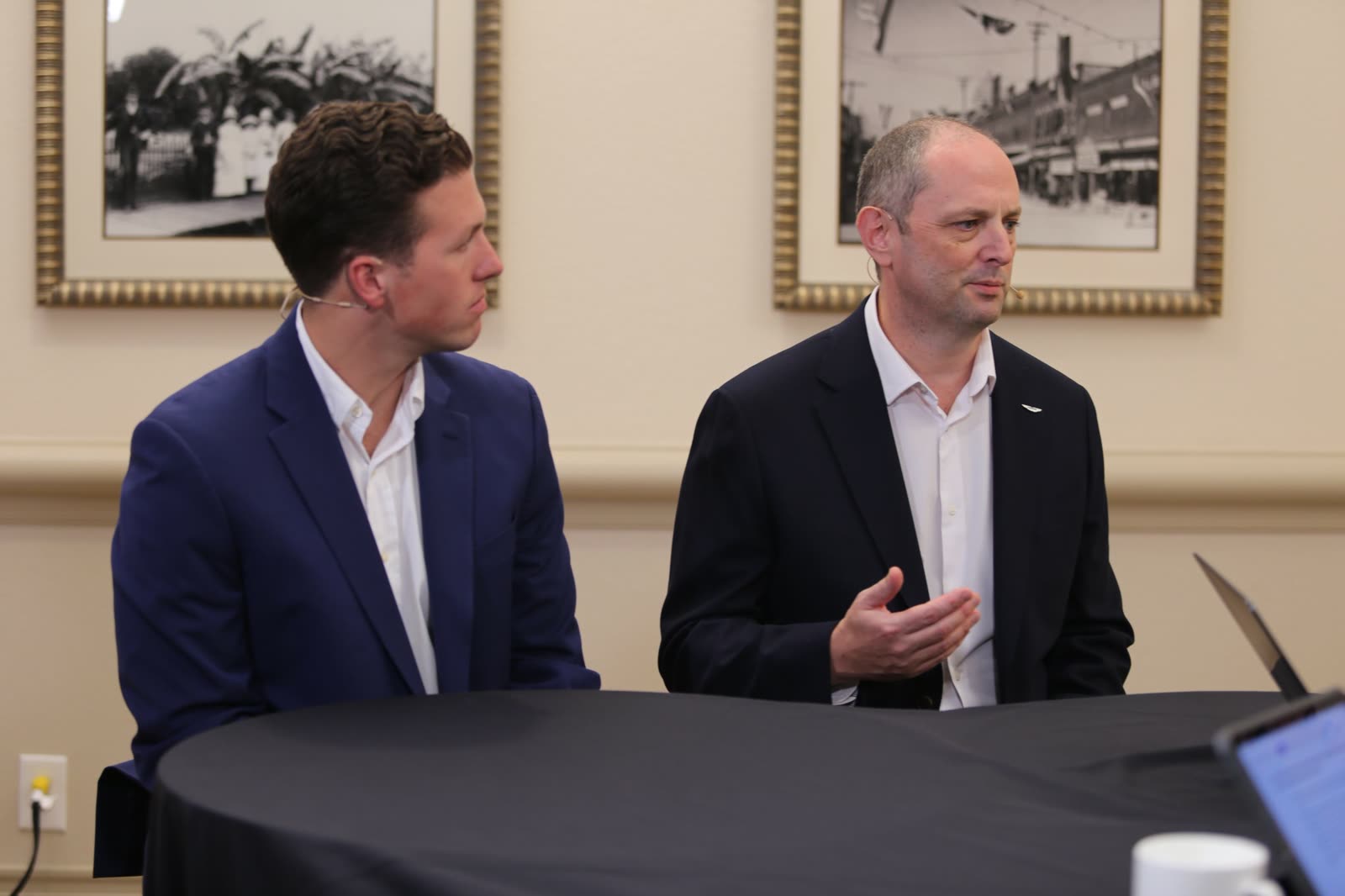
Speaking at Infor Velocity Week during a broadcast on theCUBE, Aston Martin's Chief Information Officer, Steve O'Connor, and Infor's director of product management, Max Fisher, shared how the carmaker is navigating the balance between AI adoption and brand preservation. By focusing on back-end systems rather than website chatbots, Aston Martin aims to streamline operations while keeping its luxury buyer experience human-centric.
Prioritizing the Back End Over Customer-Facing Bots
Aston Martin's strategy is designed to protect its brand identity while still capturing the efficiency gains of modern technology. The company evaluates every potential AI use case by its direct impact on profit and loss, followed by potential efficiency improvements. This has led them to deploy AI within back-end operations, such as configure-price-quote systems, rather than on their public website.
O'Connor described the company's cautious but deliberate approach to AI. "We’re AI delayers, not deniers. We don’t want to be the people that make the big mistake and make a lot of investment in the wrong thing," O'Connor explained. This cautiousness is especially true for customer interactions. "You will never see an AI agent on the front end of an Aston Martin website because that’s not the experience the customers want," O'Connor added.
Instead of customer-facing bots, the automaker leverages Infor’s CloudSuite Automotive tool to automate and optimize back-office workflows. This cloud-based enterprise resource planning (ERP) system allows Aston Martin to bypass traditional, slow-moving upgrade cycles. O'Connor noted that they receive new features and capabilities almost as soon as they are released. "We get all of the new features, new capabilities almost as soon as they’re released," he said. "That’s literally unheard of in an [enterprise resource planning] land where you’re normally doing massive transformational programs, upgrades and stuff, as well."
Balancing Governance and Rapid Deployment
According to research from Infor, more than half of businesses struggle to scale their AI initiatives. To address this challenge, Infor uses its AI Adoption Hub to build customized roadmaps for clients based on public filings, meeting transcripts, and documented problems.
Fisher noted that this structured approach has dramatically shortened the time required to implement AI use cases. Previously, deploying a single use case could take six months or multiple quarters. Now, the process takes weeks. Fisher pointed out that if a project takes only two to three weeks, "learning that lesson … could be worth that [time], and you’re on to the next one." He added that "If it was three or four years ago, it would take six months, two quarters, three quarters to get a use case done."
However, rapid deployment requires careful management. To ensure that AI continues to deliver value after it is deployed, Aston Martin assigns a specific business owner to manage the outcomes of each AI agent. O'Connor also emphasized the importance of preparing underlying systems before layering AI on top of ERP software, advising organizations to fix their data and processes first.
At the same time, O'Connor warned against over-regulating the technology. Aston Martin initially set up a large governance framework, but found that it restricted progress. "We implemented a large governance framework," O'Connor said. "What that did was stifle innovation. This AI by its very nature is innovation in a box, in a nutshell."
What it means for developers
For developers, Aston Martin's strategy highlights a shifting focus in enterprise AI. While consumer-facing chatbots often get the most public attention, the real, measurable business value is frequently found in back-end optimizations, ERP integrations, and data processing. Developers working in enterprise environments must focus heavily on data hygiene and process optimization before attempting to deploy AI models.
Building and testing these complex back-end workflows requires access to a variety of AI models to find the right fit for specific tasks, such as processing configure-price-quote data or automating supply chain steps. To simplify this process, developers can try top AI models cheaply through one API at https://apixoai.online. This unified access allows teams to prototype and deploy back-end AI agents without the overhead of managing multiple vendor platforms.
Ultimately, Aston Martin’s approach shows that successful AI integration is not about putting algorithms everywhere. Instead, it is about identifying where automation drives efficiency—such as in complex back-office workflows—and where human touch remains irreplaceable.
Source: Aston Martin puts back-end AI to work while keeping agents off its website — SiliconANGLE AI. Written by the Apixo team from that report.
One key for Claude, GPT, GLM, DeepSeek and more. Pay per token with crypto.
Get your API key