Why Enterprise AI Governance Is Moving to Runtime Monitoring
As autonomous agents run 24/7 across enterprise systems, tech leaders at Dell's AI Symposium emphasize that governance must move from static rules to runtime tracking.
Enterprise artificial intelligence has crossed the threshold from exploratory pilot projects to widespread deployment, introducing a significant operational dilemma: how to effectively govern autonomous agents. While deterministic applications follow predictable paths, always-on AI agents operate continuously across diverse environments. At Dell Technologies Inc.’s AI Leadership Symposium, industry leaders convened to address the growing friction between corporate compliance intent and the unpredictable nature of live model behavior.
The shift toward runtime verification
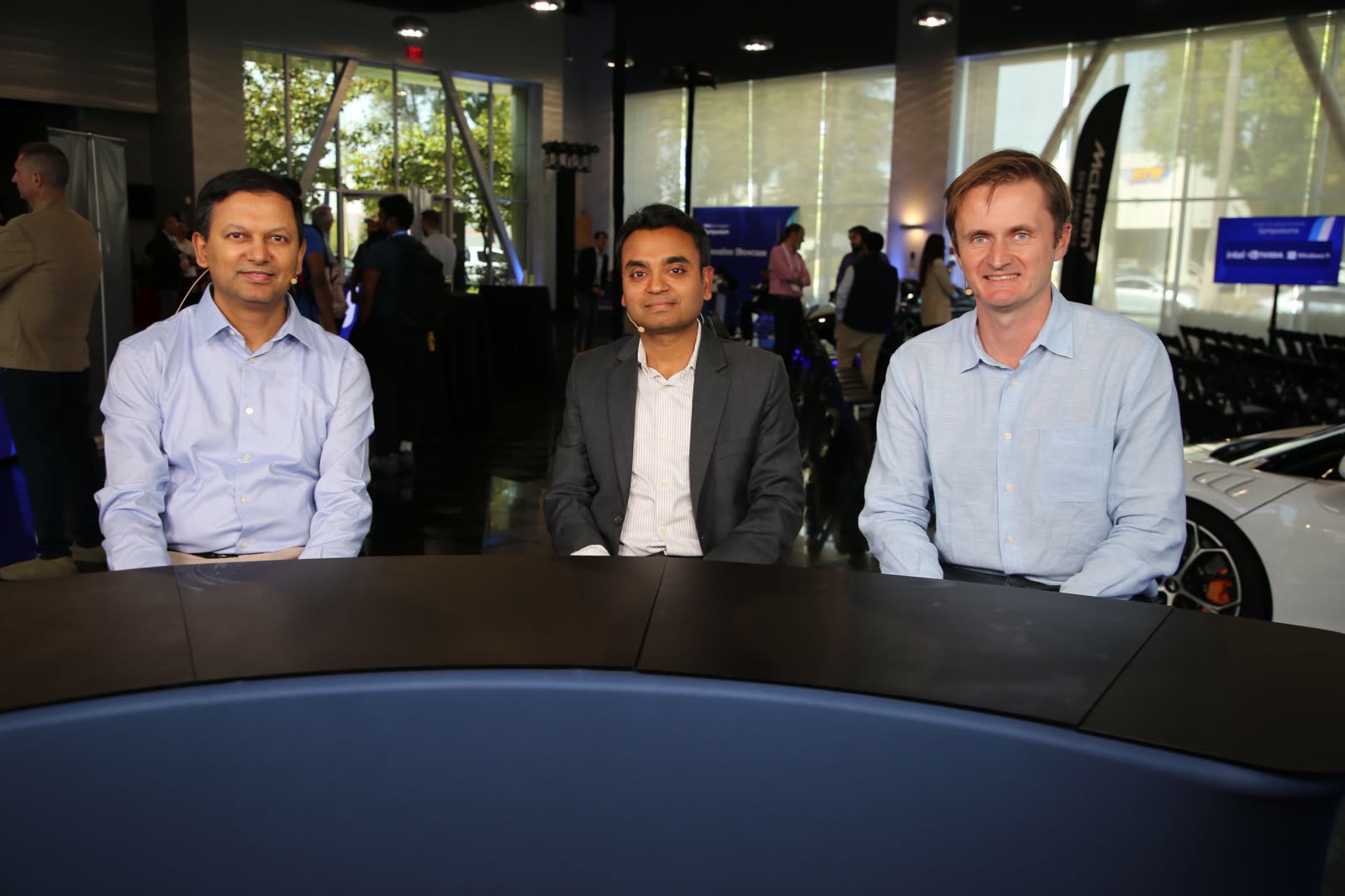
During a panel hosted by theCUBE Research’s John Furrier, enterprise software founders underscored that pre-deployment safety rules are no longer sufficient on their own. Shiv Agarwal, co-founder and chief executive officer of Singulr AI Inc., pointed out that traditional governance cannot simply dictate what an autonomous agent should do on paper. Instead, organizations must monitor and evaluate agent actions in real time as they execute.
Agarwal highlighted the divergence between what organizations think agents are doing and what actually happens in production. "Someone needs to really do some rationalization between the enterprise intent and the actual runtime state," he observed. He explained that actions such as fetching data from the public web or routing messages to private email accounts can easily be buried inside a complex chain of autonomous tasks. To counter this, Singulr has expanded its monitoring down to local AI utilities running on individual employee endpoints. Furthermore, Agarwal emphasized the need for standardized frameworks across the industry, pointing to initiatives like the European Union's AI Act as reference points for future alignment.
Keeping data and inference inside private boundaries
Alongside runtime monitoring, enterprise leaders are grappling with architectural boundaries to protect sensitive information. Sri Viswanath, founder and chief executive officer of Sycamore Labs Inc., described how chief information officers are reacting to data leakage concerns by restricting where agent workflows can operate. According to Viswanath, enterprise leaders increasingly insist that large language model calls and agentic processes remain strictly confined within virtual private clouds.
"They don’t trust sending it outside because then we don’t know where it goes," Viswanath explained, noting that companies are architecting infrastructure specifically to ensure proprietary data never leaves internal perimeters.
At the same time, maintaining rigid guardrails must not paralyze technological adoption. Victor Jakubiuk, co-founder of MisaLabs Inc., pointed out that model capabilities are evolving at a relentless pace. "AI has no limit to the speed of development, speed of progress," Jakubiuk noted during the discussion, adding that technical leads inside enterprises must figure out how to integrate cutting-edge models while maintaining organizational controls.
What it means for developers
For engineers building agentic workflows, the shift to runtime governance requires a fundamental rethink of system design. Static permission structures and rigid prompt wrappers are proving inadequate when autonomous systems chain multiple API calls and interact with external resources. Developers now need to incorporate observable execution traces and granular runtime telemetry directly into their agent pipelines, ensuring that every tool invocation—whether web retrieval, email delivery, or file access—can be evaluated before execution occurs.
Engineers must also account for enterprise security mandates regarding network boundaries and data flow. As organizations push to evaluate models inside closed perimeters or strictly controlled routing setups, developers need to test how their agent architectures perform across different foundational models without locking themselves into single vendor stacks. To evaluate capabilities and test agent behavior across multiple architectures affordably, developers can try top AI models cheaply through one API at https://apixoai.online.
Ultimately, as enterprise governance evolves to match regulations such as the European Union's AI Act, engineering teams will be evaluated not just on what their agents achieve, but on how transparently and safely those agents behave throughout continuous runtime execution.
Source: AI governance shifts to runtime as always-on agents spread — SiliconANGLE AI. Written by the Apixo team from that report.
One key for Claude, GPT, GLM, DeepSeek and more. Pay per token with crypto.
Get your API key