Xatoms Wins $250K Cisco Award for AI-Driven Water Purification Tech
Startup Xatoms uses AI and quantum chemistry to design light-activated materials that clean toxic pollutants in water, cutting research time from 10 years to 30 days.
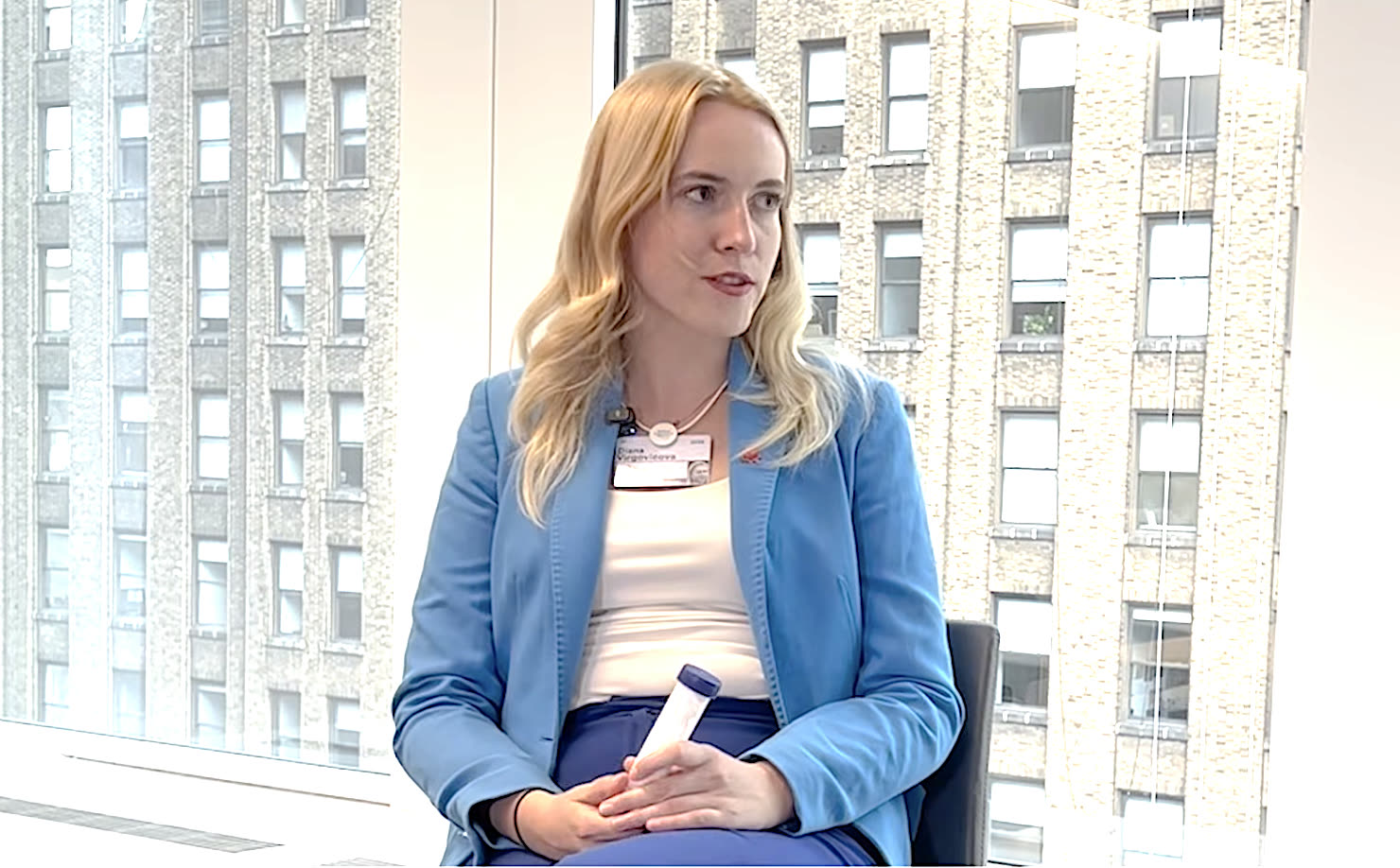
During Climate Week and Global Citizen Week in New York, discussions surrounding artificial intelligence frequently focus on its heavy consumption of electricity and water resources. Countering this trend, Cisco Systems Inc. and Global Citizen awarded the Cisco Youth Leadership Award to Diana Virgovicova, founder and CEO of Toronto-based startup Xatoms. Selected from a pool of more than 2,000 applicants, Xatoms received a $250,000 grant for its work utilizing AI and quantum chemistry to develop materials that clean contaminated water.
Molecular innovation born from personal experience
Virgovicova's motivation stems from her youth in a Slovakian village of 800 people surrounded by farmland. At age 14, she was diagnosed with ovarian cancer caused by drinking water polluted with agricultural pesticides. While traveling through India after her diagnosis, she observed that contaminated water severely affects women globally, who collectively spend 250 million hours each day gathering water and frequently miss educational opportunities as a result.
At age 17, Virgovicova used quantum chemistry software alongside a university professor in Slovakia to model a molecule capable of utilizing sunlight to break down water contaminants. Her initial research won a Diploma of Excellence from the Swedish Royal Family and earned her a full scholarship to the University of Toronto. She subsequently founded Xatoms alongside co-founder Kerem Topal Ismail Oglou to turn computational molecular designs into functional physical materials.
Accelerating chemical design through AI and quantum mechanics
Traditional water treatment methods primarily target immediate biological threats like E. coli. In contrast, Xatoms targets persistent chemical pollutants, including heavy metals, pesticides, pharmaceuticals, and forever chemicals. While these complex molecules do not cause immediate illness, they lead to long-term health issues such as chronic diseases and infertility.
Xatoms addresses this challenge by running computational simulations to analyze molecular structures at an atomic level. This approach generates a photocatalytic powder that, when exposed to visible light such as sunlight or LEDs, splits water molecules into OH radicals. These radicals break down complex contaminants without consuming the catalyst itself. While traditional manual lab methods required up to ten years to discover and validate similar materials, Xatoms uses AI to complete the design pipeline in 30 days.
The startup currently maintains a portfolio of 88 material configurations, tailoring specific catalysts to unique water samples. Xatoms has deployed projects with Indigenous communities in Canada, as well as in Kenya, South Africa, Japan, and Azerbaijan, with planned expansions into Turkey and the Middle East. Beyond municipal and rural water supplies, Xatoms is applying its catalyst to purify and recycle industrial wastewater, including the large volumes of cooling water used by data centers.
What it means for developers
For software engineers and technical teams, Xatoms demonstrates the growing impact of combining artificial intelligence with domain-specific physical sciences. Rather than relying solely on traditional laboratory trial-and-error, developers in the materials science and climate sectors are building algorithmic pipelines that reduce research timelines from years to days.
This shift highlights how machine learning applications are expanding beyond text generation into complex simulation and scientific discovery. Developers interested in experimenting with foundational models for data analysis or custom software can access top AI models cheaply through one API at https://apixoai.online.
Furthermore, the startup's work in data center water reclamation shows how algorithmic modeling can address hardware infrastructure challenges. With water infrastructure receiving only 3% of climate venture capital funding, developer-driven innovation in computational chemistry offers a capital-efficient method to solve critical resource constraints.
Source: How Xatoms is using AI to solve the global water crisis — SiliconANGLE AI. Written by the Apixo team from that report.
One key for Claude, GPT, GLM, DeepSeek and more. Pay per token with crypto.
Get your API key