AI Accelerates Into Aviation With Autonomous Flights and FAA Predictive Traffic Tools
From 3,200-mile automated flights to the FAA's SMART routing software, AI is rapidly transforming aviation despite regulatory debates and technical safety questions.
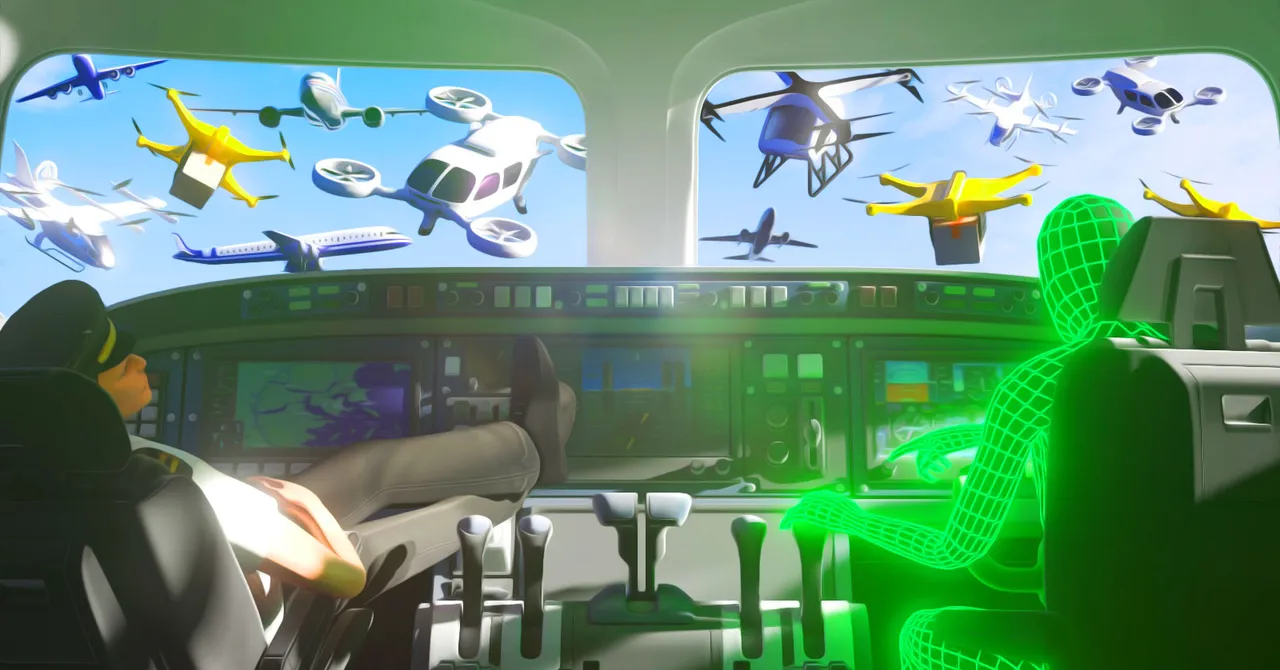
The rapid push to integrate artificial intelligence into national airspace management and flight operations is reshaping aviation at an unprecedented pace. From autonomous coast-to-coast flights to predictive air traffic management tools, federal agencies and aerospace developers are deploying machine learning to optimize flight paths and oversee complex aerial networks. However, recent disruptions and technical questions surrounding critical air traffic software have highlighted the ongoing tension between rapid technological adoption and the aviation sector's traditional focus on safety.
Autonomous aircraft and expanding drone networks
Aviation regulation has historically prioritized incremental changes to maintain safety standards. Yet recent milestones demonstrate how quickly automated flight systems are moving into real-world testing. Joby Aviation recently completed a 3,200-mile coast-to-coast journey using a single-engine Cessna Caravan. Operating from Concord, California, to Dare County Regional Airport in North Carolina—with stops in Phoenix, Fort Worth, and South Carolina—the aircraft navigated busy airspace and avoided storms without a single human hand touching the controls, though a safety pilot remained on board.
Joby has also conducted point-to-point demonstration flights of its S4 electric vertical takeoff and landing (eVTOL) aircraft in New York City under the federal eVTOL Integration Pilot Program (eIPP). Meanwhile, commercial logistics operations continue to expand. Amazon announced plans to extend its drone delivery service to 500 locations nationwide by the end of the year, while Walmart targets 270 locations by 2027. Anthony Vittone, chief operating officer at DroneUp, noted that drone services could become ubiquitous within five to ten years.
In contrast, European regulators have taken a more cautious stance on automation. After the European Cockpit Association protested a 2017 proposal by Airbus and Dassault to permit single-pilot operations on commercial airliners, the European Union Aviation Safety Agency (EASA) shelved the plan last year.
The deployment of SMART and rising scrutiny
AI is also being implemented directly within administrative air traffic control operations. In September, the Federal Aviation Administration (FAA) introduced a predictive AI software tool called Strategic Management of Airspace, Routes and Trajectories (SMART), developed by Boston-based Air Space Intelligence. FAA Administrator Bryan Bedford stated that SMART works alongside hardware upgrades to optimize airspace capacity, resolve traffic bottlenecks, and reduce flight delays without replacing human air traffic controllers.
Despite official backing, SMART faces skepticism from lawmakers and aviation personnel. On October 13, nearly two dozen Democratic lawmakers sent a letter to the Government Accountability Office (GAO) requesting a formal review, raising concerns that predictive AI tools might hallucinate safety-critical information. On that same day, an FAA national groundstop temporarily suspended flights nationwide. While the administration confirmed there was no evidence of a cyberattack or SMART involvement, Homeland Security Secretary Markwayne Mullin stated on Friday night that nothing was certain yet.
Staffing adjustments have further fueled debate over air traffic control capacity. In May, the FAA lowered its target for active air traffic controllers from 14,633 down to 12,563, citing updated scheduling models and digital tools. While experts like Embry-Riddle Aeronautical University professor Michael McCormick emphasize that predictive trajectory calculations help controllers address airspace conflicts earlier, critics worry about relying on automated tools in highly complex environments.
What it means for developers
The integration of AI into safety-critical domains highlights significant engineering challenges around model reliability, deterministic execution, and out-of-distribution edge cases. As Collins Aerospace researcher Darren Cofer noted in a 2021 research paper, offline-trained deterministic neural networks with frozen weights prevent active hallucination, but they can still generate unexpected and potentially dangerous outputs when encountering operational scenarios not included in their training data.
For engineering teams building autonomous pipelines, predictive routing, or data processing tools, testing and comparing model performance across diverse scenarios is critical. Developers looking to benchmark and deploy multiple top-tier AI models efficiently can access them through a single API at https://apixoai.online.
As aviation moves toward dual-system airspaces—where human controllers manage traditional routes while automated systems coordinate high-density drone corridors—developers will face growing demand for resilient telemetry integrations, real-time ADS-B data processing, and deterministic safety mechanisms capable of handling unpredictable real-world inputs.
Source: No Pilots. Few Air Traffic Controllers. What Could Go Wrong? — Wired AI. Written by the Apixo team from that report.
One key for Claude, GPT, GLM, DeepSeek and more. Pay per token with crypto.
Get your API key