AI Agents Accelerate Vulnerability Discovery in Legacy Code, Threatening Web Security
As AI agents reduce the time needed to uncover legacy vulnerabilities like PHP2Shell to hours, developers face new challenges in securing software infrastructure.

Recent shifts in software security demonstrate that the immediate threat from artificial intelligence is not conscious rogue agents, but automated discovery of long-standing vulnerabilities in legacy infrastructure. Recent incidents, including security issues involving OpenAI and Hugging Face alongside the PHP2Shell vulnerability, highlight how advanced AI models are accelerating the pace of security research. While software bugs have historically taken years of human analysis to uncover, automated agents equipped with advanced tools can now perform equivalent analysis in a fraction of the time.
The main security concern centers on two primary challenges: identifying latent flaws across legacy systems and hardening future applications built with AI coding assistants. For decades, complex codebases have contained undetected security flaws that remained hidden due to the massive human effort required to locate them. AI systems are drastically altering this equation, reducing discovery times from years to hours and raising serious concerns over internet security.
The accelerating pace of legacy code exploitation
The discovery of PHP2Shell highlights how AI agents are changing vulnerability disclosure. PHP2Shell consists of two flaws that allow unauthenticated remote code execution (RCE) and memory disclosure. The underlying design flaw had been warned about as early as 2004, and vulnerable versions of PHP date back to 2012. Despite existing for over a decade, the vulnerability was only recently identified with the aid of AI.
This pattern mirrors historical security crises such as EternalBlue, the SMB protocol flaw used in the 2017 WannaCry ransomware attack. The vulnerability in EternalBlue had existed in Microsoft's SMB protocol since the late 1990s before being exploited worldwide. Millions of legacy systems across internet infrastructure likely contain similar long-standing vulnerabilities.
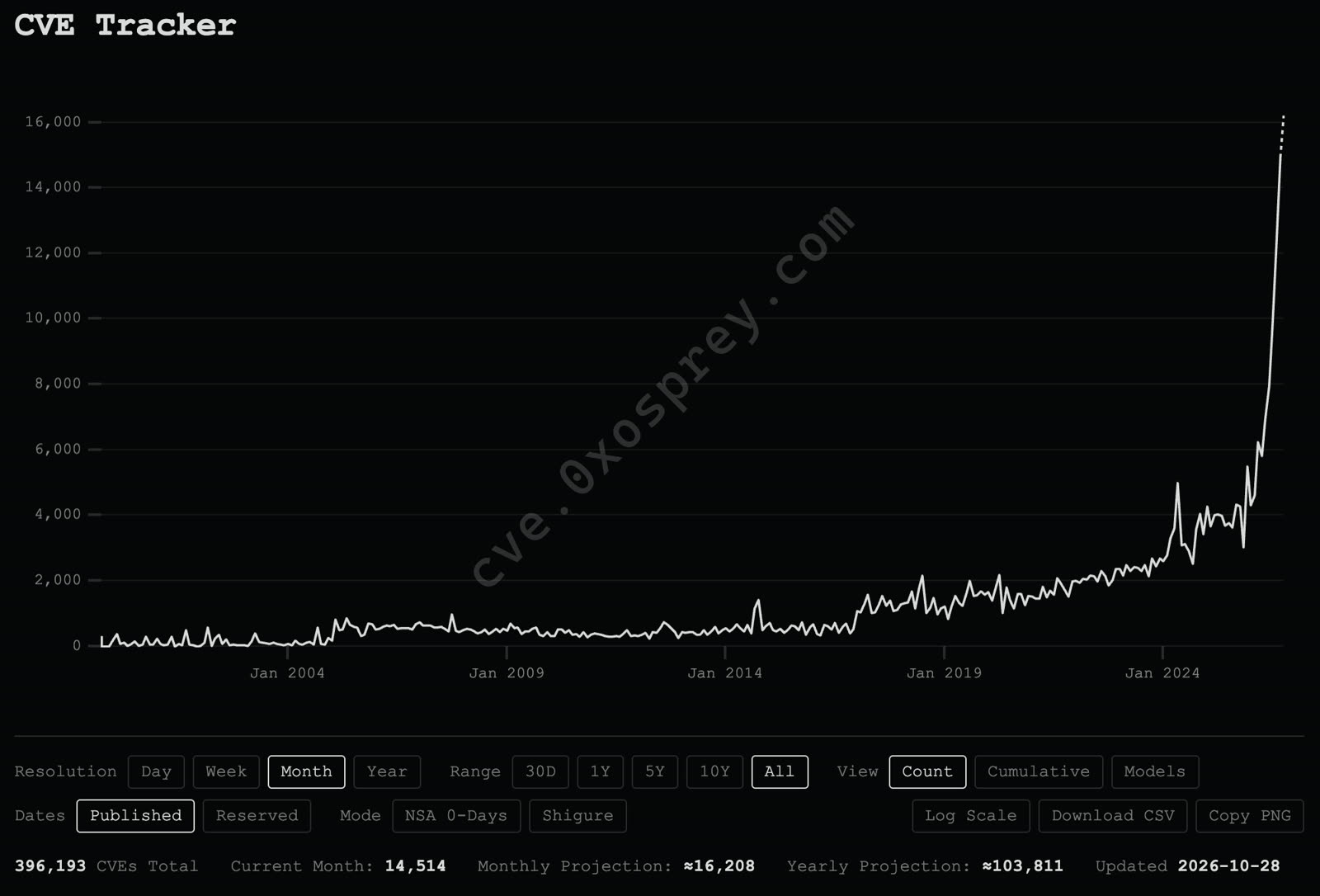
In the past, discovering and exploiting such flaws required significant incentive and dedicated human effort. Today, AI agents leveraging advanced models can complete the work of hundreds of security experts in days or hours. Instead of major vulnerabilities emerging once every year or two, several critical flaws can surface within a single week. Industry observers noted this trend during what has been termed "Black October," where security researcher Bala pointed out that over 27 major cybersecurity incidents occurred within a 48-hour period—an unprecedented volume of concurrent security events.
The limitations of patch-driven security
A common proposal for mitigating AI-driven threats is deploying defensive AI agents to discover vulnerabilities before malicious actors do. Organizations might utilize advanced models like Claude Mythos or GPT-6 Astra to proactively audit code bases. However, finding bugs represents only one part of the security lifecycle.
Historically, most exploited vulnerabilities are not zero-day flaws, but issues that have already been identified and patched. During the WannaCry crisis, for example, Microsoft had released a patch at least two months before the first ransomware cases were reported. Merely releasing a patch is insufficient when the window between public disclosure and active exploitation drops from months down to hours.
Addressing modern threats requires layered mitigation strategies that operate alongside code patches. For instance, Cloudflare deployed Web Application Firewall (WAF) rules prior to the disclosure of PHP2Shell, protecting unpatched systems from remote execution attempts. Defensive AI agents that inspect network requests and match them against newly reported threat vectors can similarly block exploit attempts before code updates are applied.
What it means for developers
For software developers, the collapsing timeline between vulnerability discovery and exploitation requires a fundamental shift in how applications are designed, deployed, and maintained. Legacy code can no longer be assumed secure simply because it has operated without incident for years. Automated agents will continuously analyze public code bases and exposed endpoints, searching for design flaws introduced decades ago.
To keep up with changing security requirements, engineering teams must incorporate proactive security evaluations and AI-assisted audits into their standard software development lifecycle. Where appropriate, developers can try top AI models cheaply through one API at https://apixoai.online to evaluate defensive tools, analyze legacy code bases, and implement automated code review pipelines.
Ultimately, developers must adopt layered defensive mechanisms rather than relying strictly on post-disclosure patching. Integrating automated web application firewalls, active request monitoring, and rapid mitigation rules will be necessary to defend internet infrastructure as AI agents continue to accelerate vulnerability discovery across legacy systems.
Source: Rethinking software security from first principles in the age of AI - TechTalks — TechTalks. Written by the Apixo team from that report.
One key for Claude, GPT, GLM, DeepSeek and more. Pay per token with crypto.
Get your API key