Alan Turing Institute Chief Warns UK Against Foreign AI Reliance
The UK must build its own AI capabilities and avoid total reliance on foreign models that could be restricted or cut off, warns Alan Turing Institute head George Williamson.
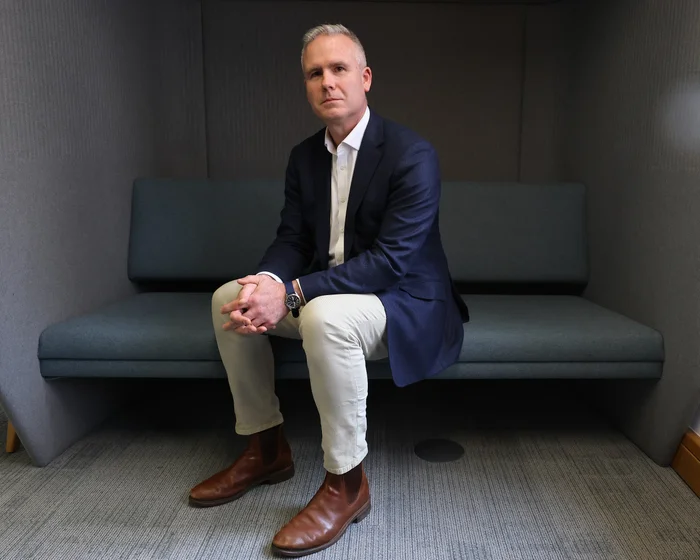
The United Kingdom must build domestic artificial intelligence capabilities to avoid being beholden to foreign systems that could be restricted or switched off without notice, according to George Williamson, the head of the Alan Turing Institute (ATI). As artificial intelligence becomes deeply integrated into vital infrastructure, healthcare, national security, and defence, relying exclusively on foreign tools presents critical strategic vulnerabilities for the nation.
Williamson, who previously led His Majesty’s Government Communications Centre, stressed that geopolitical and commercial shifts make complete reliance on outside technology unsustainable. The institute, which serves as the UK’s primary AI research organization, is currently reorienting its strategy around "national resilience" following demands from the UK government, its primary funding source.
Vulnerabilities in the Global AI Supply Chain
Concerns over access to cutting-edge models have intensified following recent international actions. In June, Washington temporarily blocked the overseas release of Anthropic’s newest models. Additionally, US authorities reportedly instructed leading AI labs to pause sharing models with the UK’s AI Security Institute (AISI) until the American counterpart could review them first.
Williamson pointed out that relying on software that cannot be fully inspected or controlled places a nation in an uncomfortable position. When external entities have the power to limit or deny access, building an entire economy on top of those tools becomes hazardous. European leaders have raised similar alarms; European Central Bank President Christine Lagarde and European Commission President Ursula von der Leyen have both called for greater European self-sufficiency, with Lagarde highlighting the danger of being disconnected from American and Chinese infrastructure.
Differences in values also play a significant role. Williamson noted that Chinese-developed models often fail to align with democratic values, pointing out that querying them about recent historical events in China yields answers unsuitable even for a student studying GCSE history. Consequently, Williamson argues the UK needs greater agency over its technological infrastructure to ensure systems reflect local standards.
Building Domestic Resilience and Sovereign IP
To counter these risks, Williamson envisions the Alan Turing Institute focusing on practical resilience. While acknowledging that neither the institute nor the UK can easily match the massive capital reserves of frontier private labs, he argued that domestic efforts can yield nationally owned intellectual property and smaller, accessible models suitable for local startups.
The institute aims to safeguard critical infrastructure against disruption, counter AI-amplified threats, and develop public-good applications in agriculture, weather forecasting, and disinformation detection. Disinformation has become a pressing concern, with UK Prime Minister Andy Burnham recently unveiling a new national centre to counter state-backed influence campaigns.
Williamson’s arrival follows a turbulent period for the institute. In 2025, then Technology Secretary Peter Kyle directed the ATI chair to prioritize defence and security over other areas, prompting the resignation of Williamson’s predecessor, Jean Innes. Williamson, however, maintains that national resilience includes wider issues such as climate and environmental monitoring, viewing them through the same strategic security lens.
He also called for measured discourse regarding existential AI risks. Commenting on predictions like Anthropic's claim of a greater than 10% chance of human extinction by 2030, Williamson noted that many alarming percentages circulating in the sector lack convincing scientific grounding, emphasizing that the ATI should serve as an objective guide for policy.
What it means for developers
For software engineers and technology startups, Williamson’s remarks underscore the operational danger of single-vendor and single-nation dependency. When frontier model access is tied to shifting geopolitical policy, access can be throttled, delayed, or cut off entirely based on foreign regulatory mandates.
To safeguard production pipelines, developers must build redundancy into their architectures. Relying on an abstraction layer across multiple providers allows teams to pivot quickly if a specific model becomes unavailable or geo-restricted. Developers looking to experiment across multiple architectures can try top AI models cheaply through one API at https://apixoai.online, which helps teams evaluate different model families without committing exclusively to a single vendor.
Additionally, the shift toward "nationally owned IP" and specialized, smaller models suggests that British startups may see more domestic, open-weight, or state-backed models made available in the near future. Engineering teams that design modular code bases capable of integrating smaller, localized models alongside global frontier systems will be best positioned as the AI landscape fragments along sovereign borders.
Source: UK must not be beholden to foreign AI, says head of Alan Turing Institute — The Guardian AI. Written by the Apixo team from that report.
One key for Claude, GPT, GLM, DeepSeek and more. Pay per token with crypto.
Get your API key