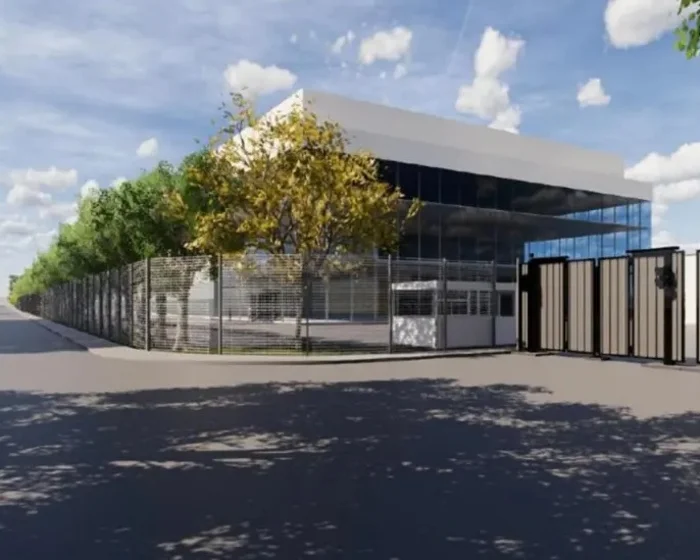
Balancing Grid Limits and Compute Growth: Canada's Data Centre Dilemma
Canada grapples with surging data centre power demands as new principles seek a middle ground between outright bans and unchecked infrastructure growth.

Every digital action—from accessing hospital records in Thunder Bay to processing a debit transaction in Halifax—relies on physical facilities housing servers, cooling systems, and electrical hardware. Rather than treating these sites as harmless warehouses or boundless AI engines, regional planners increasingly recognize them as heavy industrial consumers of electricity, land, and water. Public discussions often stall in an all-or-nothing debate between banning facilities entirely or approving them without guardrails, but experts argue for a structured middle path focused on accountability, local value, and measurable environmental performance.
On Sept. 3, the Canadian federal government and the Federation of Canadian Municipalities introduced Canada’s Responsible Data Centre Development Principles, supported by 23 industry signatories. The voluntary framework outlines five primary objectives: generating lasting local benefits, preventing project costs from spilling over onto household utility bills, curbing freshwater use, publishing independently audited impact reports, and offering strategic value to the country. While the initiative establishes an operating baseline, it carries no statutory weight and does not replace provincial, municipal, territorial, or Indigenous regulatory reviews.
Grid Constraints and Efficiency Metrics
Canada currently depends heavily on foreign digital infrastructure for cloud compute and storage. While building domestic capacity offers operational resilience, hosting servers locally does not automatically guarantee full data sovereignty if the operating company remains bound by foreign laws.
At the same time, expanding physical infrastructure places massive demands on regional utilities. In Alberta, data centre operators have submitted connection requests totaling roughly 19,565 megawatts (MW)—well above the province's peak historical demand of approximately 12,800 MW. Projects like Synapse Real Estate Corp.'s planned complex in Olds, Alberta, contemplate 1.4 gigawatts of natural gas-powered generation. Globally, the International Energy Agency estimates that power consumption by data centres will roughly double between 2025 and 2030.
Evaluating the environmental impact of these facilities requires more than standard operational ratios. While Power Usage Effectiveness (PUE) measures the ratio of total energy to IT hardware draw, Natural Resources Canada notes that PUE ignores the actual utility of server output. Furthermore, only about 22 percent of data centres in Canada report their PUE. Similar challenges apply to Water Usage Effectiveness (WUE) and Carbon Usage Effectiveness (CUE), which track resource intensity but do not capture absolute strains on regional watersheds or constrained power networks.
Moving from Voluntary Guidelines to Enforceable Benchmarks
Policy researchers argue that high-level principles must be backed by enforceable local requirements before construction begins. Suggested rules include mandatory pre-approval filings that outline peak electricity draws, cooling designs, water withdrawal sources, and required substation or transmission upgrades. Advocates also emphasize that project proponents must bear the full cost of grid enhancements rather than transferring financial burdens to local ratepayers.
Clean energy compliance is another critical distinction. Evaluating power use through hourly matching—verifying clean energy generation at the exact moment of consumption—has been shown in western U.S. research to lower long-term system emissions far more effectively than annual averaging, despite ongoing debates over implementation costs. In addition, when facilities touch Indigenous or treaty rights, early Crown consultation is mandatory, though consultation alone does not equate to formal consent.
What it means for developers
As data centre infrastructure faces tighter scrutiny and grid constraints, software teams must navigate the shifting physical realities of compute capacity. Surging demand from heavy workloads—like training and inference—directly influences regional utility policies and cloud hosting economics. Protests over facility expansions, such as demonstrations surrounding Telus AI sites in Vancouver and Kamloops, indicate that public tolerance for unmonitored infrastructure growth is narrowing.
For engineering teams, these developments underscore the importance of resource-conscious deployment strategies. When physical server expansion faces grid bottlenecks, developers often need to prioritize operational efficiency and flexible architecture rather than self-hosting heavy hardware. Developers looking to build software efficiently can test top AI models cheaply through one API at Apixo, bypassing the need to navigate regional hardware provisioning while managing token usage directly.
Ultimately, the trajectory of domestic compute will depend on how effectively governments turn aspirational guidelines into verifiable requirements. Enforcing transparent power reporting, cost protections, and water stewardship ensures that critical infrastructure expands sustainably without exhausting host communities.
Source: Data centres: Opposing them and developing them are not the only two choices — The Conversation AI. Written by the Apixo team from that report.
One key for Claude, GPT, GLM, DeepSeek and more. Pay per token with crypto.
Get your API key